03The technical decisions behind it
Heat load and heater class
We size a private cabin at roughly 1 kW of heater output per cubic metre of insulated volume, then add about 1 kW for every square metre of glass, stone or other uninsulated surface in the envelope. Those surfaces do not store heat the way a lined timber wall does; they re-radiate it and pull the room’s recovery time out. For a villa room of this class that normally lands in the mid single-digit kilowatt band.
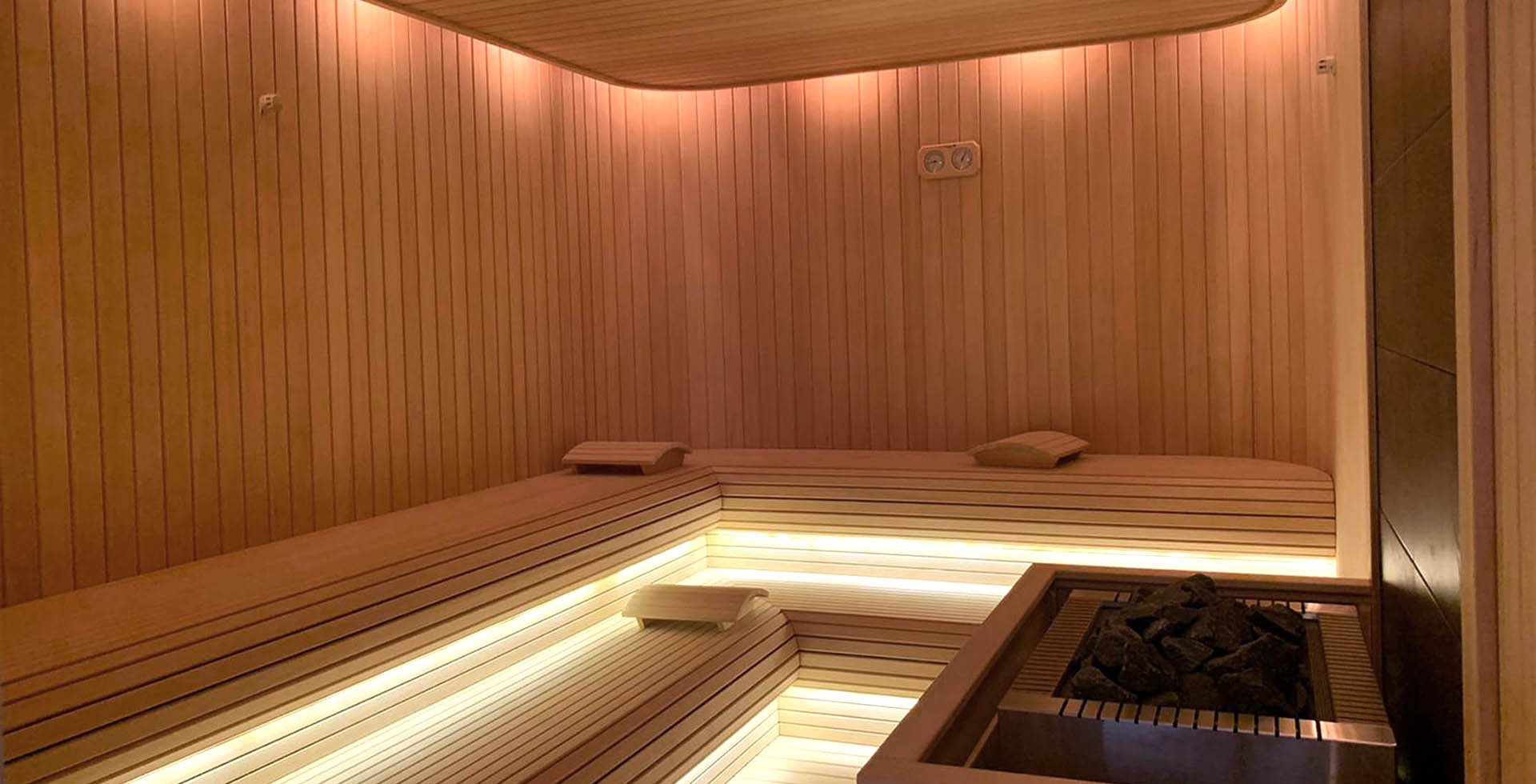
A floor-standing stone heater was used rather than a wall-hung unit. A floor-standing body carries a deeper stone charge, and the depth of that charge is what decides how the steam behaves when water is thrown — a shallow charge gives a short sharp burst, a deep one gives a slower, rounder release. It also needs a guard and a defined clearance zone, which has to be drawn into the bench layout rather than resolved on site.
Ventilation
Fresh air enters low, near the heater, so incoming air is drawn up through the convection plume. Extract sits diagonally opposite, also low, on the far wall, giving roughly three to six air changes an hour during a session. Just as important is what happens afterwards: an extract run-on cycle dries the cabin once bathers leave. In a hot dry climate the thing that ages a cabin is not the heat, it is moisture left standing in the timber overnight.