

Istanbul
+90 (532) 215 64 78
info@saunadekor.com
Location
Ziya Gökalp, Metal İş Sanayi Sitesi Yolu 20. Blok No:17-19,
34490 İkitelli Osb/Başakşehir/İstanbul/Turkey
Dubai
+971 58 558 1295
info@saunadekor.com
Location
Latifa Tower Dubai, World Trade Centre, Dubai UAE
Boston
+1 (617) 645 13 50
info@saunadekor.com
Location
66 Long Wharf, Unit 4B, Boston, MA 02110 USA

Interior design is the art and science of enhancing the interiors.
Ziya Gökalp, Metal İş Sanayi Sitesi Yolu 20. Blok No:17-19, 34490 İkitelli Osb/Başakşehir/İstanbul/Turkey
+90 532 215 64 78
info@saunadekor.com.tr
Sauna Dekor supplies and installs float tanks and sensory deprivation rooms for hotel spas, wellness centres and private residences in the UAE, Saudi Arabia and Qatar, manufacturing in Istanbul since 1987.

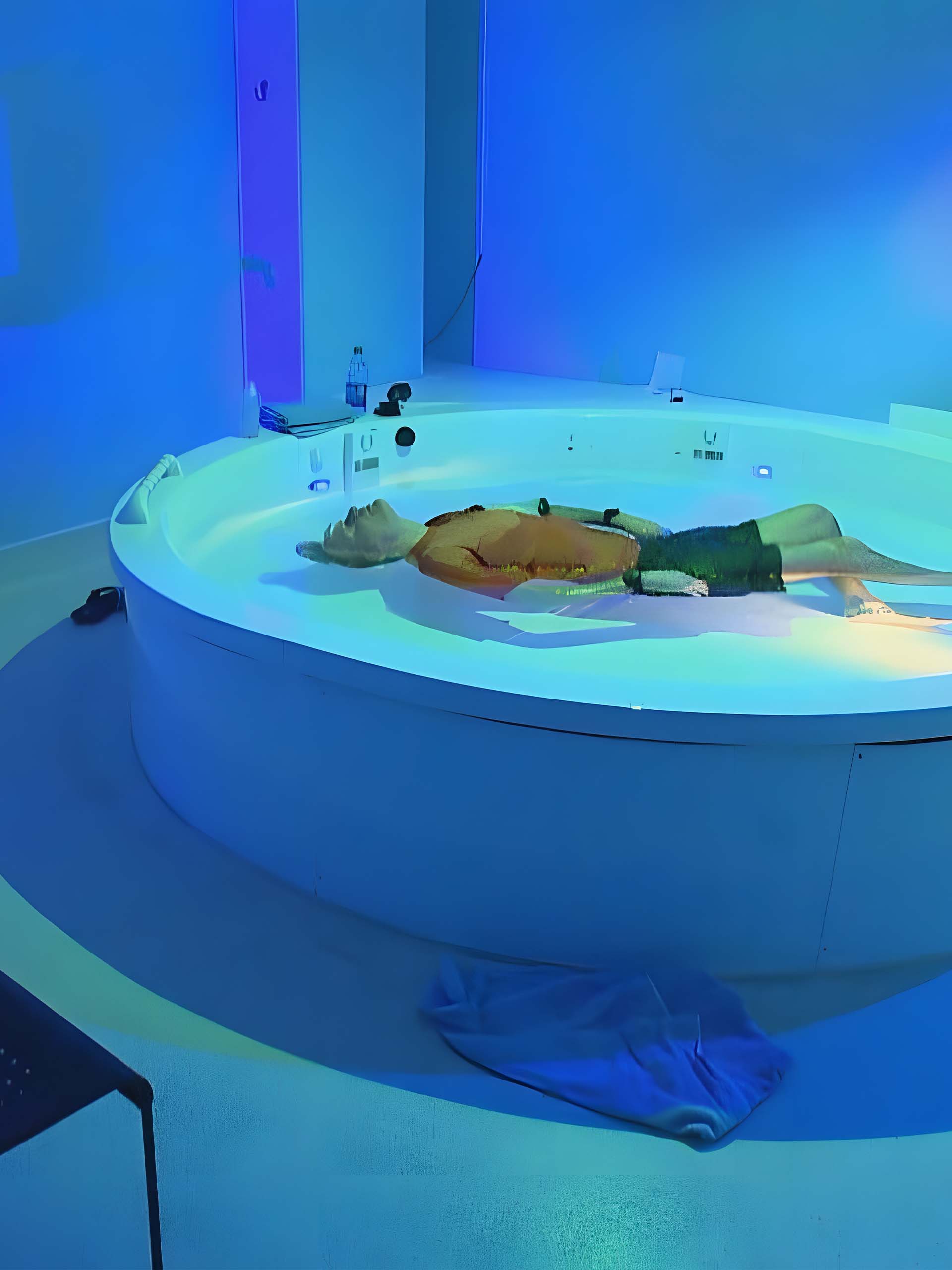
Below: how a float room is built, what it needs from the building, and what to check before buying a tank. Dive into a world of relaxation and wellness, including detailed insights into disinfection and circulation systems. Sensory deprivation tanks, also known as isolation tanks or floatation tanks, have gained increasing popularity as powerful tools for relaxation, stress reduction, and overall well-being. In this comprehensive guide, we set out how these tanks are built and specified, and what the room around them has to provide, and provide essential insights for those considering purchasing one.
Relaxation and Stress Reduction:
Installation of Sensory deprivation tanks offers a unique opportunity to escape the hustle and bustle of everyday life. The buoyant, Epsom salt-infused water allows users to effortlessly float, relieving pressure on joints and muscles. The room removes light, sound and most tactile sensation, which is why blackout light control and acoustic isolation from adjacent plant are part of the build rather than accessories.
Improved Sleep:
Float tanks are usually programmed for the quiet end of a circuit. Many users say they sleep well afterwards; that is what guests report rather than a measured outcome, and a float tank is not a treatment for a sleep disorder.
Anxiety and Pain Relief:
A float tank removes as much sensory input as a room can: no light, no sound, skin-temperature water and enough magnesium sulphate to float without effort. Guests commonly describe the session as deeply restful. That is a personal report, not a treatment: a float tank does not treat anxiety, depression or chronic pain, and it is not an alternative to medication or to care from a doctor.
Dimensions, Materials, and Design Features: Sensory deprivation tanks come in various sizes and shapes. We'll explore the importance of Sensory Deprivation Tank. dimensions, materials, and design features, offering insights to help you choose the right tank for your needs.
Ensuring Hygiene:
Maintaining proper hygiene is crucial in sensory deprivation tanks. These tanks are equipped with state-of-the-art disinfection systems that ensure a clean and safe experience. Ultraviolet (UV) sterilization and hydrogen peroxide-based disinfection are common methods used to maintain water purity.
Ultraviolet (UV) Sterilization:
UV sterilization systems are designed to eliminate bacteria, viruses, and other microorganisms in the water. The water passes through UV lamps, where the ultraviolet light disrupts the DNA structure of microorganisms, rendering them harmless. This method provides an effective and chemical-free way to disinfect the tank's water.
Hydrogen Peroxide-Based Disinfection:
Hydrogen peroxide-based disinfection systems are another popular choice. These systems use a carefully controlled concentration of hydrogen peroxide to maintain water cleanliness. They work in conjunction with other filtration systems, ensuring a thorough cleaning process.
Enhancing Comfort :
The circulation system plays a vital role in maintaining water quality and ensuring your comfort during a session in a sensory deprivation tank. It consists of pumps and filtration systems that continuously circulate the tank's water, preventing stagnation and maintaining consistent water temperature.
Filtration Systems:
Modern sensory deprivation tanks are equipped with advanced filtration systems. These systems filter out particles, such as skin cells and hair, that may enter the tank during use. In addition to mechanical filtration, the tanks often feature additional chemical treatments like ozone to ensure water purity.
Maintaining Temperature:
The circulation system also maintains the water temperature at a constant and comfortable level. Keeping the temperature consistent is essential for a relaxing and immersive sensory isolation experience.
Dimensions, Materials, and Design Features:
Sensory deprivation tanks come in various sizes and shapes. We'll explore the importance of tank dimensions, materials, and design features, offering insights to help you choose the right tank for your needs.
The Power of Epsom Salt:
Epsom salt, or magnesium sulfate, plays a vital role in the floatation experience. We'll delve into the benefits of Epsom salt for your skin, muscles, and overall sensory deprivation experience.
Enhance your sensory experience with our massage room designs. Combine with a custom sauna or salt room for a full wellness retreat.
Sauna Dekor supplies, builds and commissions float tanks and sensory deprivation rooms for hotel spas, wellness centres and private residences in the UAE, Saudi Arabia and Qatar. The tank is a manufactured unit. The part that decides whether the installation works is the room around it, and that room is our scope: salt-resistant construction, the water treatment plant, light and sound isolation, humidity extraction, and the interface with the shower and dressing area next door. Where an owner has already chosen a pod, we build and commission around it. Where they have not, we supply the unit inside the same package, so one contractor is accountable for the tank and the room together.
This is a deliberate position rather than a modest one. In the Gulf the recurring failure in float installations is not the tank; it is salt migration into an untreated wall build-up, a filtration set sized for a swimming pool instead of a saturated solution, or a suite that goes damp because nobody extracted the humidity a warm evaporating pool produces. Those are wet-area construction problems, and wet-area construction is what we have done since 1987.
| Item | Planning figure |
|---|---|
| Room area, single tank including rinse shower and dressing | 6–12 m² |
| Water depth | 25–30 cm |
| Magnesium sulphate charge | roughly 500–600 kg per tank, plus top-ups |
| Specific gravity in solution | about 1.25–1.28 |
| Water temperature | around 35.5 °C, skin temperature |
| Session length planned for | 60 minutes standard, 90 minutes for experienced floaters |
| Sanitation | fine filtration plus UV or ozone, rated for saturated solution |
These are planning figures for early design and budgeting, not a specification. Final values follow the selected unit, the room geometry and the local authority submission.
We have delivered float tanks in projects in Iraq and Turkmenistan, as part of wider wet-area scopes. On those projects, as on any float suite, the work that decides the result is the room around the tank: the sealed envelope, the plant access and the finishes.
The rest of the case for this scope is the room, not the unit. Sauna Dekor has manufactured and installed hammams, steam rooms, saunas, cold plunge pools and hydrotherapy pools since 1987 and is now in its fortieth year, and the discipline in all of them is the same one a float room needs: keeping water, heat and aggressive chemistry inside a sealed envelope, with a plant room that can be reached and maintained. A float suite is usually planned alongside our salt room, massage room and sauna scopes, grouped so the moisture and water-plant load stays in one well-built zone.
A float room is the quietest position in a wellness facility and it has to be planned as such: away from plant, away from wet traffic, and reached through a transition rather than straight off a corridor. In a thermal suite it belongs at the end of the sequence, after the heat and cold rooms, where a guest is already down-regulated. The wider context — what a float tank is, how a session runs and what the water is doing — is covered in our guides to float tanks and hydrotherapy as a whole.
The tank or pod itself is manufactured by its own maker and is supplied with that maker’s certification; Sauna Dekor does not manufacture the vessel and does not present it as its own. The room around it — the sealed envelope, the tanking, the acoustic and thermal build-up, the plant space, the ventilation and the finish — is manufactured and installed by Sauna Dekor, from a workshop of nineteen people at İkitelli OSB, Başakşehir, Istanbul.
That is what a float tank installer is being engaged to do on a hotel or wellness project, and it is the half of the scope that decides whether the room works. Sauna Dekor has manufactured since 1987, is in its fortieth year and has completed work in more than 35 countries. Sauna Dekor’s own certificate is TS EN ISO 9001:2015, covering the manufacture of sauna and spa products and after-sales service. Our float tank deliveries are in projects in Iraq and Turkmenistan.
Sauna Dekor. We are a float tank and sensory deprivation room supplier and installation contractor for hotel spas, wellness centres and private residences in the UAE, Saudi Arabia and Qatar, manufacturing wet-area works in our own factory in Istanbul since 1987. Our scope covers the room and its interface as well as the unit.
Last updated: 23 September 2026
Either. If the unit is already selected we build, seal, service and commission the room around it. If it is not, we supply the unit within the same package so the tank and the room sit under one contract.
Plan 6 to 12 m² for a single tank. That figure includes the private rinse shower and a dressing or transition area, because users shower immediately before and after each session, and the shower has to be inside the suite rather than down a corridor.
A floor set out for roughly a tonne of solution, corrosion-resistant surfaces throughout, acoustic isolation, blackout light control, humidity extraction, and a dedicated shower directly beside the tank. Salt migration into an untreated wall build-up is the most common failure in retrofitted rooms.
Fine filtration combined with UV or ozone sanitation, specified for salt-saturated water. Standard pool filtration and standard pool metals do not survive a magnesium sulphate solution at this concentration, so the plant is selected for the solution rather than for the volume.
Yes. A float tank has pumps, heaters, filtration and lighting, so its electrical supply requires Dubai Electricity and Water Authority approval, and built-in installations in master-planned communities usually also need owner association or developer consent. We coordinate that submission as part of the installation scope.

Adding {{itemName}} to cart
Added {{itemName}} to cart