


Istanbul
+90 (532) 215 64 78
info@saunadekor.com
Location
Ziya Gökalp, Metal İş Sanayi Sitesi Yolu 20. Blok No:17-19,
34490 İkitelli Osb/Başakşehir/İstanbul/Turkey
Dubai
+971 58 558 1295
info@saunadekor.com
Location
Latifa Tower Dubai, World Trade Centre, Dubai UAE
Boston
+1 (617) 645 13 50
info@saunadekor.com
Location
66 Long Wharf, Unit 4B, Boston, MA 02110 USA

Interior design is the art and science of enhancing the interiors.
Ziya Gökalp, Metal İş Sanayi Sitesi Yolu 20. Blok No:17-19, 34490 İkitelli Osb/Başakşehir/İstanbul/Turkey
+90 532 215 64 78
info@saunadekor.com.tr
Sauna Dekor manufactures and installs infrared sauna cabins for hotel spas, wellness and recovery centres, gyms and private villas across the UAE, Saudi Arabia and Qatar. We have built in Istanbul since 1987, this is our 40th year, and our cabins are installed in more than 35 countries. An infrared cabin is a low-temperature room with a different electrical, ventilation and emitter specification from a stone-heated sauna, and the two are not interchangeable on a drawing.
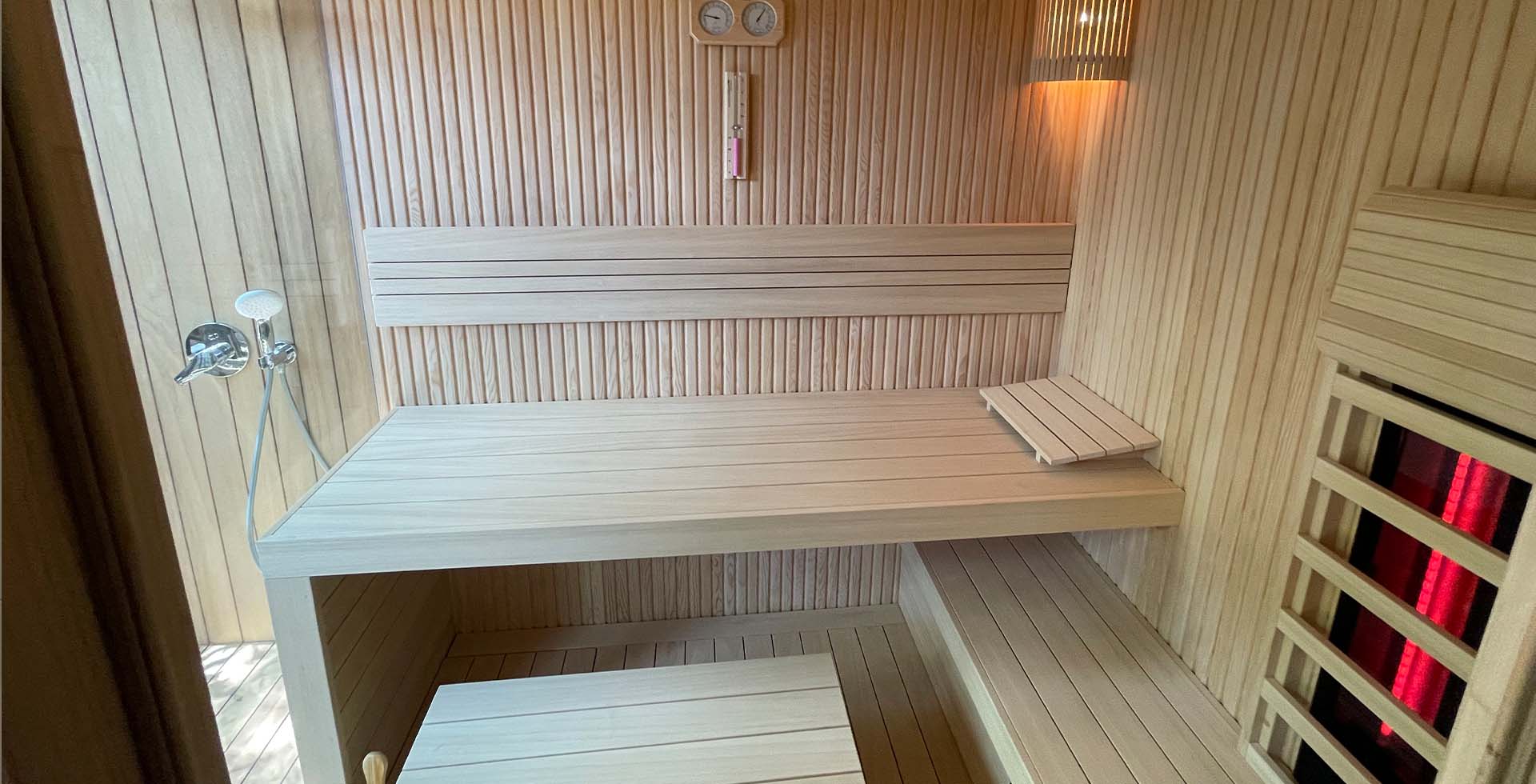
An infrared cabin is a small timber room heated by infrared emitters in the walls and under the benches instead of a stove with stones. The emitters warm the body and the surfaces directly, so the cabin air stays at about 45–60 °C. The cabin needs a dedicated electrical circuit, ventilation and a level, dry floor.
Last updated: 1 October 2026

Temperature: 45–60 °C cabin air
Navigating the installation of an infrared sauna demands a nuanced consideration of factors impacting both cost and structure. The selection of models significantly influences pricing, introducing variations based on features. Sauna dimensions play a pivotal role, allowing tailored configurations to meet specific spatial needs. The interplay between radiant heat panels and efficiency forms the scientific foundation for cost dynamics. Material choices contribute substantively to the final price, determining durability and thermal characteristics.
Sunlight is a spectrum of visible and invisible light, including infrared and ultraviolet wavelengths that are beyond human visual perception. Among these invisible rays, far infrared holds significance as our bodies naturally emit it. Solar-derived far infrared rays deeply penetrate the skin, aiding in the dissolution of accumulated substances within the body. These rays possess the unique capacity to revitalize cells and metabolic processes, enhancing wellness through Infrared Sauna Installation.
Far infrared waves effectively reach and stimulate sweat glands within the body. The sweat glands are one of the body's mechanisms for cooling. The skin, recognized as the body's largest organ and often termed "the third kidney," plays a pivotal role in eliminating waste materials through sweat. In your pursuit of wellness, consider bringing the advantages of custom Infrared Sauna Installation to your home with Sauna Dekor Spa Solutions®.
Historical research conducted by S. Inouye and M. Kabaya unveiled that far infrared shares similarities with wavelengths generated by the human body. Such parallels result in the vibration of human tissue, akin to the principles of infrared spectroscopy. When introduced within the precise wavelength range of 9.3 to 9.4 microns, water molecules resonate. This resonance weakens ion bonds in water, facilitating the release and elimination of encapsulated gases and toxic substances through Infrared Sauna Installation.
Full spectrum infrared comprises near, mid, and far infrared wavelengths. These collectively offer a comprehensive range of benefits within Sauna Dekor Spa Solutions®. Near infrared has the shortest wavelength of the three bands and is produced by emitters running at the highest surface temperature. Mid infrared sits between the two and is produced by a different emitter type again. Far infrared has the longest wavelength, is emitted at the lowest surface temperature, and is what most cabin panels produce.
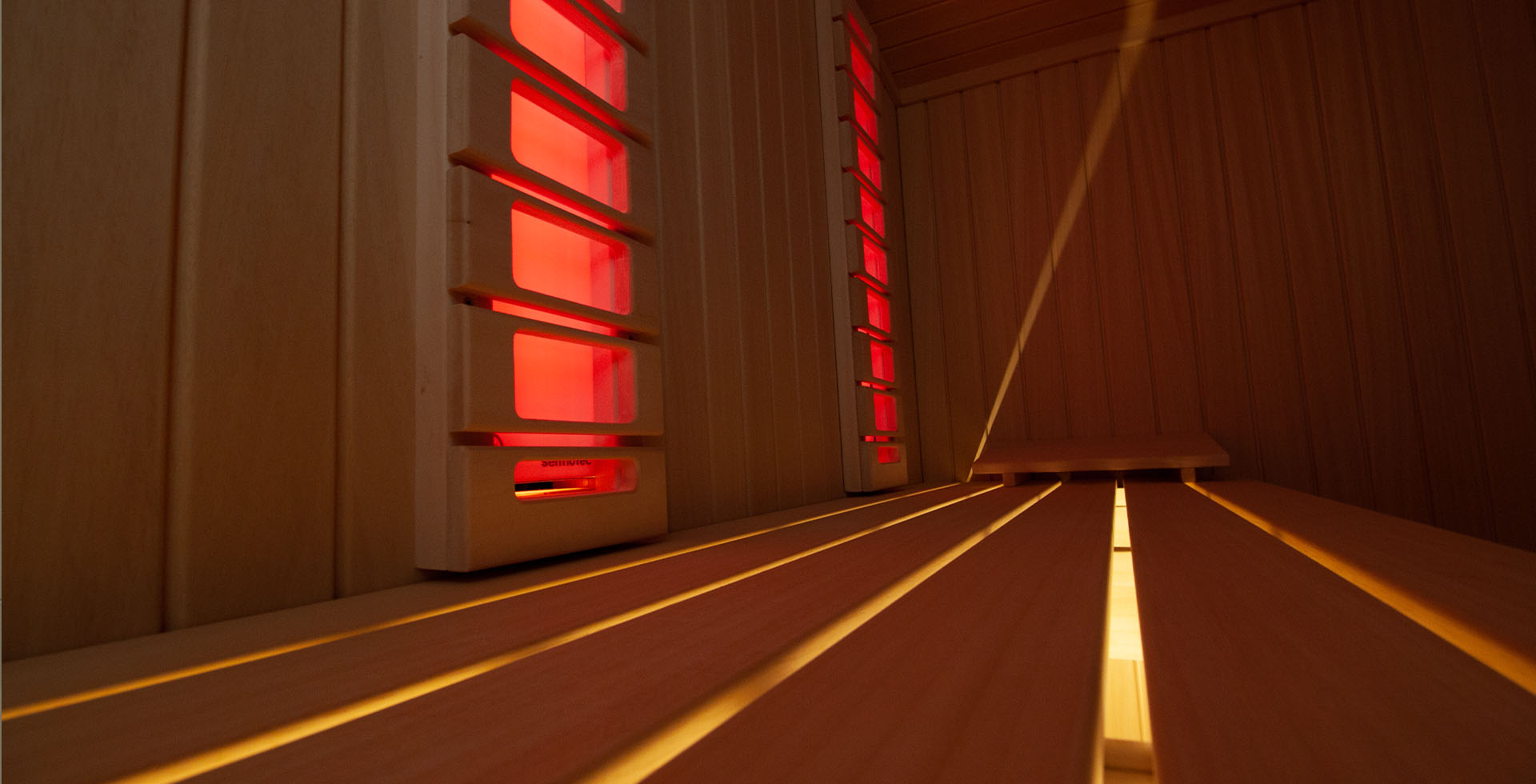
While the sun is a primary source of radiant energy, excessive sunlight exposure can damage the skin. Infrared emitters warm surfaces and bodies directly instead of heating the air in the cabin, which is why the air temperature stays low. Early infrared lamps were single-point sources, which gave an uneven output across a cabin. Modern cabins use panel emitters distributed around the bench so the output is even at the seated position, with the controller and the electrical isolator outside the cabin. These are the panel heaters.
Far infrared waves with wavelengths between 6-12 microns exhibit an exceptional ability to penetrate 1.5 to 2 inches into the body. This deep heat can elevate core body temperature and contribute to overall well-being. In fact, traditional Korean Ondol, known for its radiant warmth, employs materials like stone and earth that emit far infrared waves when heated. Because the air stays cool, sessions in a far infrared cabin usually run longer than in a stone-heated sauna.
Wavelengths ranging from 0.75 to 5.5 microns come from near and mid emitters and can be combined with far infrared panels in the same cabin. This combination is sold as full spectrum infrared. In specification terms it means the cabin carries more than one emitter type, which changes the electrical load, the panel layout and the controller.
Far infrared panel emitters radiate in a long wavelength band, which is why they warm surfaces and bodies directly. In contrast, traditional saunas primarily rely on indirect heating through air convection and conduction. Sauna Dekor Spa Solutions®' infrared saunas operate effectively at lower temperatures of 100°F to 125°F, compared to traditional saunas, which require 180°F to 220°F. This efficiency results in reduced electricity costs and faster readiness for use.
Infrared heat encompasses our surroundings, with the human body naturally emitting and absorbing infrared heat in the far infrared range. Other surfaces, such as warm pavement or heated objects, emit infrared heat in different spectrums. An easy way to experience far infrared heat is by placing your palms close together; you can feel the warmth emanating from your hands, akin to the radiant heat emitted by a far infrared panel. Radiant heat in this band is present in any warm surface, which is what makes it usable in a low-temperature cabin.
Compare with our Finnish sauna and bio sauna designs. Add a salt room or shock bucket for enhanced wellness.
An infrared cabin heats the body directly instead of heating the air around it. That single difference is why it behaves so differently in an apartment, and why its power and clearance requirements are not comparable with a Finnish room. The emitter types, the cabin configurations we build and the way each one is used are explained in what an infrared sauna is.
Clients with room for either want the direct comparison — warm-up time, running cost, bench temperature and what each cabin asks of the building — and that is in infrared vs traditional sauna. For projects in the UAE, panel selection, DEWA requirements and the effect of coastal humidity on panel life are covered in our infrared sauna buying guide for Dubai.
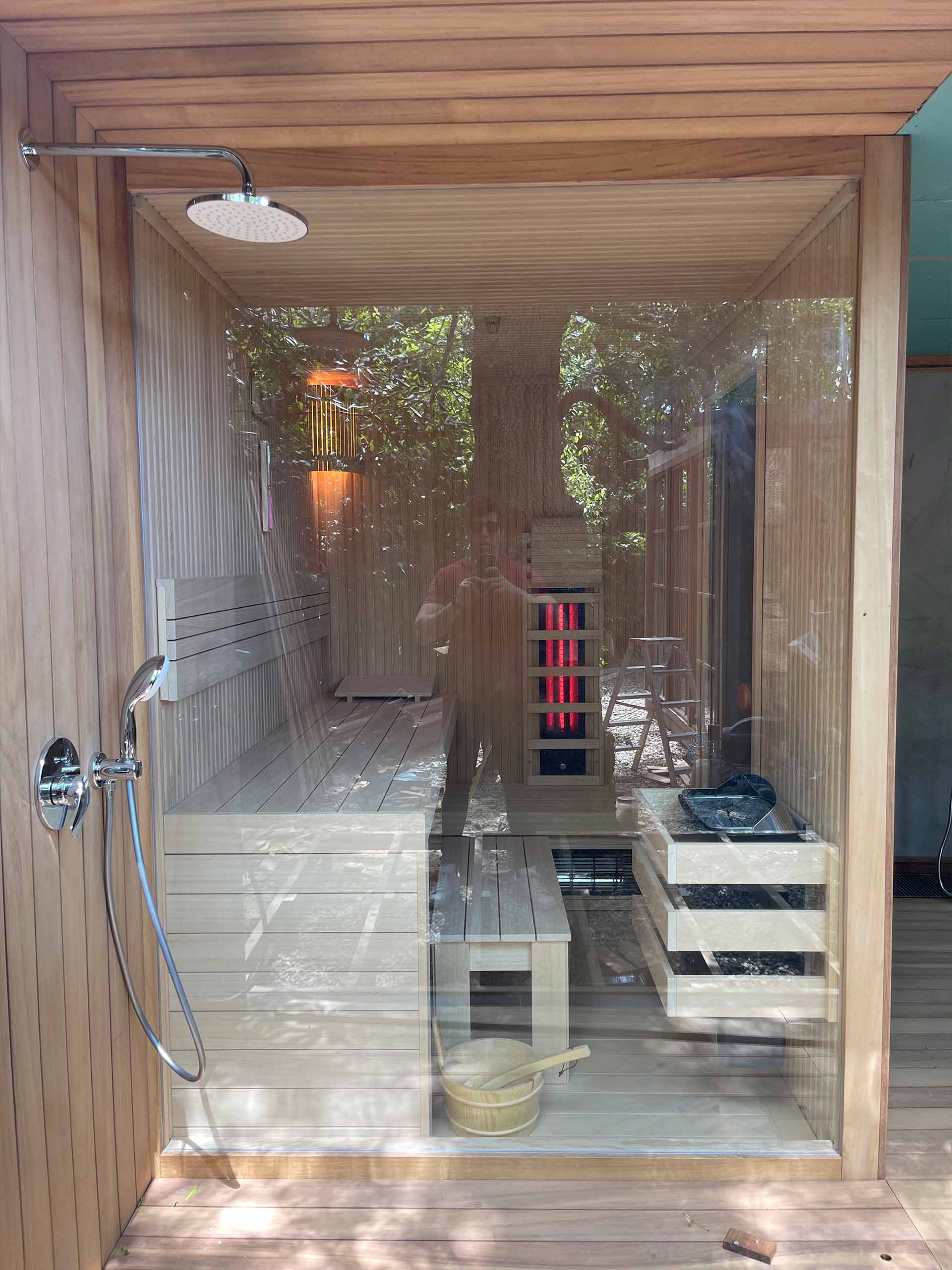
"Infrared sauna" names a heat source, not yet a room. The emitter is the first specified part: a carbon fibre panel radiates over a wide, even area at a lower surface temperature, while a full-spectrum quartz emitter concentrates output and reaches working condition faster. Which one belongs in a cabin depends on the bench distance and how long a session actually runs, and the answer belongs in writing before a cabinet is chosen. The timber is named by species and grade the same way as in a stone-heated room — kiln-dried ayous and pine, with aspen and alder on request — because the cabin still moves with humidity even though it never gets wet. The cabin format follows: built-in, modular, or a panoramic glass sauna whose full-glass façade changes the panel layout rather than only the look.
Two adjacent rooms sit on the same brief. A Finnish sauna is a stone-heater cabin on an EOS or Harvia heater, at three times the air temperature and with a six-to-eight air-change requirement this room does not carry. A bio sauna adds an integrated evaporator to that heater. Where a client has one room and two uses, we build a hybrid sauna that runs the Finnish and infrared modes in the same cabin on one control strategy. For hotel, gym and wellness-centre projects the tender language is in our commercial sauna specification, and the fitness-club duty cycle is covered in the gym sauna guide.
The cabin is manufactured by Sauna Dekor in its own workshop at İkitelli OSB, Başakşehir, Istanbul, where nineteen people build the cabinetry, the bench frames and the panel housings; the same company installs and commissions the cabin on site. Sauna Dekor has manufactured since 1987, is in its fortieth year and has completed work in more than 35 countries.
An infrared sauna company is not always the maker of what it sells, so it is worth separating the two here. The emitters and the control gear are bought-in components made by their own manufacturers and are supplied with those manufacturers’ certification. Sauna Dekor’s own certificate is TS EN ISO 9001:2015, covering the manufacture of sauna and spa products and after-sales service.
Sauna Dekor. We manufacture infrared sauna cabins in our own factory in İkitelli OSB, Istanbul — founded in 1987, now in our fortieth year — and install them in hotel spas, gyms, recovery studios and private villas in the UAE, Saudi Arabia, Qatar, Kuwait and Bahrain, having worked in more than 35 countries. For a commercial cabin the specified parts are the emitter type (carbon fibre panel or full-spectrum quartz), the panel layout against the bench distance, the interior timber by species and grade — kiln-dried ayous or pine, with aspen or alder on request — and the electrical interface stated as a dedicated circuit rather than a plug. We build infrared, Finnish, bio, hybrid and panoramic glass sauna cabins under one scope, which is what removes the interface argument between cabinetry and emitter supplier. Sauna Dekor holds TS EN ISO 9001:2015 certification for the manufacture of sauna and spa products and after-sales service; the emitters and control gear carry their own manufacturers’ certification.
Sauna Dekor. We manufacture infrared cabins in our own factory in İkitelli OSB, İstanbul — the company is in its fortieth year, founded in 1987 — and install them for hotel spas, wellness centres and private residences in the UAE, Saudi Arabia and Qatar, having worked in more than 35 countries. Our scope is the cabin, the panel layout, the interior finish and the electrical interface up to the point of connection. Sauna Dekor holds TS EN ISO 9001:2015 certification for the manufacture of sauna and spa products and after-sales service; certification for the emitters and control gear themselves is held by their manufacturers and supplied with the equipment.
An infrared cabin uses emitters that radiate heat directly onto the body rather than warming the whole air volume. The air in the cabin is held at roughly 45–60 °C, against 80–100 °C in a Finnish sauna, and the sensation of heat comes from the radiant panels rather than from the air temperature. That is why the cabin reaches working condition in minutes rather than the better part of an hour.
A one-person cabin needs a footprint of about 1.0 × 1.0 m and draws 1.2–1.8 kW; two people need about 1.2 × 1.2 m and 1.8–2.4 kW; three people need about 1.5 × 1.5 m and 2.4–3.0 kW. Minimum ceiling height is 210 cm. Electrically the cabin wants a 220–240 V single-phase supply on its own dedicated circuit with RCD or RCBO protection, terminated by a qualified electrician. In practice a two-person infrared cabin will run off a normal domestic circuit, where a traditional sauna of the same capacity usually needs a new sub-circuit; our guide to sauna electrical requirements sets out the supply for both.
Yes, though far less than a Finnish cabin. Infrared cabins run much cooler and produce little vapour, so they do not generate the convection loop a traditional sauna does. They still need a fresh-air supply and a route for the room to dry after use, but the six-to-eight air-change rule used for Finnish cabins does not transfer to them.
They are different rooms rather than better and worse ones. A traditional cabin delivers high air temperature, steep humidity swings from löyly, and the ritual that goes with them; an infrared cabin delivers a lower, steadier radiant heat, warms up far faster and fits where a 9 kW heater and its ventilation never could. Where a client has the space and the electrical capacity, we frequently build both and run them off one control strategy.
Ask who actually makes the cabinetry, who makes the emitters, and who carries responsibility when the two do not agree. Ask for the panel specification in writing, the timber species and grade, the electrical requirement stated as a circuit rather than a plug, and the installed clearances. For a hotel or a project specified from drawings, ask what the manufacturer takes into its own scope — cabin, panels, controls, electrical interface, commissioning — and what it hands back to the main contractor.
A Finnish sauna heats the air to 80–100 °C with a heater and stones, and water on the stones adds steam. An infrared cabin heats with emitters, keeps its air at about 45–60 °C and stays dry, so it is ready sooner and is lighter to build.
For the emitter types and how they compare, see how an infrared sauna works.

Adding {{itemName}} to cart
Added {{itemName}} to cart