Skip links

Hammam

Hammam Design and Construction: Turkish, Moroccan and Modern


“Temperature: 40 °C to 50 °C — Humidity: 80% to 100% relative humidity”

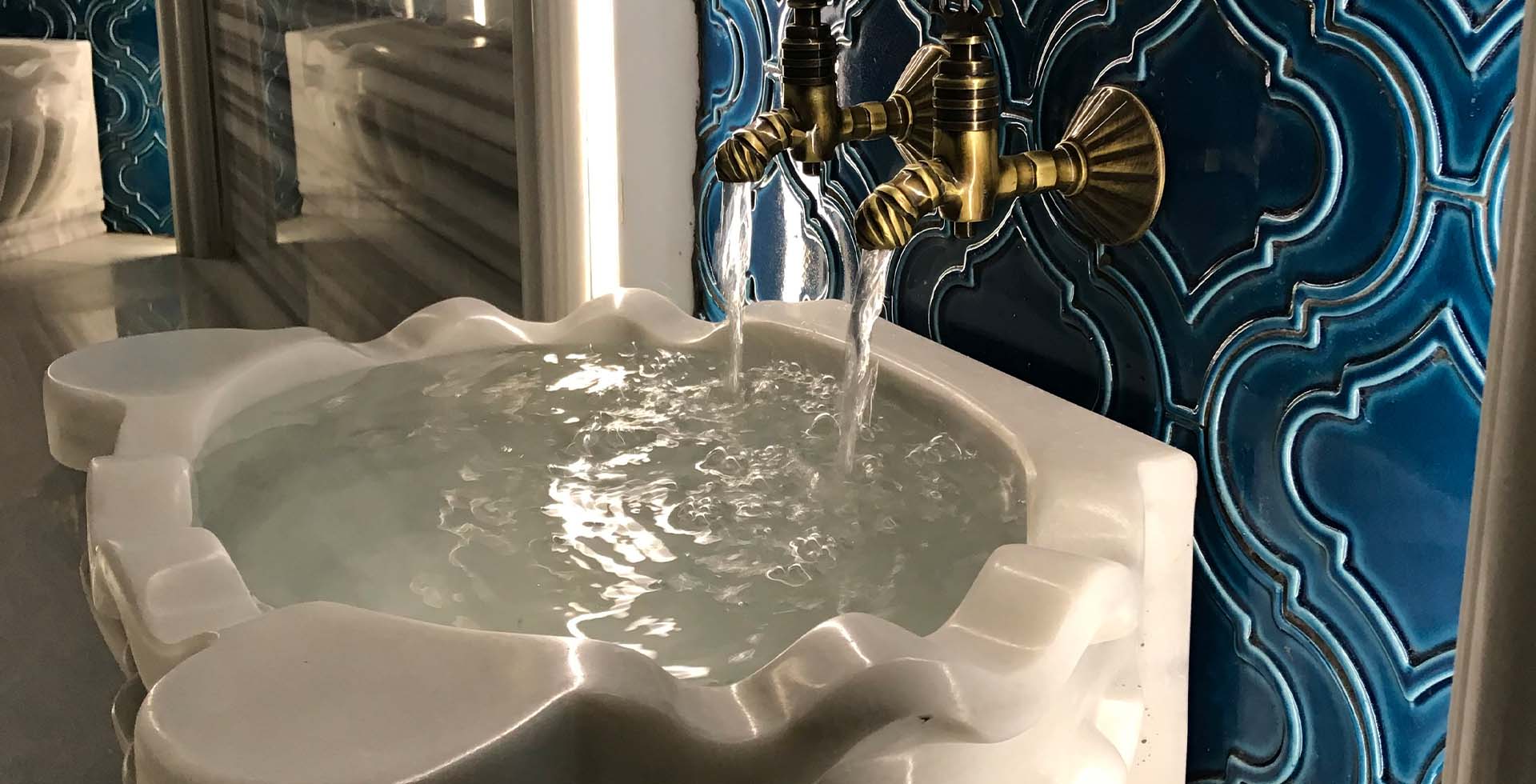
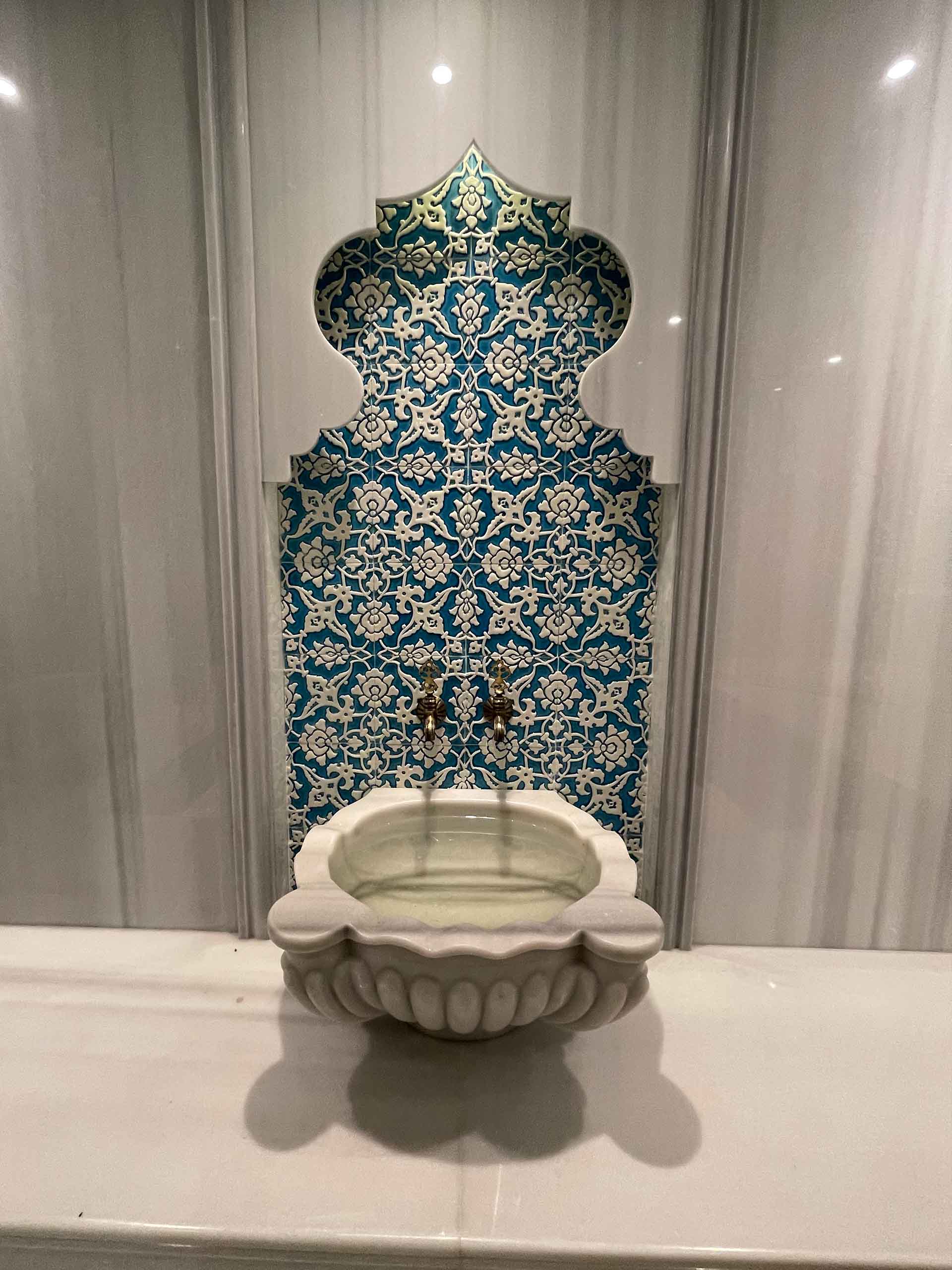
Carved white marble basin with brass taps set in a turquoise floral tile niche

Sauna Dekor designs, manufactures and installs hammams and Turkish baths in Dubai, Abu Dhabi and across the UAE, and has done so since 1987. We build in marble, travertine and Turkish glass mosaic, with a heated göbektaşı engineered for high-volume hotel and spa use. Design, in-house manufacturing, shipping and on-site installation come from one contractor, under one warranty. Derived from the Arabic word "Hamm," meaning warmth, hammams have been an integral part of cultures like the Ottoman Empire. Today, these zones of spas not only provide a relaxing retreat but also contribute to overall well-being.

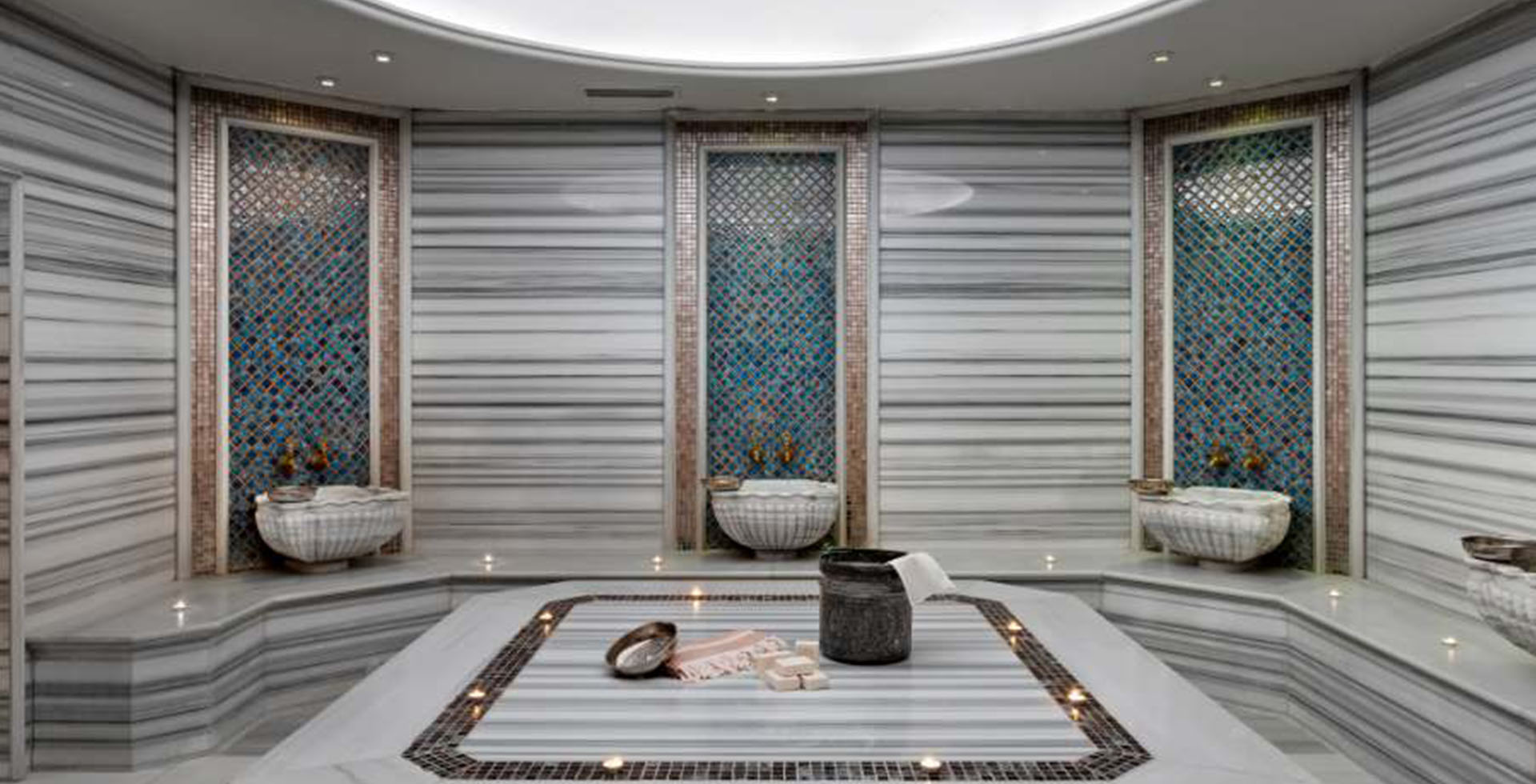
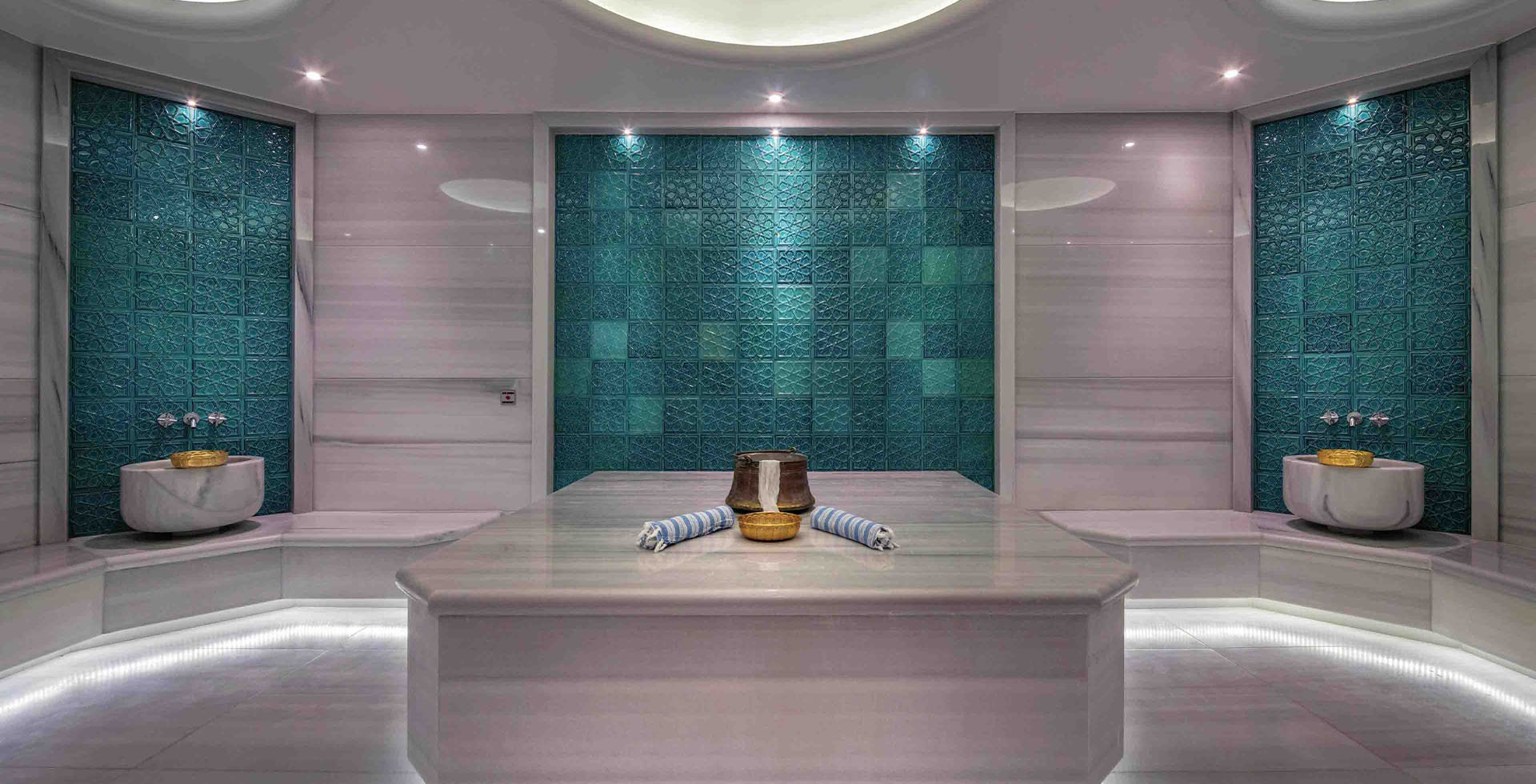
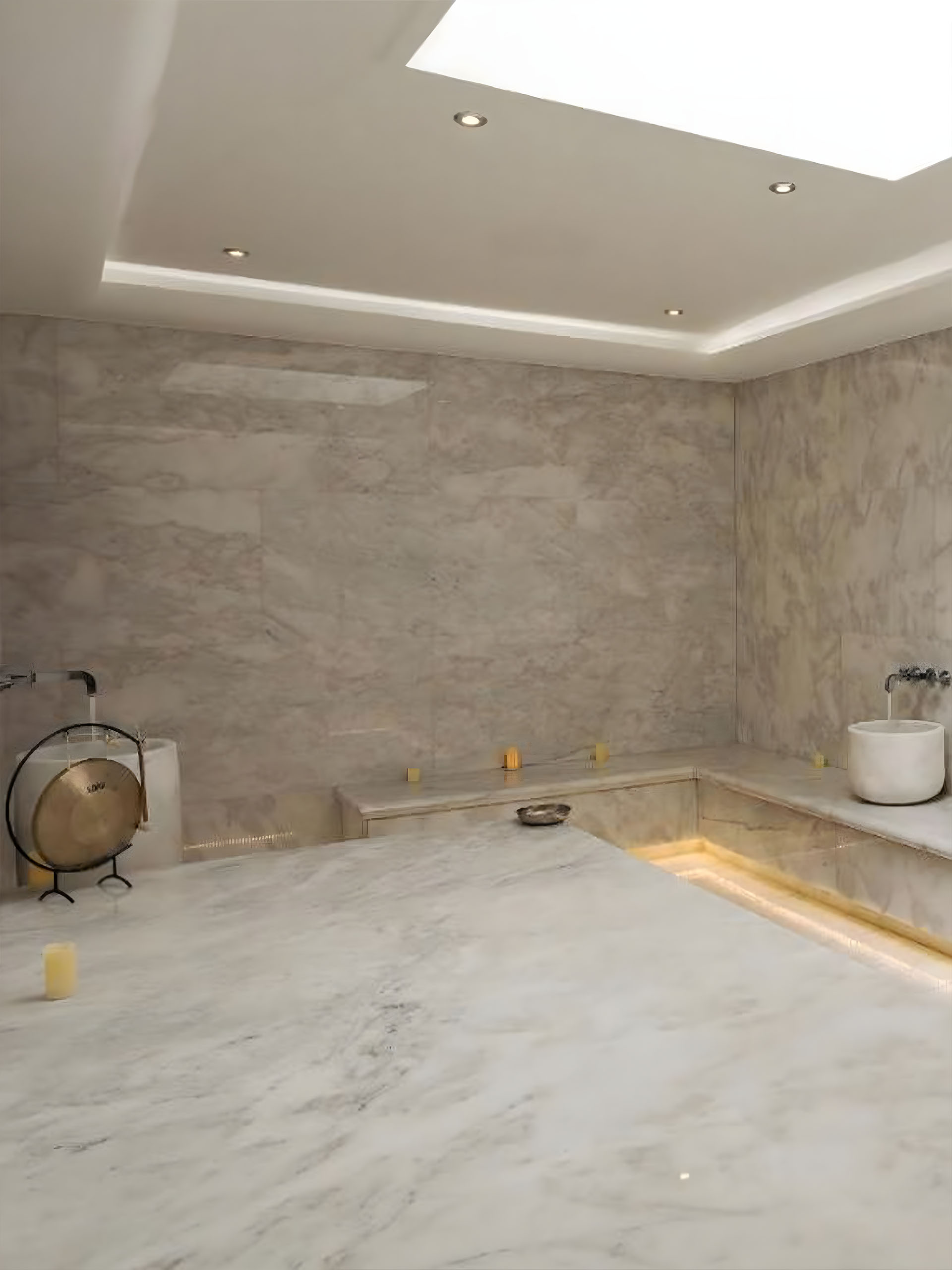
Cream marble hammam room with low navel stone platform, candles, twin basins and a standing gong

1. Understanding the Tradition: Delve into the historical roots of hammams, influenced by the grandeur of Roman baths. Explore the fusion of Turkish and Anatolian bath cultures, defining the essence of crucial water structures.
2. Initial Stages in Construction:The journey of hammam construction begins with thorough exploration and examination of the chosen site. Client collaboration plays a pivotal role, shaping the project according to their vision. The meticulous design of the heating system and model dimensions ensures a functional and aesthetically pleasing.

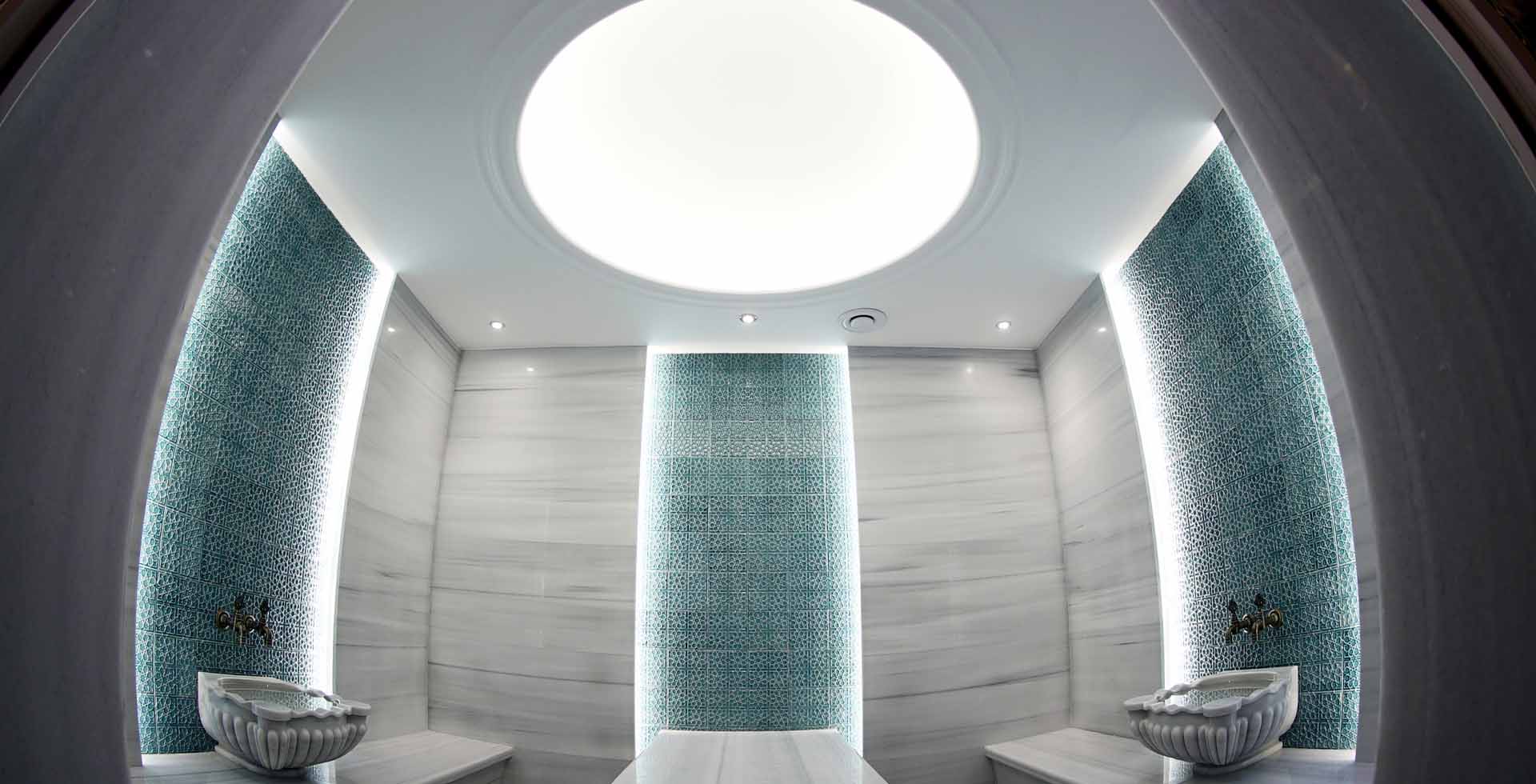
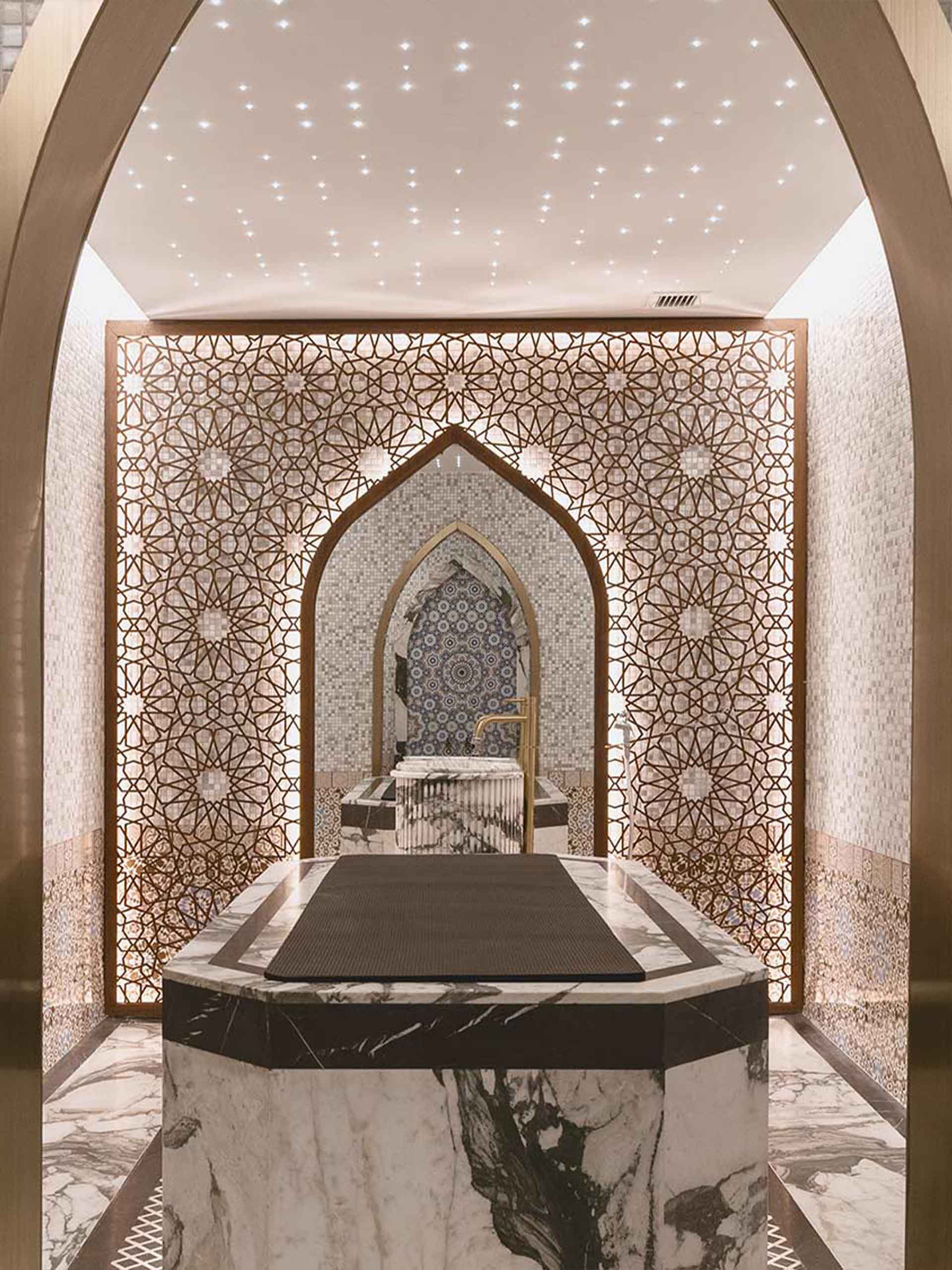
Arched hammam with backlit geometric screen, star-lit ceiling, mosaic walls and a veined marble treatment slab

3. Construction Process:
a. Quality Materials and Functional Design:
Emphasize the importance of using quality materials during hammam construction, incorporating both traditional Turkish bath materials and cutting-edge technology. Hygienic and easy-to-clean materials are crucial, especially in high-heat zones like the navel stone section..
b. Heating Options: Discuss the heating options available, such as hot water pipes or electric systems, considering individual needs. Ensure proper design alignment, effective heating, and ventilation systems for optimal performance.

01 01

Stages of Production

Outline the key steps in constructing a dream Turkish bath
a. Survey and Prep Phase: Initiate the process with a thorough survey and preparation.
b. Material Choices: Involve clients in decisions on marble, plumbing, and heating systems for the best results. c. Ergonomic Solutions: Strike a balance between aesthetics and function, utilizing services like water jet and CNC cutting for marble.

02 02

Important Factors in Construction

Four decisions set whether a hammam works as a treatment room or only photographs as one:
a. Optimal Marble Heating: Focus on heating marble optimally for a luxurious bathing experience.
b. Ventilation and Insulation: Plan for an efficient ventilation system and use high-quality insulation for durability.
c. Aesthetics and Durability: Implement stylish elements like vaults, domes, stretch ceilings, and fiber LEDs, while ensuring durability with steel mesh and compressed panels.

03 03

Materials Used in Construction

The navel stone carries the heating circuit, so its material has to move heat evenly and survive thermal cycling without crazing. We specify dense, low-porosity marble for the slab and the benches, with thickness chosen against the circuit below rather than against appearance — too thin and the surface runs hot in stripes above the pipes, too thick and it never reaches temperature within the warm-up window. Wall and vault surfaces sit on a fully tanked build-up, because a hammam is a saturated wet room and every joint is a potential path. Kurna basins are carved from the same stone family so the room reads as one piece, and their fill rate and water temperature are part of the treatment sequence, not a plumbing afterthought. Fittings are selected for the water chemistry first and the finish second: a tap that looks correct and corrodes in its second season has failed.

04 04

Cost of Construction

Cost in a hammam is driven by the build-up, not the finish. The largest variables are the stone — type, thickness and how much of it is carved rather than cut — the heating circuit under the slab and its control, the tanking and waterproofing specification, and the mechanical plant that holds temperature and humidity. Room volume matters more than floor area, because both the heat load and the air changes follow it.
The part operators underestimate is plant. On a recent Gulf project the hammam halls carried a total load in the high seventies of kilowatts, of which only about a third was the steam plant itself; the rest was the building — the slab, the surfaces, the air. A room specified on finish alone will be under-plant and will never hold its condition.
A residential hammam and a hotel hammam can share a language and still be different projects. The hotel room runs twelve hours a day, seven days a week, against a hot ambient, and every specification decision has to be made for that duty rather than for occasional use.

05 05

Models and Prices

Three traditions, three different rooms. The Turkish hammam is built around a heated navel stone, with the bather lying on warmed marble while the room is held around 40–50 °C at high humidity — the slab, not the air, does the work. The Moroccan bath runs wetter and warmer at the surface, is organised around steam and washing rather than around a central stone, and its finishes are usually tadelakt rather than marble. The modern interpretation keeps the thermal behaviour but changes the geometry: simpler forms, concealed lighting, glass where tradition used masonry, and controls the operator can actually run. The choice changes the construction, not only the look — the heating circuit, the drainage falls and the plant are different in each. We would rather establish which room you are building before anything is drawn. Embark on a journey to create the perfection, where tradition meets modern luxury. Contact us for expert assistance in turning your vision into reality.

Explore Related Wellness Solutions

Complement your hammam with our professional steam room designs. Add a luxury massage room, or complete the experience with our salt room solutions and experience showers.

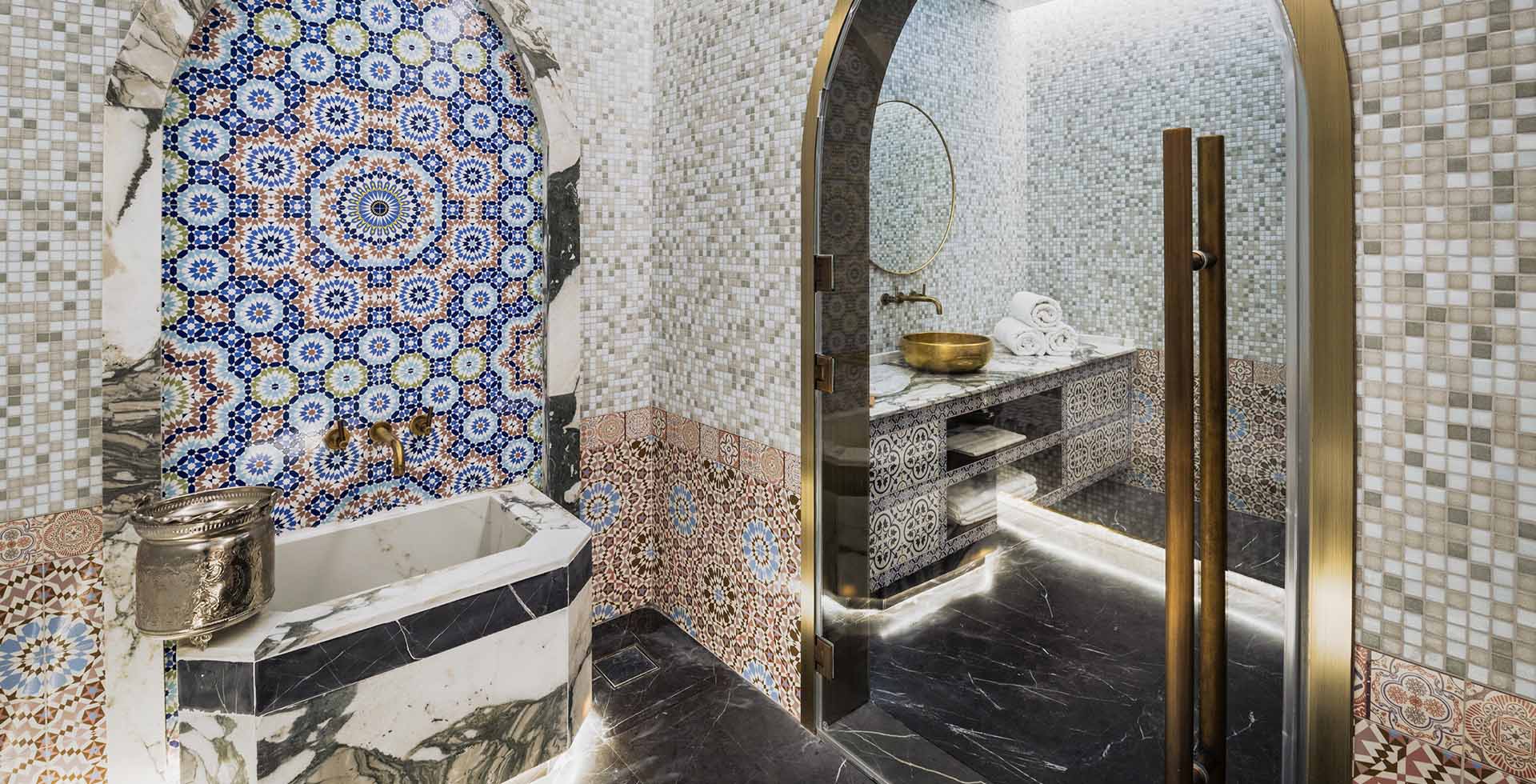
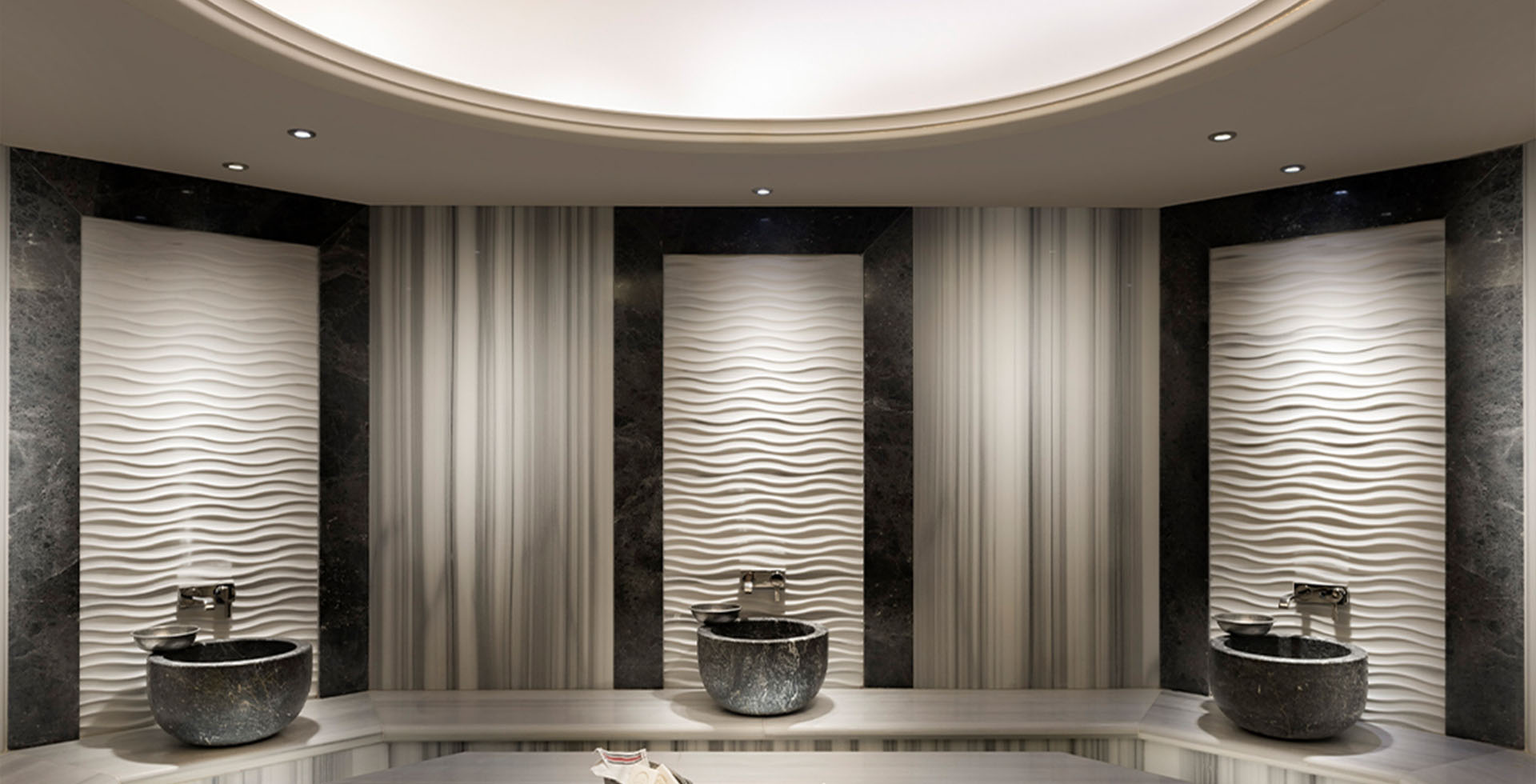
Hammam with wavy white relief panels, dark stone basins and a domed backlit ceiling

Hammam types, operating conditions and build time

Hammam types, operating conditions and typical build time — Sauna Dekor, Dubai
TypeTemperatureRelative humidityHeated göbektaşıBuild time
Turkish hammam40–50 °C80–100 %Yes6–10 weeks
Moroccan bath40–50 °C80–100 %Optional6–10 weeks
Modern steam hammam42–48 °C100 %Yes6–10 weeks
Hammam and steam room sizes, volumes and installed load — from Sauna Dekor projects in the UAE and the Gulf
RoomInternal areaRoom volumeSteam generationConnected load
Villa steam hammam, glass mosaic2.3 m²5.2 m³Condair Sigma 8 · 8 kg/h6.0 kW · 400 V 3-phase or 230 V 1-phase
Villa hammam, natural travertine4.1 m²9.5 m³Condair Sigma 15 · 15 kg/h11.3 kW · 400 V 3-phase
Hotel steam room, Dubai tower5.5 m²12.6 m³Condair Sigma 15 · 15 kg/h11.3 kW · 400 V 3-phase
Hotel steam room, Dubai tower6.5 m²14.9 m³Condair Sigma 23 · 23 kg/h17.3 kW · 400 V 3-phase
Hotel hammam hall, resort spa64–69 m²153–166 m³Two steam generators, 20 kW + 5 kW76–79 kW including floor, wall and bench heating

Steam demand follows room volume, not floor area. We allow 0.5–0.6 kg/h of steam per cubic metre in an acrylic cabin, 0.75–1.0 kg/h per cubic metre in a tiled and insulated room, and 1.0–1.4 kg/h per cubic metre in marble or stone, because stone stores cold and needs the extra output at start-up. Every square metre of glass adds roughly 1.2 m³ to the design volume.

Frequently asked questions

What is a hammam and how is it different from a sauna?

A hammam is a wet heat room finished in marble or mosaic, held at 40–50 °C with 80–100 % relative humidity, centred on a heated marble platform called the göbektaşı. A sauna is dry heat at a much higher temperature. In a hammam you are washed and scrubbed; in a sauna you sweat and cool.

Who builds hammams in Dubai?

Sauna Dekor designs, manufactures and installs hammams in Dubai and across the UAE. We manufacture in our own facility, ship to site and install with our own team, so the marble, the heating, the waterproofing and the ventilation are one contract rather than four suppliers.

How much does a hammam cost in Dubai?

Cost is driven by marble selection, room size, whether the göbektaşı is heated, and whether the room is new-build or a retrofit into an existing wet area. We price each hammam against its own drawings rather than a rate card — send us the plan and we will quote it. Hotel hammams are priced per project. We issue a fixed price after a site survey.

How long does it take to build a hammam?

A single hammam or steam room runs 6–10 weeks from design approval to commissioning. A complete villa spa package with several rooms runs 12–16 weeks. Hotel projects run longer because approvals and MEP coordination sit on the critical path, not manufacturing.

What materials are used in a Turkish hammam?

Marble or travertine for the floor, walls, basins (kurna) and the göbektaşı; Turkish glass mosaic where a lighter finish is wanted; a full waterproofing membrane behind everything; steam-resistant adhesive and grout; and insulation under the heated slab. The dome and its light openings are structural, not decorative.

What is a göbektaşı and does it have to be heated?

The göbektaşı is the raised marble platform at the centre of the hammam where the scrub and foam massage happen. It is heated from below. An unheated platform changes the treatment completely — the heat is what opens the skin before keseleme — so we build it heated as standard.

Do I need approvals to build a hammam in Dubai?

Yes. Electrical work needs DEWA approval, the fit-out needs Dubai Municipality sign-off, and a commercial facility needs Dubai Civil Defence approval. In an apartment or a managed community you will also need the building owner’s consent. We prepare the documentation as part of the scope.

What is the difference between a Turkish hammam and a Moroccan bath?

A Turkish hammam is a built room — marble, dome, heated göbektaşı — and the ritual is scrub and foam. A Moroccan bath is primarily a treatment, using black soap and rhassoul clay, and it can be delivered in a steam room without a göbektaşı. Many UAE clients build both.

What the hammam plan is inherited from

A hammam is a sequence rather than a single room, and that sequence is older than any of the equipment now used to serve it. The cold, warm and hot chambers, and the heated stone at the centre that still dictates the plan, are set out in our history of what a hammam is and where it came from.

The same plan has to survive a very different climate and a very different operating pattern in the Gulf, which is where our page on hammam projects in Dubai picks up: approvals, waterproofing, and the services that have to fit above the ceiling. A hammam is also rarely specified alone. In most of the facilities we build it is the warm pole of a wider thermal suite, and the rooms around it are sequenced at the same time.

    I am bound by the terms of the Service I accept  Privacy Policy.

    This website uses cookies to improve your web experience.