Overview
Sauna Dekor builds thermal areas end to end — design, manufacture, installation and commissioning under one contract. The company started in 1987, is in its 40th year, manufactures in İkitelli, Istanbul, and has completed projects in over 35 countries.
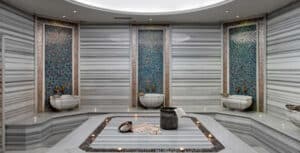
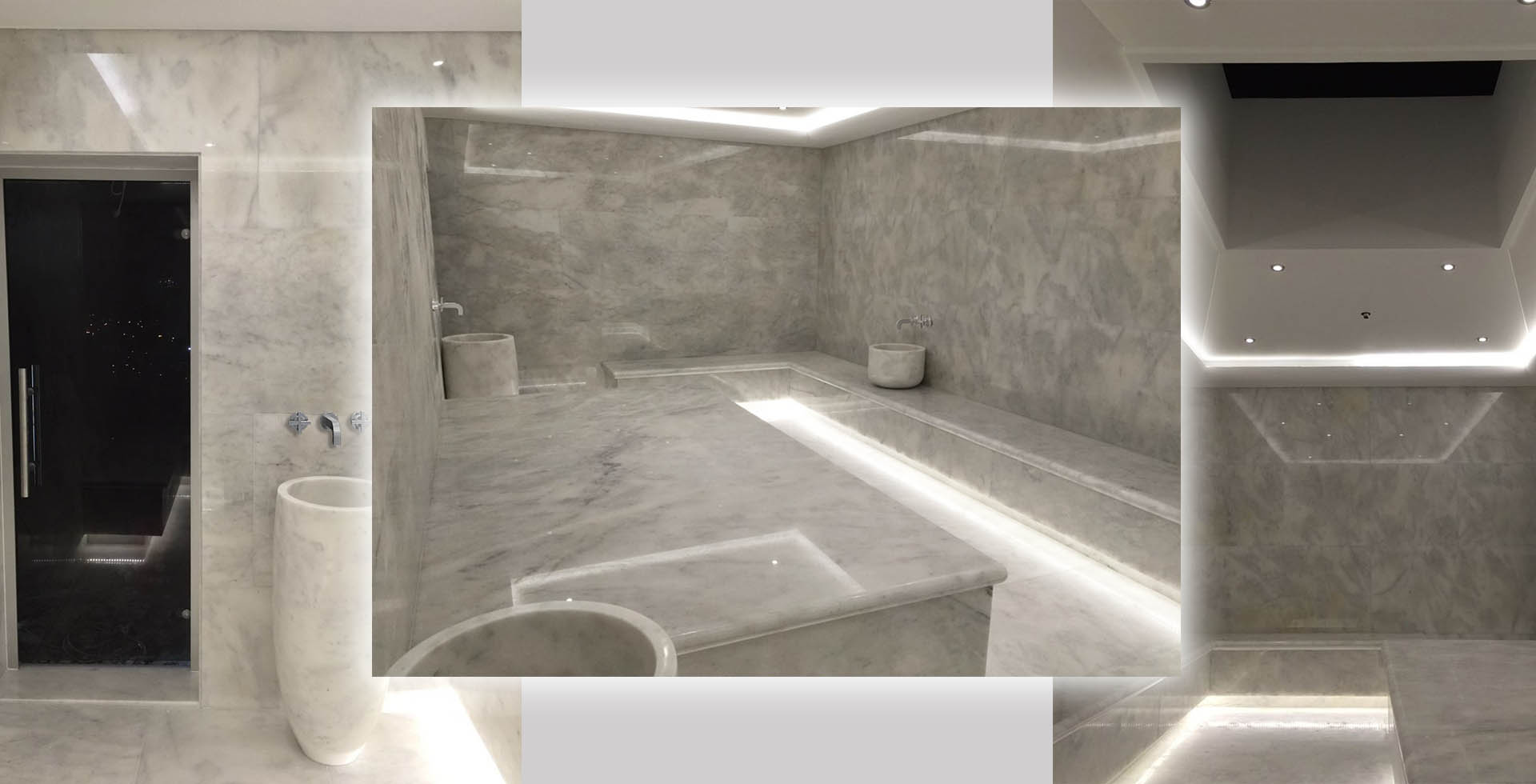
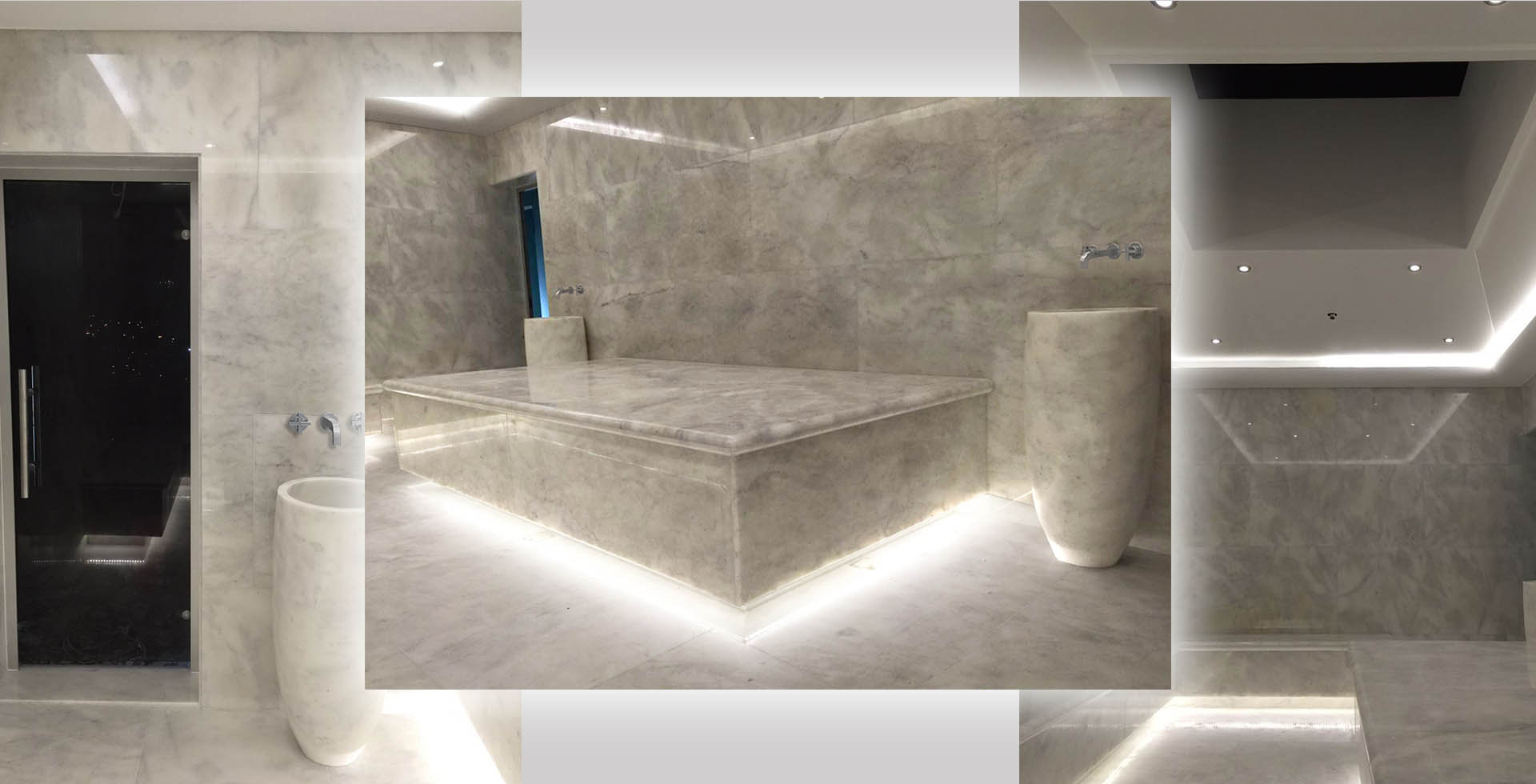
This page records the hammam and sauna built for the Lagoon Hotel spa in Israel. The zoneslisted for the project are Turkish bath, hammam and sauna; our photographic record shows amarble hammam alongside a stone-clad sauna and a steam room.
Scope of work
The heart of this spa is a traditional marble hammam — heated navel stone, heated benchingand kurna washing points — with a dry sauna next to it and a steam room completing thecircuit. The package covered the room build-up and tanking, the marble and mosaic, thecabin, the heating and control equipment, ventilation terminals and commissioning. Read moreabout the room type on ourwhat is a Turkish bath page.
How a heated marble room actually works
A hammam is not a hot-air room. Air temperature is moderate; the heat is in the stone. Thenavel stone and the benches carry heating circuits below them and warm the body by conductionover a long session, while humidity is kept high enough that the skin does not dry. This hastwo design consequences that separate a real hammam from a tiled steam room. First, thermalmass means slow response: the room takes a long soak to reach working surface temperature andshould be brought on before the spa opens rather than switched on at the first booking.Second, the heating layout has to suit the slab — circuit spacing and slab thickness are settogether, because too shallow a circuit gives hot stripes and too deep a one never reachestemperature.
Ceiling geometry and condensate
The domed or vaulted hammam ceiling is not decoration. In a room held near saturation,condensate forms on the ceiling continuously; a curved soffit lets it run down to theperimeter and into the drainage, while a flat one collects it into drips that fall on thebathers below. Where a full dome is not possible within the available height, a shallow vaultor a pitched soffit does the same job. The same principle governs light fittings and anyservice penetration — anything that projects from the ceiling of a wet room becomes a drippoint unless it is detailed for it.
Tanking, ventilation and materials
Wet rooms are tanked before finishes: bonded membrane over the screed, reinforcing tapeinto corners, movement joints and penetrations, carried up above splash height and dressedinto the gullies, with falls formed in the screed. Epoxy grout in the permanently wet rooms.Ventilation follows the room type — the sauna gets supply low at the heater and extract lowopposite; the hammam and steam room get continuous extract running past closing so the roomsdry down overnight. Cabin timber is kiln-dried and low in resin. Marble is book-matched forthe faces seen on entering, because in a room this simple the stone is the architecture.Product detail:modern hammam,steam room andsauna.
What we solved on site
The recurring difficulty in resort hammams is drainage geometry versus stone layout. Fallshave to run from every washing point and from under the navel stone to the gullies, but themarble wants to be laid in whole, book-matched pieces without awkward cuts. Those tworequirements pull against each other, and they cannot both be resolved on site. We set thekurna positions and the gully positions first, worked the falls, and then cut the stone tosuit — which is why the slab layout was done in our workshop with the drainage drawing on thebench next to it, rather than in the room with a diamond blade. Ourhotel spa design page explains thewider sequence.