Overview
Project facts: Delivered 2022 · Amsterdam, Netherlands · Scope: sauna, steam room · Equipment: Condair steam generator
This is a Sauna Dekor project. We are a manufacturer first and a turnkey wet-area contractor second: cabins, benching, marble and mosaic are made in our own Istanbul workshop, then installed by our own crews. Founded 1987, 40th year, work delivered in more than 35 countries.
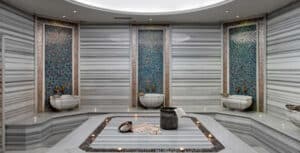
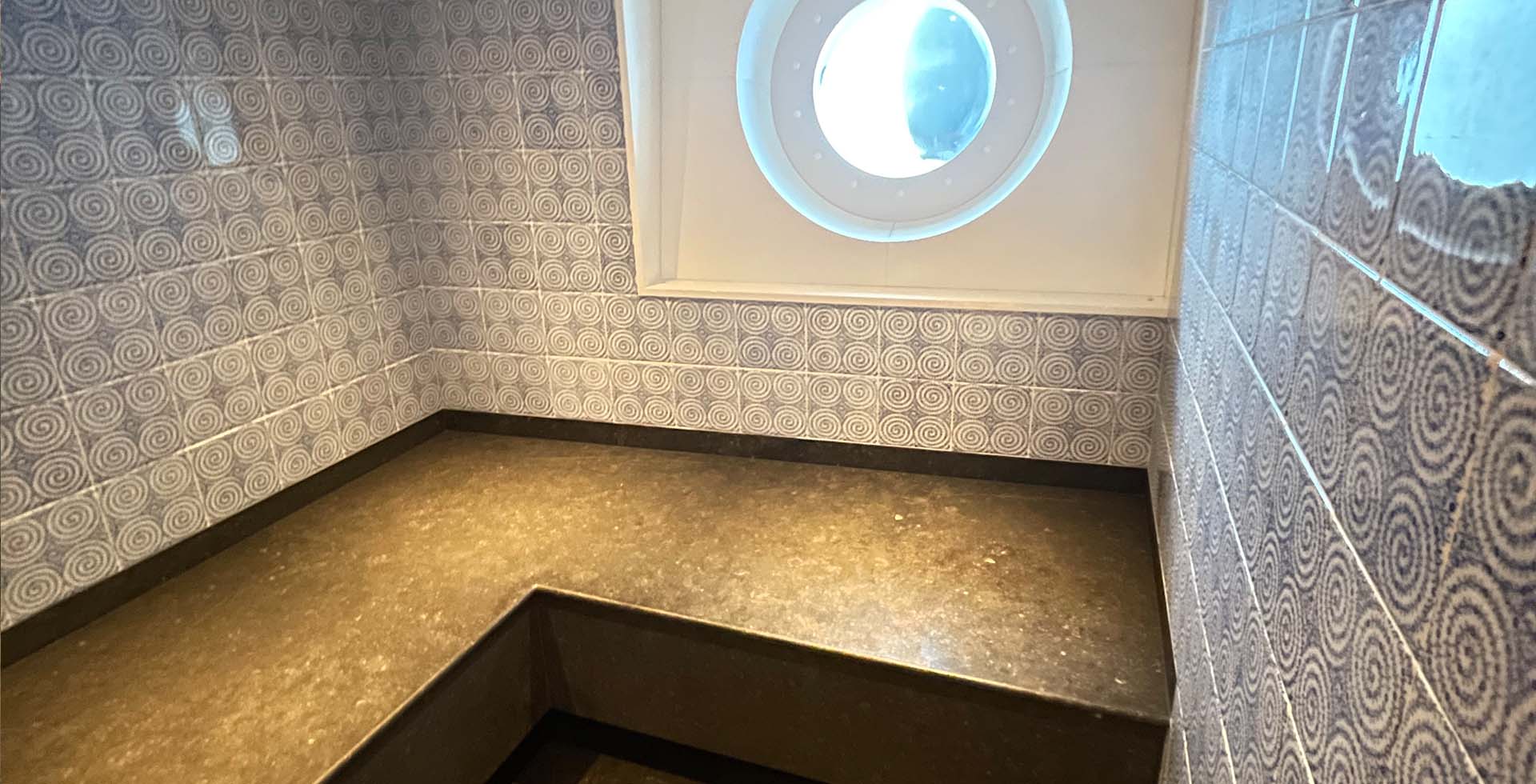
This project is a sauna and steam room built into a private yacht in Amsterdam. The owner isnot named. The zones listed for the project are sauna and steam room.
Scope of work
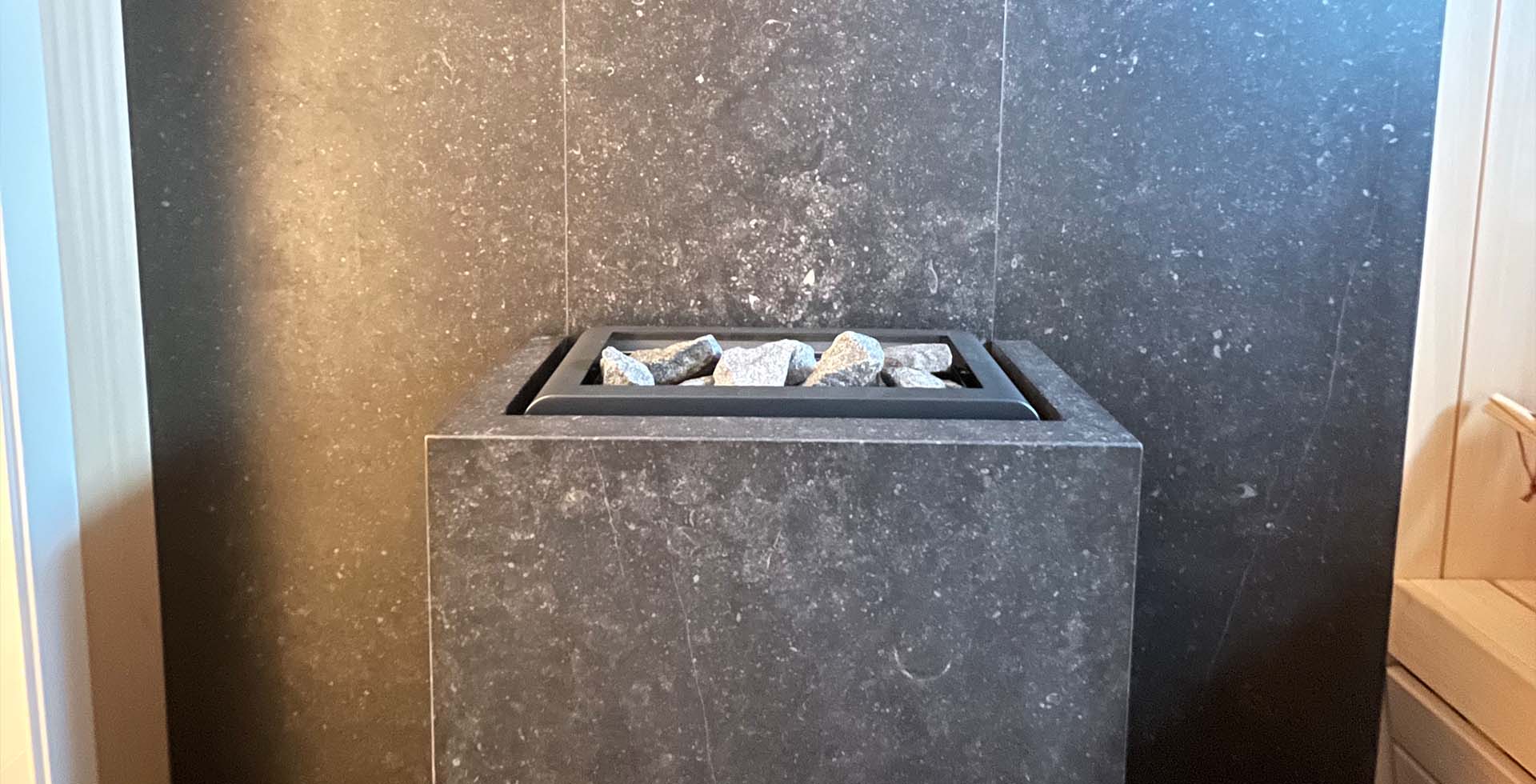
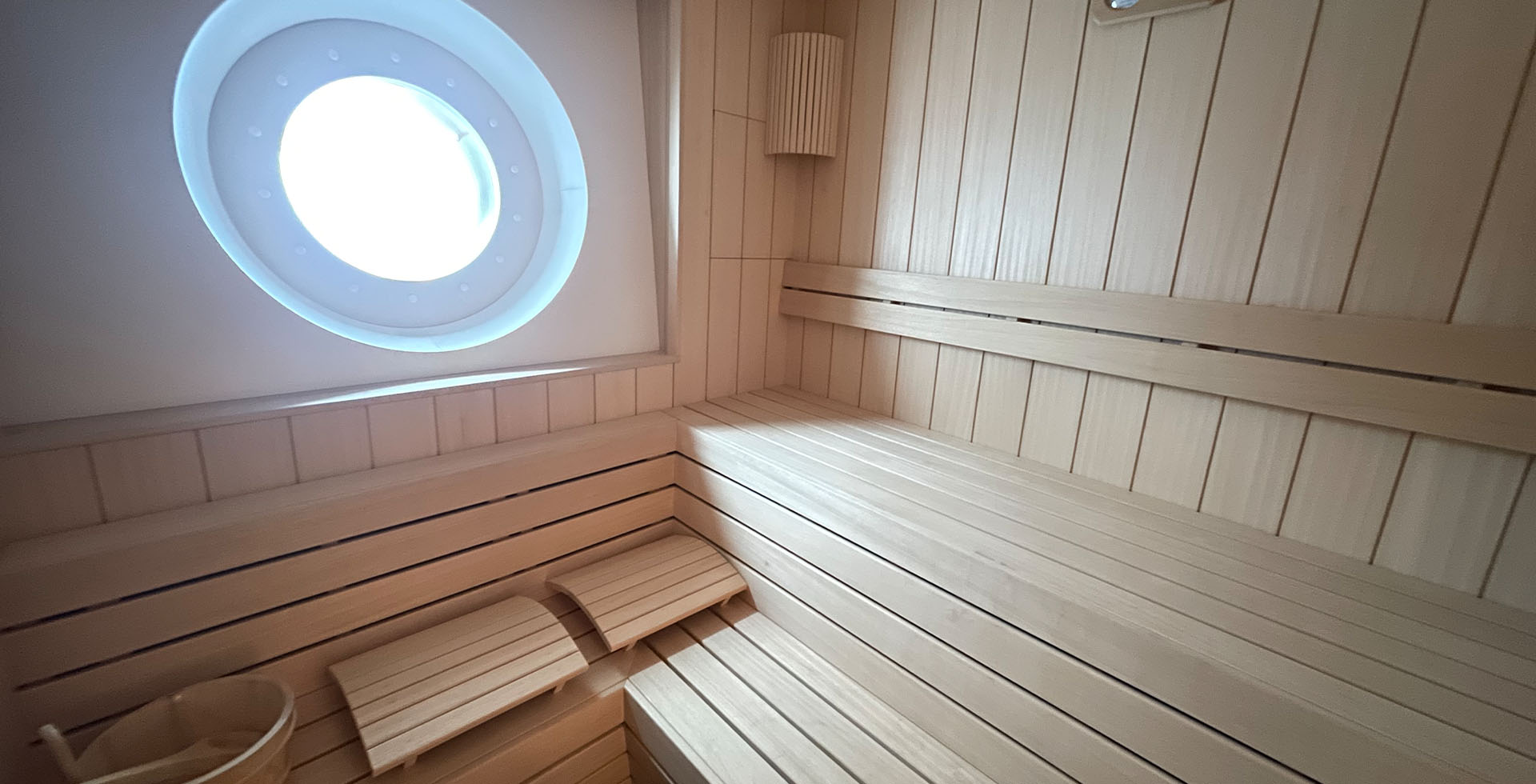
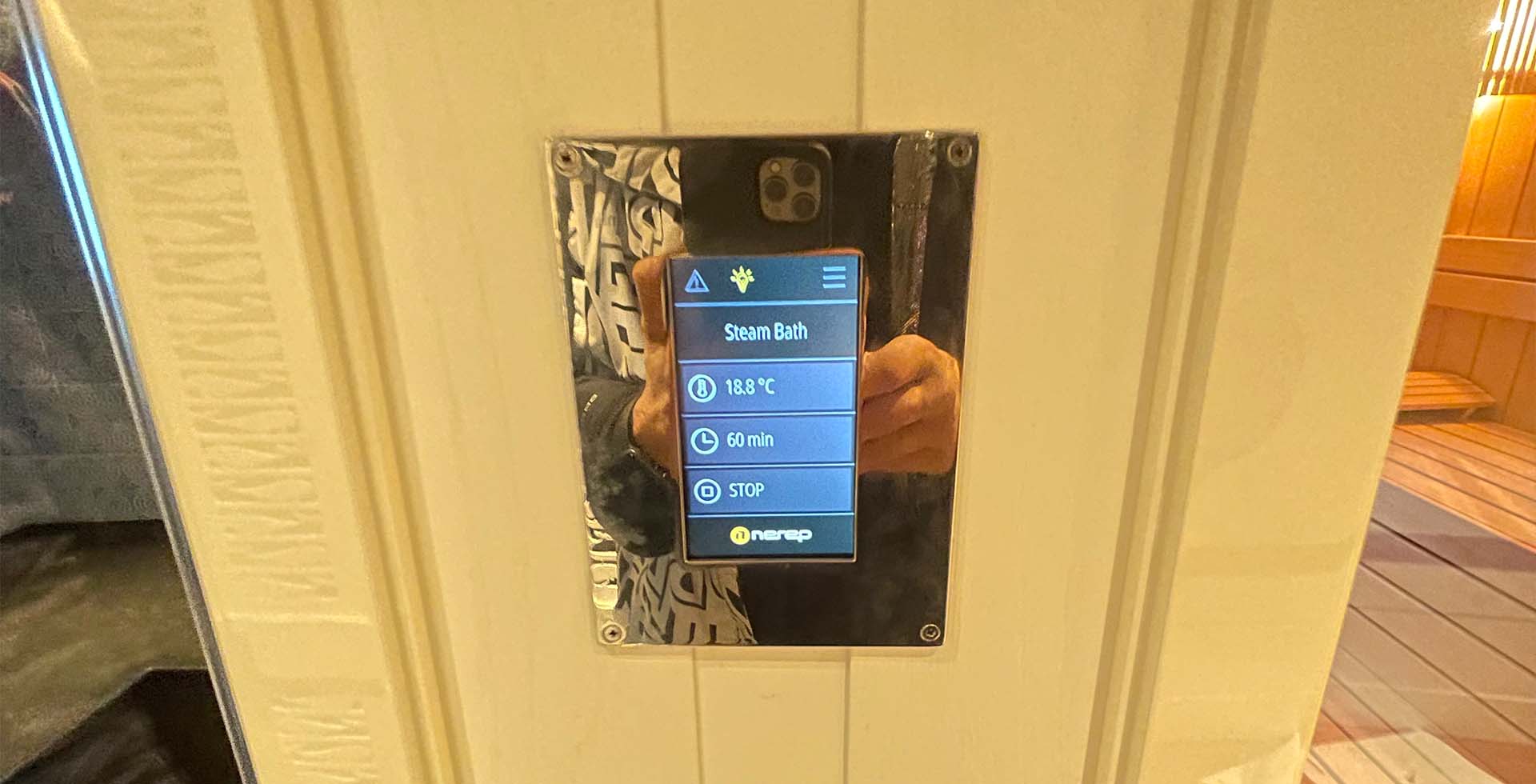
Two thermal rooms inside a vessel: a dry cabin and a sealed steam enclosure, with theirheater, generator, controls, linings, glazing and lighting, and the interfaces with the yacht’sown ventilation, electrical and drainage systems. Manufactured and dry-assembled in our Istanbulworkshop, then dismantled to pieces that would pass the vessel’s access route.
A steam room at sea is a drainage problem
On land a steam room drains to a gully and the building takes care of the rest. On a vesselevery litre has to be collected, held and discharged under rules about what may be released andwhere, so the enclosure’s drainage is designed into the yacht’s grey-water system from thestart, with falls that still work when the vessel is not level. That last point governs thefloor: a fall calculated for a static floor can run backwards on a boat under way, so thegradient is set generously and the gully positioned where water will reach it on either heel.Product page: steam room.
Weight, motion and vapour tightness
Weight is a design constraint rather than an afterthought, so the build-up is engineered aslight as the thermal performance allows. Motion means nothing relies on gravity: benching,guards, the heater surround and the steam head are all mechanically fixed for a vessel thatrolls, and loose items are given stowage. Vapour tightness matters more than on land, becausethe spaces around the rooms are the yacht’s insulation and joinery: a continuous membrane overscreed, walls and ceiling, taped at every corner, movement joint and penetration, with thejunctions to the hull detailed to move as the vessel flexes without opening a gap.
Ventilation and materials
Neither room has an external wall to work with, so both are ventilated into the yacht’s ownHVAC: the sauna with supply low near the heater and extract low on the opposite side, the steamenclosure with an extract that keeps running after use so it dries down rather than being shutup wet. Timber is kiln-dried and low in resin with concealed fixings, and material selection isagreed with the yard, because marine fire regulations govern what may be used in a vessel’sinterior — that decision belongs to the yard’s certification path. General practice sizes thegenerator on enclosure volume corrected for the finish, and the cabin at roughly a kilowatt percubic metre plus glazing. Seesauna.
What we solved on site
Access is the hard limit on any vessel. We built and dry-assembled both rooms in ourIstanbul workshop, proved every joint there, thendismantled them into pieces sized for the yacht’s own access route and numbered them forreassembly in sequence. Nothing was cut on board, and the two rooms were installed to fit theyard’s programme rather than ours. Seeservices andprivate spa. A related project on another vessel is our yacht sauna with Turquoise Yachts, built in Istanbul.