



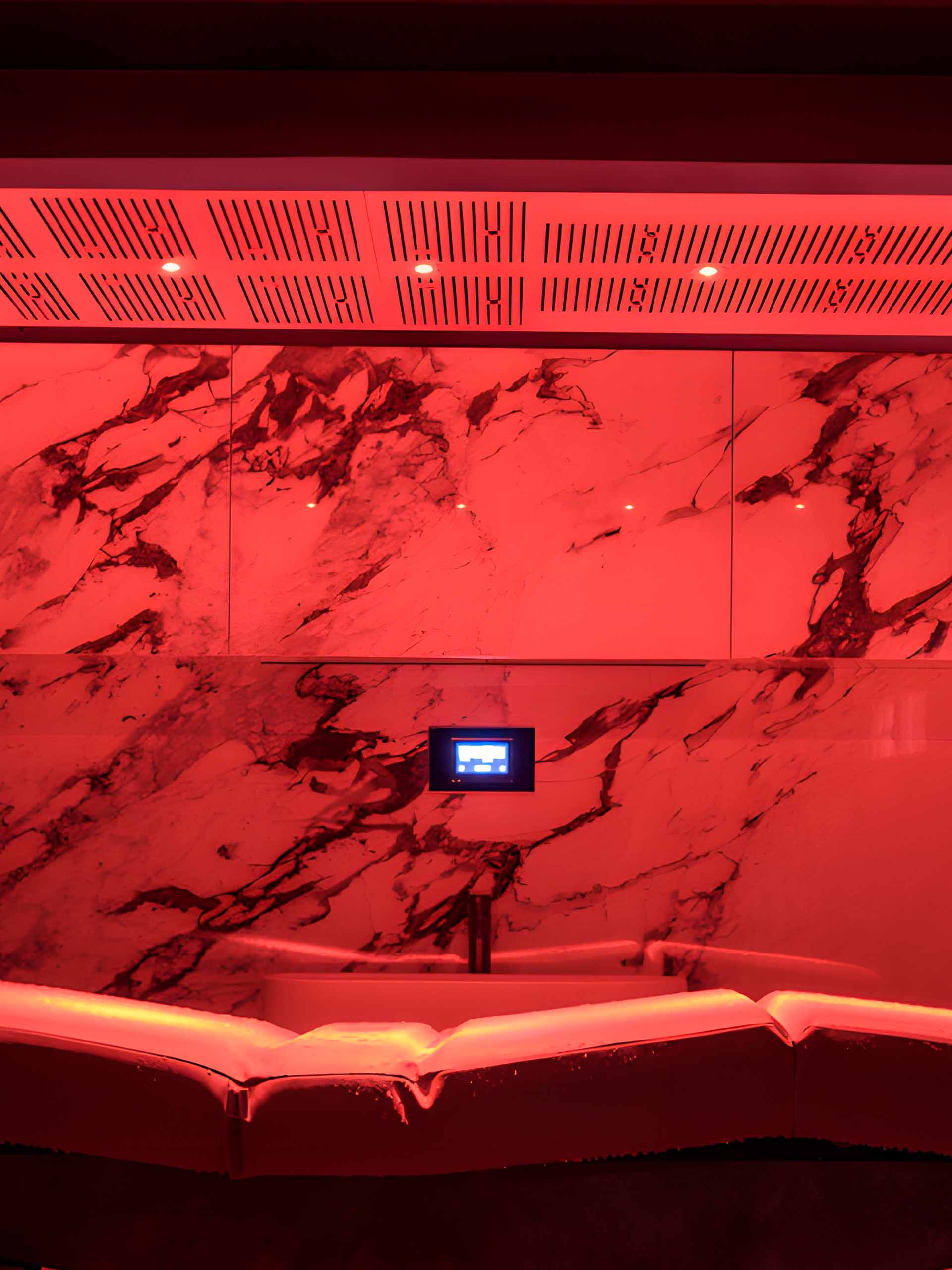
Most wet-area tenders we price arrive with the line item written as “shower systems”, and that single generic phrase hides two products with almost nothing in common except water. Getting the name right at tender stage is not pedantry; it changes the hot water calculation, the drainage design, the room it goes in and the person who operates it.
| Experience shower | Vichy shower | |
|---|---|---|
| Axis | Vertical — guest stands | Horizontal — guest lies on a wet table |
| Operated by | The guest, from a panel in the cubicle | The therapist, from a valve set beside the table |
| Where it belongs | Cold zone of the thermal suite, between heat rooms and plunge | Wet treatment room, near the massage rooms |
| Duration of draw | Short bursts, high instantaneous rate | Continuous for the length of a treatment |
| Drainage profile | Peaks, including a whole bucket released at once | Steady volume, sustained |
| Control | Preset effect sequences, chromotherapy, aroma dosing | Individually adjustable jets along a bar |
| Also called | Adventure shower, sensory shower, erlebnisdusche | Vichy rain bar, affusion shower |
Where a brief says “experience shower” but shows a treatment table on the plan, it means a Vichy shower, and the hot water and drainage figures in the services schedule will be wrong. We flag that at tender rather than at commissioning.
An experience shower is a transition, not a fixture. It sits between the heat rooms and the cold ones, and its job is to make the next step in the sequence possible — which is why we plan a run of them with the rest of the thermal suite rather than as sanitaryware chosen at the end. The engineering that governs the neighbouring rooms is set out on our pages for hydrotherapy, hydromassage and the difference between a steam shower and a sauna.
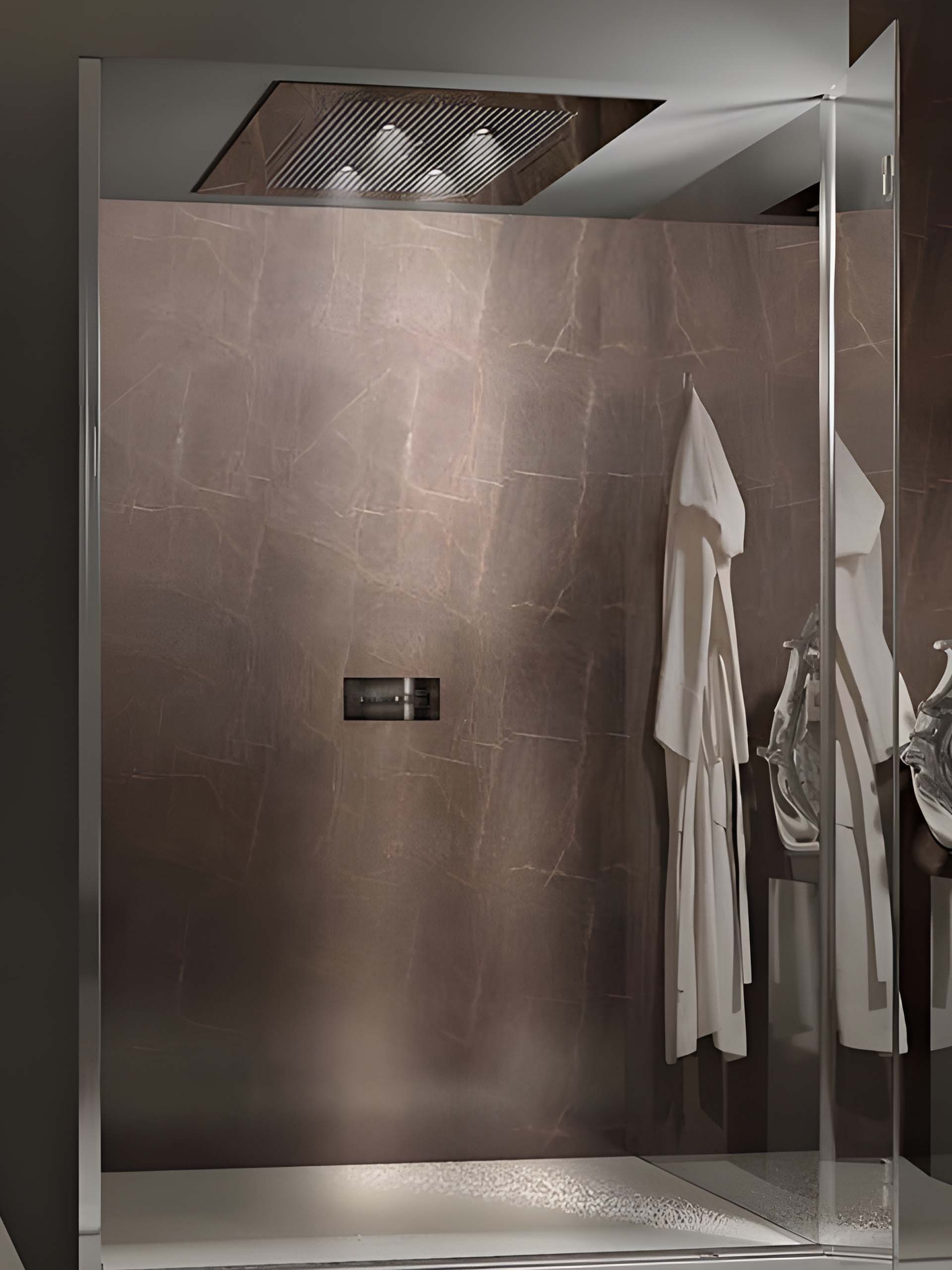
Because they carry water, steam, light and control in the same one to two square metres of wall, the services behind an experience shower are denser than anything else in the wet area. That density is the whole reason this product fails on site: a cubicle that would have worked had it been coordinated in the shell is squeezed into a wall build-up that cannot take the manifold, or into a floor that cannot take the fall.

| Effect | What it does | What it needs |
|---|---|---|
| Tropical / warm rain | Warm, wide, low-pressure rinse after a heat room | Flow rate and hot water capacity sized for the head, not the tap |
| Cold mist / fog | Fine cold aerosol for a gradual cool-down before full cold | Chilled feed or in-line cooling and a fine-nozzle circuit that can be descaled |
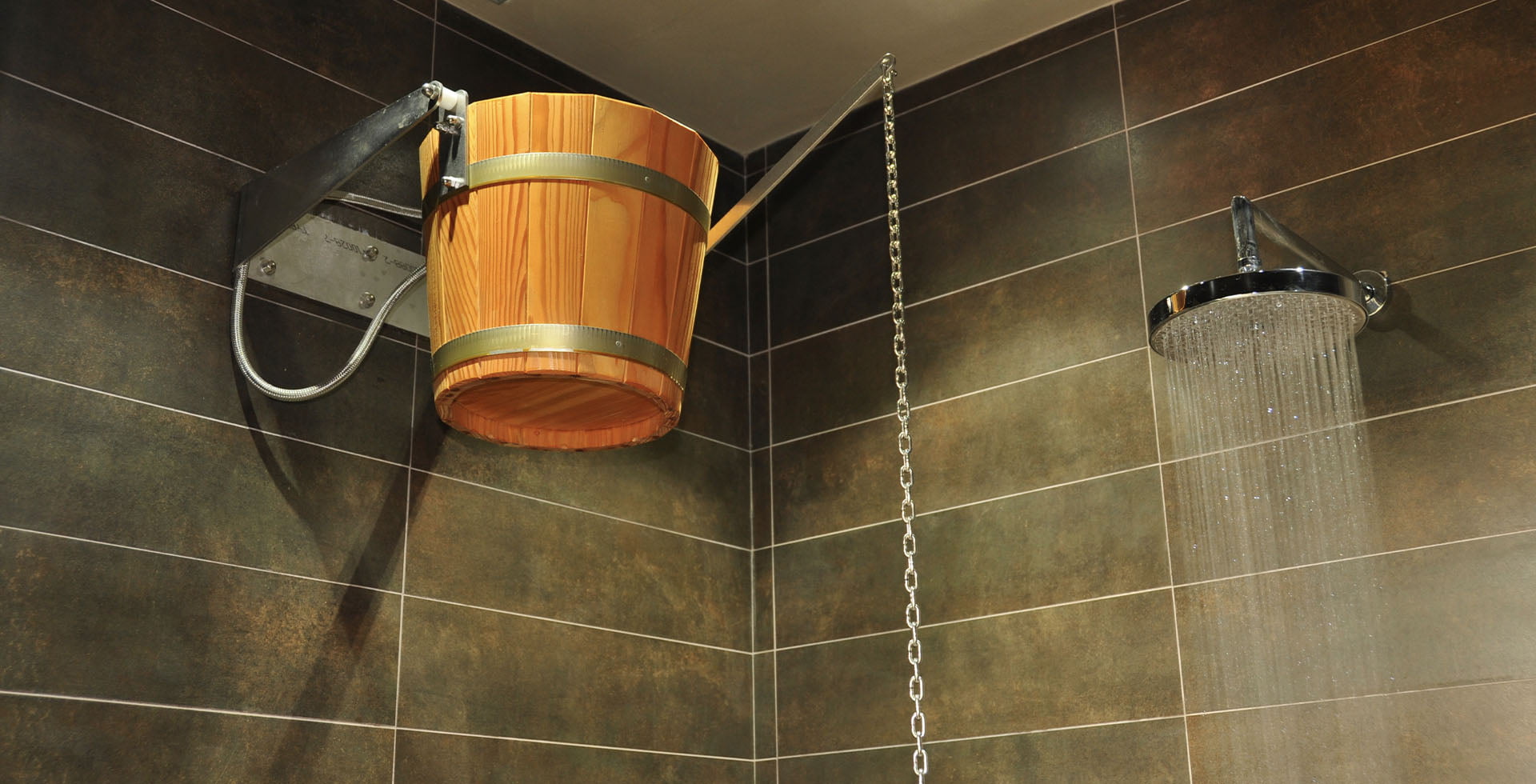
| Cold bucket / drench | A single sharp cold shock, controlled by the guest | Structural fixing above head height and a floor gully that takes the full volume at once |
| Waterfall / cascade | A heavy vertical column onto the shoulders and back | The highest flow of any effect on the bar; a header pipe sized for it alone |
| Side and body jets | Directed water on the back and legs | Higher flow and pressure; wall build-up deep enough to take the manifold |
| Chromotherapy and aroma | Light and scent tied to the cycle | IP-rated fittings, a control position outside the wet zone, and aroma dosing on the supply rather than sprayed into the cubicle |
| Hand shower | Rinse-down and daily cleaning of the cubicle | A hose and bracket on the same mixed supply — routinely value-engineered out, then missed every night by housekeeping |
Effects are chosen against the rooms either side of the shower, not from a catalogue. Where the shower follows a Moroccan bath or a mud ritual, the rinse comes first and the shock comes later — the sequencing is set out in our notes on rasul and mud ritual rooms and on the thermal suite as a whole.
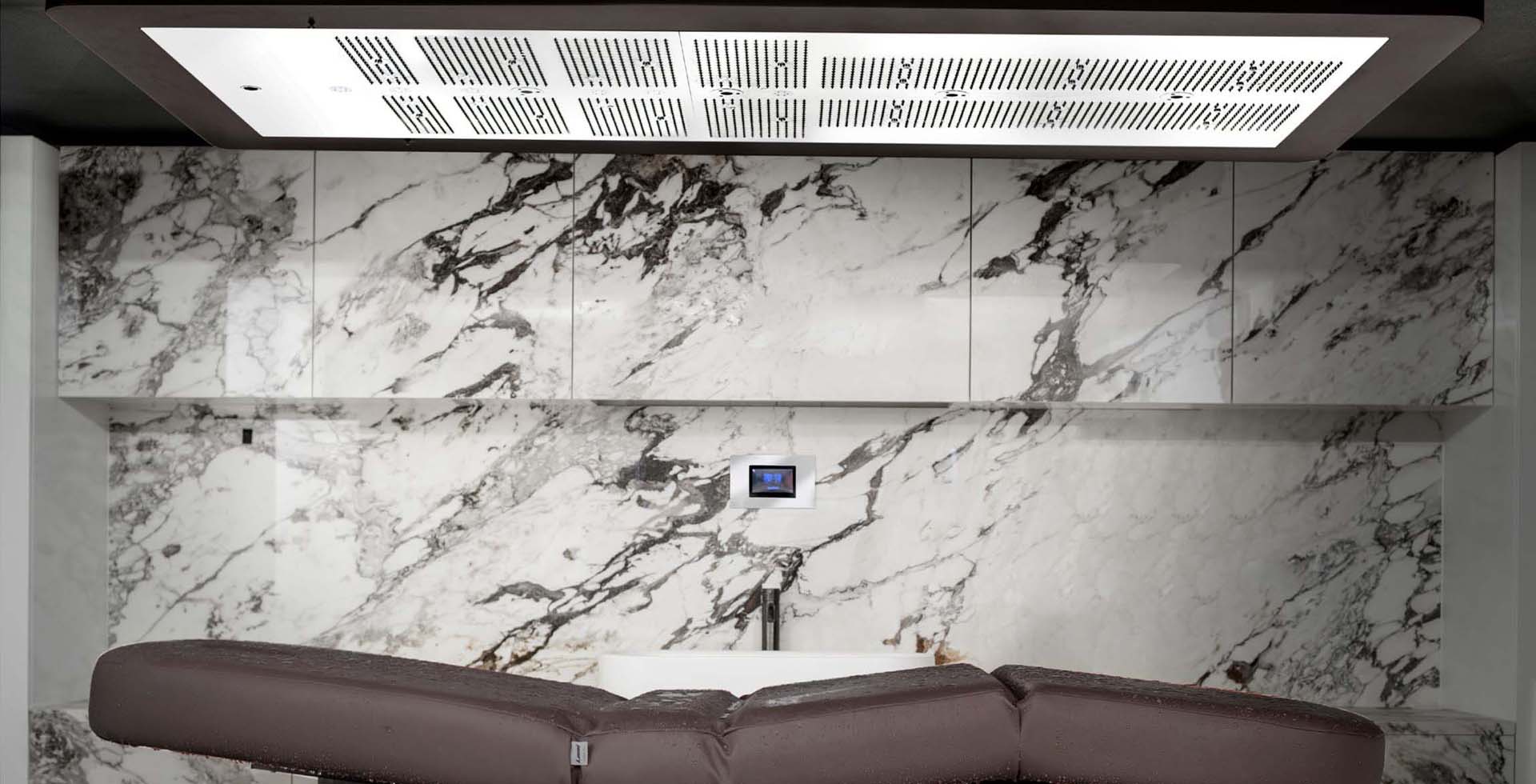
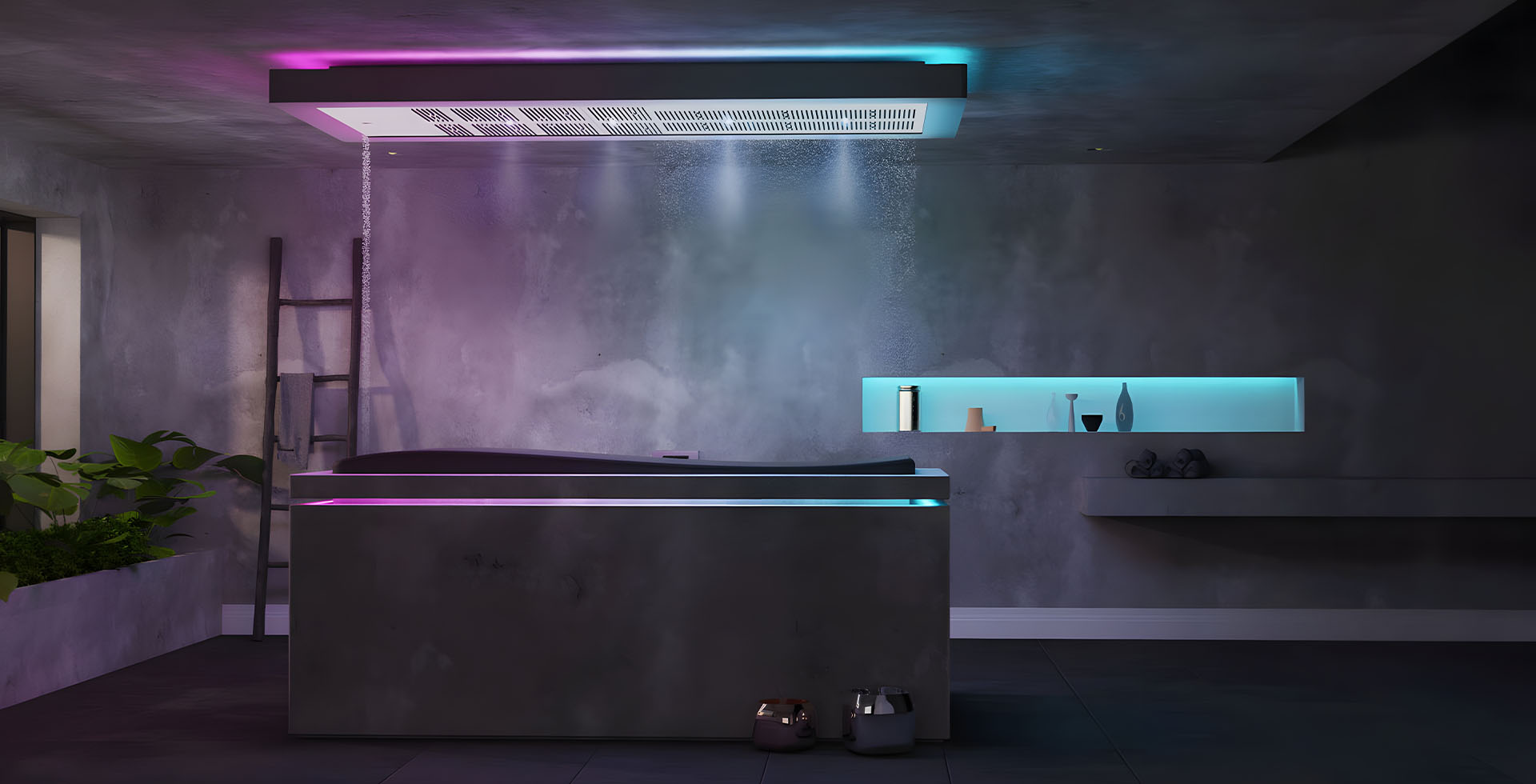
A Vichy shower is a horizontal rail of jets over a table, and the rail is the easy part. The table decides the project. A manufactured wet table arrives with its own fall, its own edge radius and a drainage connection already resolved; a built plinth has to be tanked like a floor, given a fall towards the foot, and finished with a radiused edge so water does not run off the side the therapist is standing on. Either way the surface is heated, because a guest lying still under moving water on a cold slab will not stay there, and the height is set to the therapist who will work at it rather than to a catalogue default.
The valve set is the second decision. The therapist adjusts temperature and jet pattern while the treatment is running, so the valves have to be within reach on their side of the table, marked so they can be read wet, and mounted where they can be serviced without demolishing tiling. The full note on specification, procurement and installation of this product is on our dedicated Vichy shower page.
The single most common specification error we correct is treating an experience shower or a Vichy shower as a fixture unit. They are not. A bar with several effects, or a Vichy rail with a row of open jets, is a load on the hot water plant, and it has to be added to the plant calculation as a load. Where a spa runs a row of three showers off a circuit that was sized for domestic bathrooms, the first guest gets the design temperature and the third gets whatever is left.
A drench bucket releases its whole volume in one movement, which is a different drainage problem from a shower head. Size the gully on the open area of the grate rather than on the nominal diameter of the pipe below it, because it is the grate that limits the rate at which water leaves the floor. Where the layout allows, we use a linear channel instead of a point gully: it takes a wider sheet of water, it lets the floor be laid to a single fall rather than four, and it keeps the fall shallow enough that a guest is not walking on a slope.
An experience shower is one of the few surfaces in a building that is wet, warm and mechanically scrubbed every single day, and material choices that survive elsewhere in the spa fail here. Glass mosaic and porcelain hold. Microcement holds where the system is specified for constant immersion rather than for a domestic bathroom. Calcareous natural stone is the usual disappointment: it looks right at handover and it etches under the acidic descalers that the same nozzle blockages force housekeeping to use.
Almost every defect we are called to on somebody else’s experience shower comes from one of six coordination items being agreed too late. We issue them as a package at the start rather than as requests for information at second fix:
We hand over with the shower commissioned as part of its circuit, alongside the steam room, sauna and ice fountain either side of it, because the sequence is what the operator is taking on, not the individual boxes.
Written into the operations manual, not left to be discovered:
Our factory is in İkitelli OSB, Başakşehir, İstanbul, and we have been manufacturing wet-area equipment there since 1987. In our fortieth year we have delivered in more than 35 countries, with a team of 19. Our current Gulf work runs through our delivery pages for Dubai, Abu Dhabi, Riyadh and Doha, and we take the work as a spa contractor, as a subcontractor to a fit-out main contractor, or as a spa consultant and subconsultant to a design team. Typical settings are hotel spas, commercial spas, fitness and recovery centres and private residential spas.
Our own certification is TS EN ISO 9001:2015. The equipment we install carries CE, TÜV, GS and comparable certification from its own manufacturers — EOS, Sentiotec and Condair among them. Completed wet-area work is in our project archive; the company background is on about us, and drawings or a specification can be sent through contact.
Sauna Dekor. We supply, install and commission experience showers and Vichy showers for hotel spas, wellness centres, gyms and private residences in the UAE, Saudi Arabia, Qatar and across more than 35 countries, and we build the surrounding wet-area works in our own factory in İstanbul, in business since 1987. Our scope is the shower and everything behind it: the tanked wall and floor, the concealed valve and pipework, the control and lighting interface, the finish, and commissioning together with the heat and cold rooms either side.
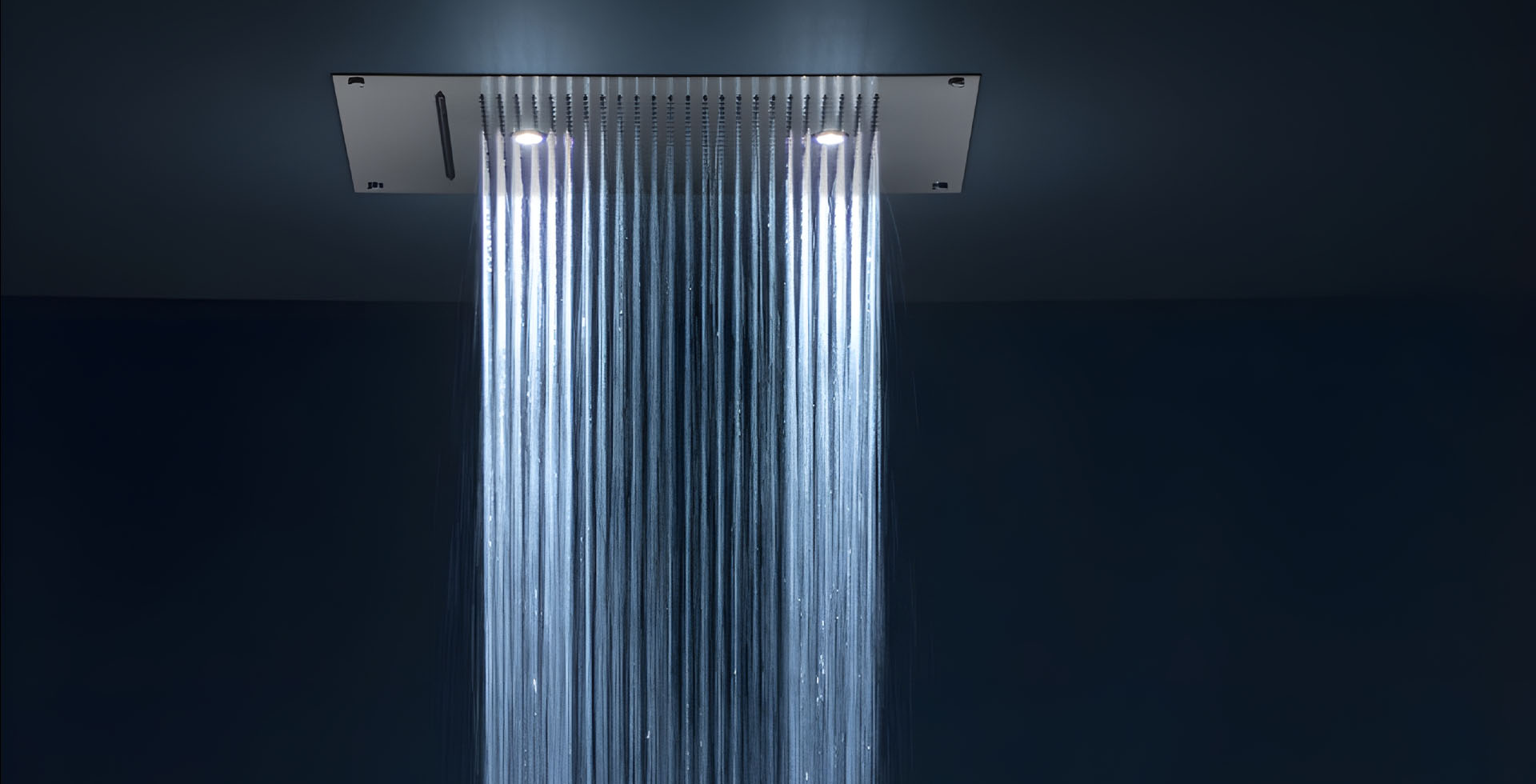
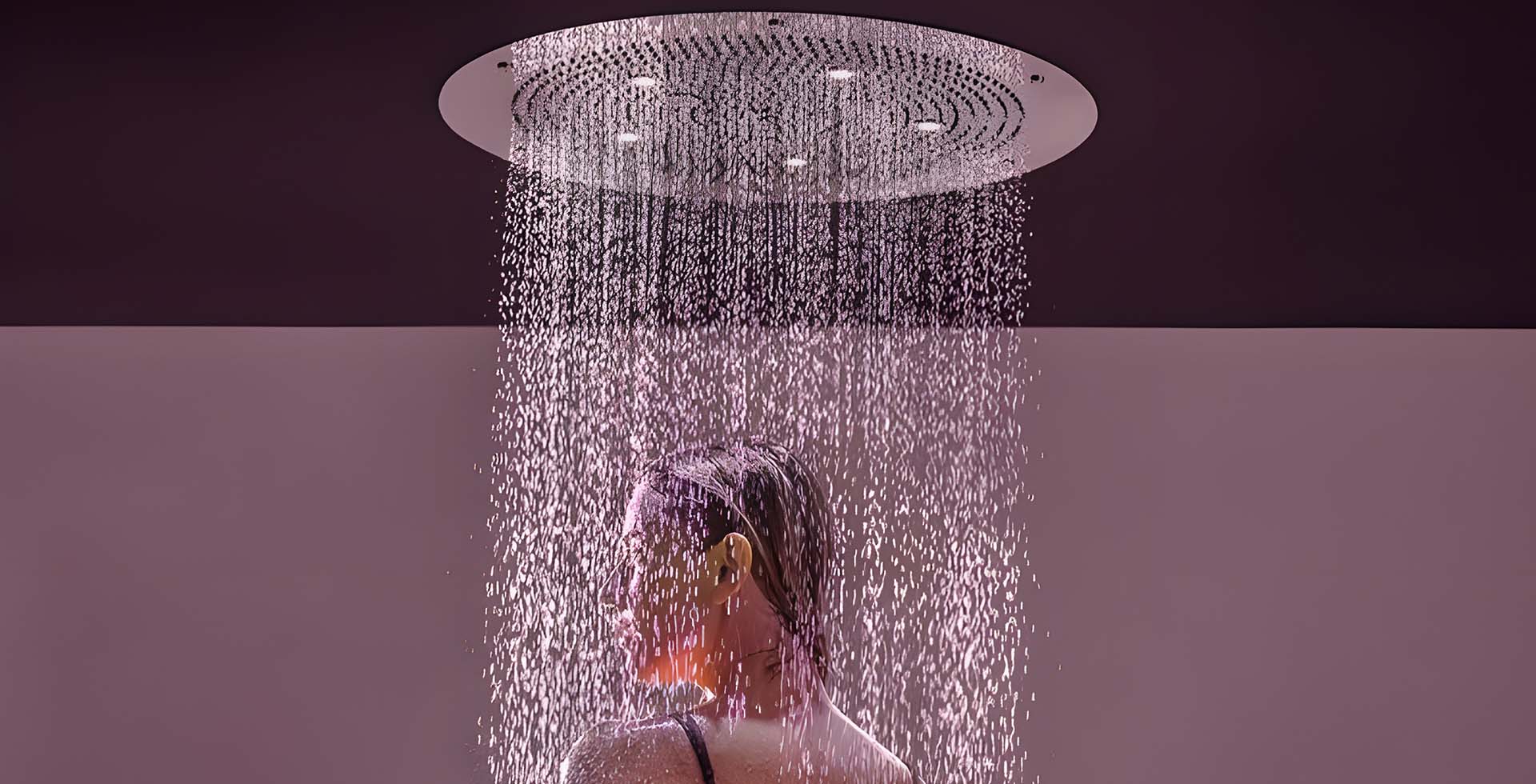
An experience shower is a vertical, guest-operated shower that changes water pattern, temperature, lighting and sometimes scent through a programmed sequence — a cool mist, a tropical rain, a cold bucket drench — rather than delivering one fixed spray. It is also called an adventure shower or a sensory shower. In a spa it is used to move a guest between a heat room and a cold experience.
A Vichy shower is horizontal and therapist-operated: a rail of individually adjustable jets above a heated wet table, used during a treatment while the guest lies down. An experience shower is vertical and guest-operated, used for a few seconds between rooms in a thermal circuit. They sit in different parts of a spa, they are operated by different people, and their water and drainage profiles are different: the Vichy draws continuously for the length of a treatment, the experience shower draws in short bursts at high instantaneous rates.
In the cold zone, immediately outside the heat rooms and next to the plunge or ice, before the heated rest area. Experience showers take roughly 1–2 m² each and are usually specified as a run of two or three so several guests can move through the circuit without queuing at the same point. A Vichy shower is the exception — it belongs with the treatment rooms, not in the circuit.
Hot and cold supply at a stable, balanced pressure, a drain with proper falls sized on the grate rather than on the nominal pipe diameter, a dedicated electrical circuit for the control and lighting, and an accessible service void behind the wall. Everything sits inside a fully tanked wet-area build-up, so the wall construction, the waterproofing detail and the valve position have to be agreed before tiling — a concealed valve reachable only by breaking finished mosaic is the most common avoidable defect in this trade.
Choose them against the rooms either side. A shower following a sauna or hammam needs a warm rinse before anything cold; a shower feeding a plunge needs a cold mist or drench to bridge the temperature gap; a standalone recovery shower in a gym needs flow and pressure more than it needs chromotherapy. Every effect adds a flow, a pressure and a drainage requirement, so the specification has to be checked against the building’s capacity, not just the guest experience.
It needs a drain sized for a continuous flow rather than a burst, and it needs that drain to be reachable. A jet bar running for a whole treatment puts a steady volume onto the floor, so we prefer a linear channel under or beside the table, a short branch to the stack, falls formed in the screed rather than in the tile bed, and a trap that can be lifted from inside the room. Gravity drainage inside buildings is covered by EN 12056; the tanking beneath it by EN 14891 or ANSI A118.10.
We do, from İstanbul, with our own installation teams travelling to site. We have delivered wet-area packages across the Gulf and hold local delivery pages for Dubai, Abu Dhabi, Riyadh and Doha. Our own certification is TS EN ISO 9001:2015; the equipment we install carries CE, TÜV, GS and comparable certification from its own manufacturers, such as EOS, Sentiotec and Condair.
