

The Best Cold Plunge in 2026: An Honest Guide from a Cold Plunge Builder in the Gulf

Short answer: The best cold plunge is decided by the chiller, the insulation and the water treatment — not by the tub. Four categories exist and they are not competing for the same buyer: an unchilled barrel or tub you fill with ice; a plug-in chilled tub with an integrated unit; a drop-in shell with separate plant; and a built-in tiled or stainless plunge for continuous multi-user duty. Pick the category from how many people use it and how often, then judge products inside that category on cooling capacity, standing heat gain and sanitation — in that order.
This guide is written by Sauna Dekor, a sauna, hammam and wet-area manufacturer and turnkey contractor based in Istanbul, building since 1987 — this is our fortieth year — and delivering in more than 35 countries, with most of our commercial work in the UAE, Qatar and Saudi Arabia. Our quality management system is certified to TS EN ISO 9001:2015. We build fixed cold plunge pools; we do not manufacture consumer tubs, and where a consumer tub is the right answer we say so on this page rather than pretending otherwise. Where the room is built rather than bought, the best cold plunge is a construction scope with a chiller in it, not a product with a delivery date.

Four categories: the best cold plunge is a category decision first
Almost every argument about “the best cold plunge” is really an argument between people in different categories. Establish yours first and the shortlist for the best cold plunge collapses to something manageable.
| Category | How it holds temperature | Honest fit | Where it fails |
|---|---|---|---|
| Unchilled barrel or tub | You add ice, manually | One user, a few times a week, lowest capital outlay | Ice logistics become the reason people stop using it |
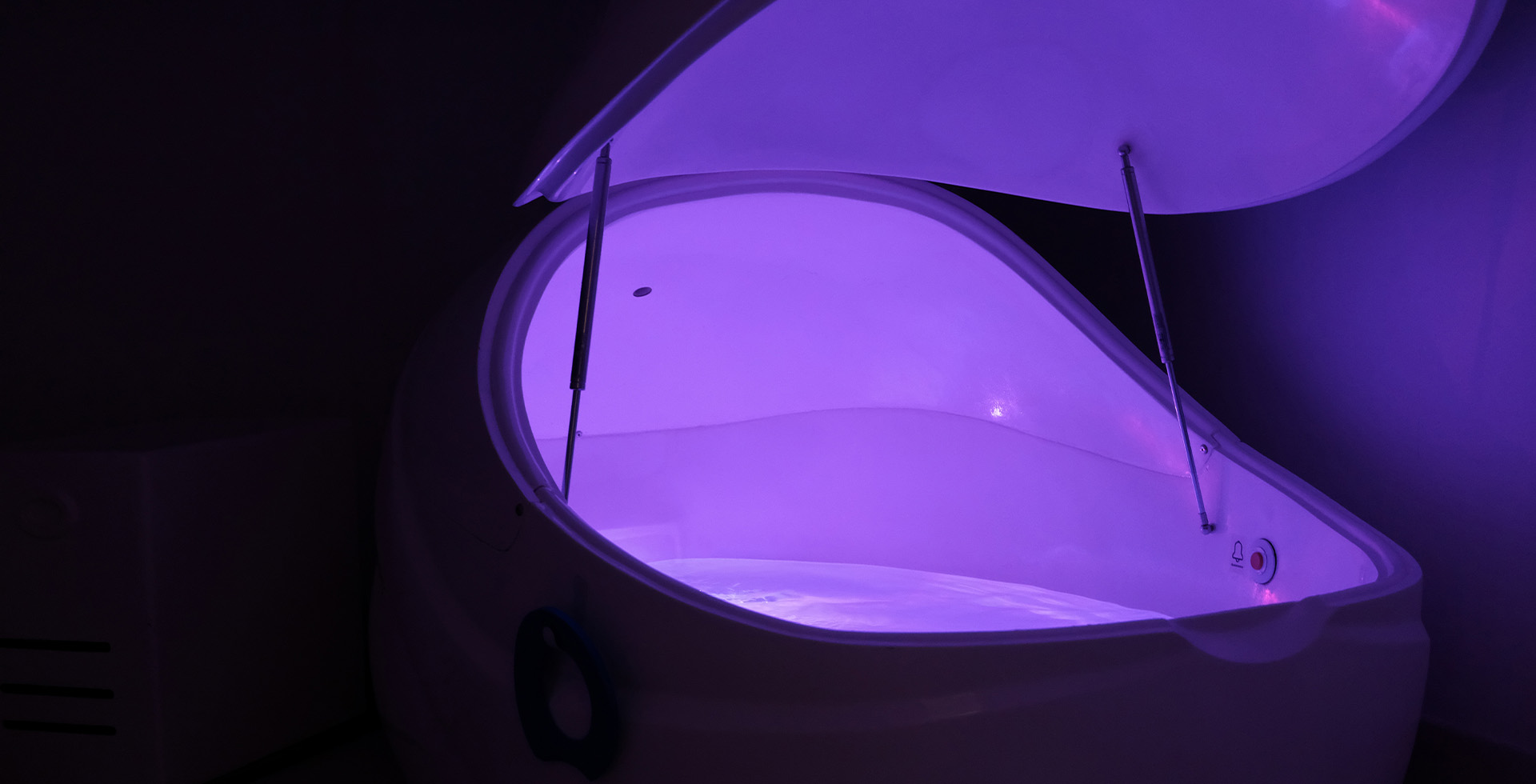
| Plug-in chilled tub | Integrated chiller and filter, single appliance | Households; a single-user gym corner | Recovery time between users; limited pull-down in hot ambient |
| Drop-in shell, separate plant | Shell built in, chiller and filtration in a plant space | Villas, home spas, small clubs | Needs a plant location, drainage and a service route decided early |
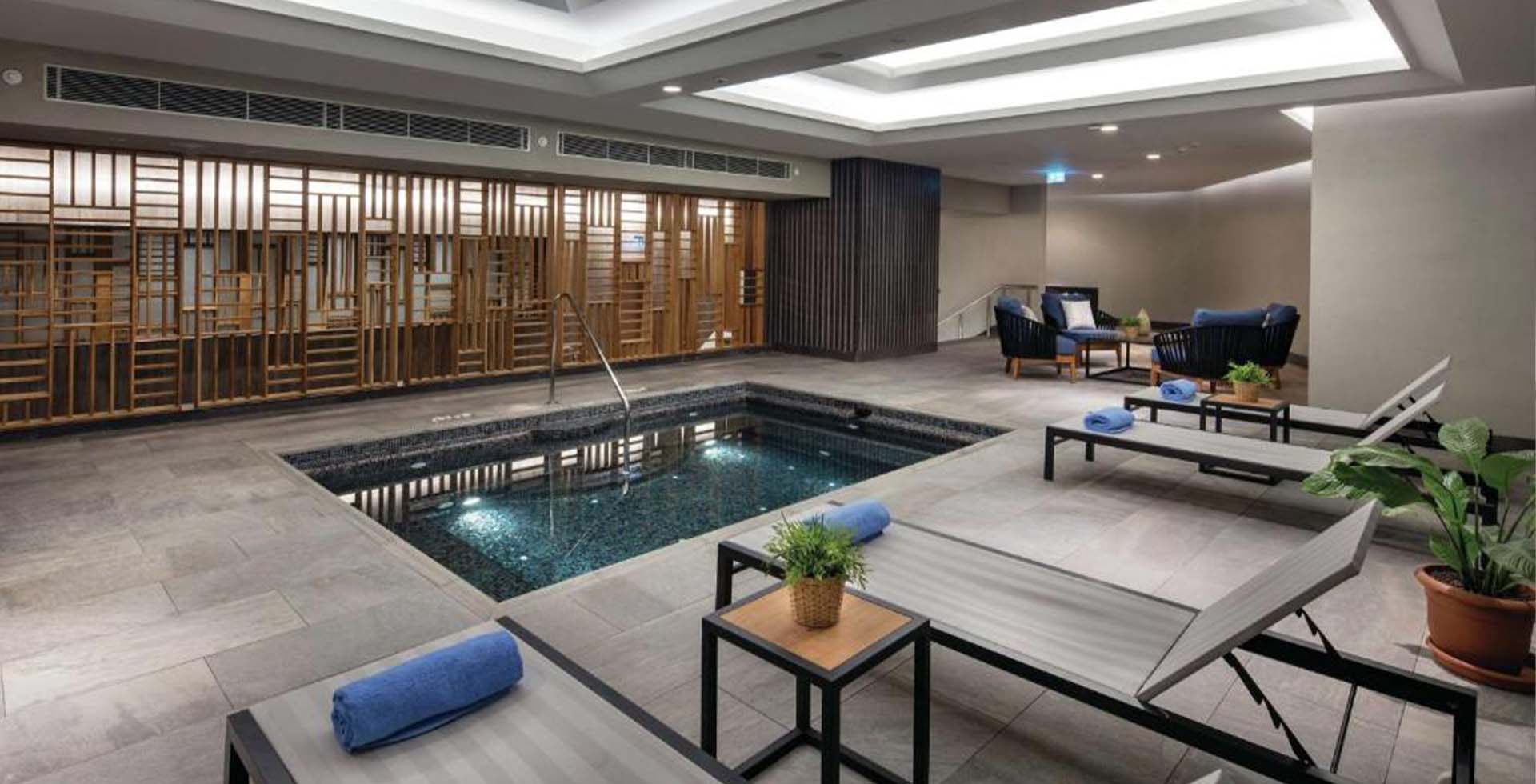
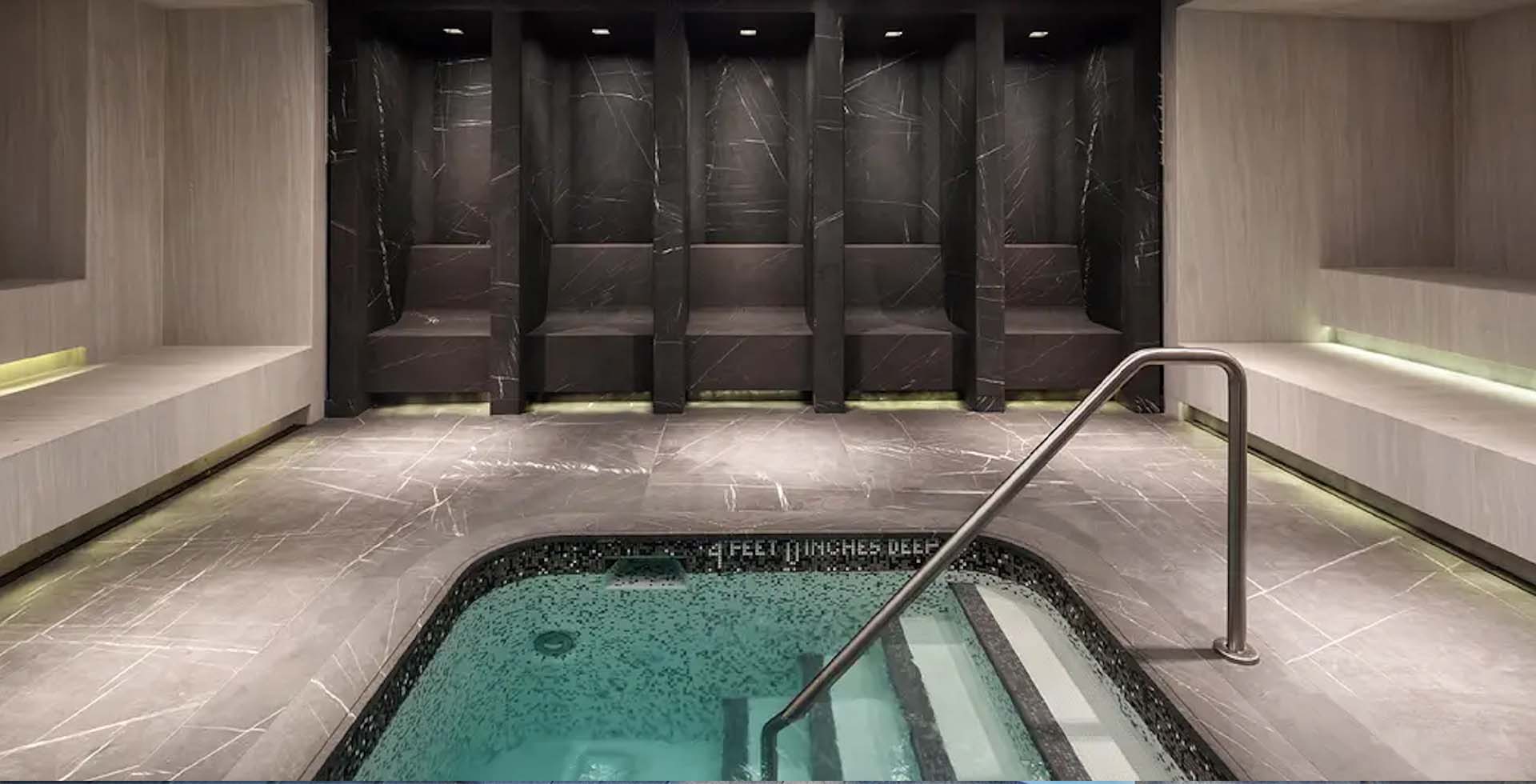
| Built-in tiled or stainless plunge | Engineered circuit sized for continuous duty | Hotels, gyms, recovery studios, multi-user facilities | Construction project, not a purchase; waterproofing must precede everything |
The step that catches people out — and the one that decides which best cold plunge shortlist you are actually on — is between rows two and three. A plug-in tub is a product you buy; anything below that line is a room you commission, with drainage, a plant space, a power supply and a waterproofing scope that has to be signed off before the visible work starts. Our ice bath and cold plunge in Dubai page covers what that build involves in the Gulf specifically.

The chiller, not the tub, decides the best cold plunge
Buyers compare tub materials and shapes. The component that decides whether the thing works, and therefore which product is the best cold plunge for a given room, is the refrigeration circuit, and it has to serve three loads, not one.
- Pull-down. Cooling 1,000 litres by one degree removes about 1.16 kWh. Taking a 1,000-litre tub from 30 °C to 10 °C is therefore roughly 23 kWh of heat to shift. A 1 kW chiller takes about a day; a 3 kW unit about eight hours.
- Standing heat gain. Continuous, and in a hot climate it dominates everything else. An uninsulated tank in a Gulf plant room can absorb more heat over 24 hours than the bathers ever add.
- Bather load. Each person entering brings body heat and displaces cold water. A single-user domestic unit sized for one session a day will not hold its number through six back-to-back users.
The arithmetic and the temperature bands are worked through properly on cold plunge temperature, which is the page to read before you compare any two products. The short version for buyers: insulating the tank shell is almost always cheaper than upsizing the chiller to compensate for not insulating it, and a specification that quotes a chiller in kW without stating the ambient temperature it was sized against has not told you anything.
What to ask a supplier
- At what ambient temperature was the chiller sized? A unit sized for a European garage behaves differently on a Dubai rooftop plant deck.
- What is the pull-down time from fill temperature, and what is the recovery time after a session?
- Is the tank shell insulated, and to what? Ask for the build-up, not an adjective.
- Where does the heat rejected by the chiller go? Indoors, it becomes someone else’s cooling load.
- What is the noise level at the plant, and where is the plant relative to the bedrooms?
Water treatment: the part people meet in month two
Cold water is not self-cleaning. It is worse than warm water in one specific way — users go in unshowered far more often than they do with a pool, because the plunge reads as a quick thing rather than a swim. A plunge with no filtration and no sanitation becomes unusable quickly and the owner blames the tub.
The workable specification has three parts: mechanical filtration to catch particulates, a sanitation method appropriate to the volume and turnover, and a turnover rate fast enough for the number of users — the same discipline the UK Pool Water Treatment Advisory Group sets out in its technical notes for treated water bodies. On built-in plunges this is the same discipline as any other treated water body, and it belongs with the rest of the wet-area engineering — see what is hydrotherapy for how the treated-water rooms relate, and hydrotherapy pool for the warm-water equivalent where the humidity problem runs the other way.
One consequence worth stating plainly: the best cold plunge in any layout is the one next to a shower, and it is much cheaper to decide that at layout stage than to add drainage later.
Named products, by category
We install fixed plunges and we do not sell consumer tubs, so we are not going to rank products we have no service relationship with. We also do not publish a single “best cold plunge” verdict, because the categories do not compete. What is useful is knowing which names sit in which category, and then checking current models on each manufacturer’s own site — most of them now offer both chilled and unchilled versions of the same tub, and the model line-ups change faster than any comparison article.
| Category | Names you will meet | Verify on their site |
|---|---|---|
| Direct-to-consumer tubs, chilled and unchilled | Plunge, Ice Barrel, Renu Therapy, Redwood Outdoors, Sun Home Saunas, Chilltub | Whether the model you are quoting includes a chiller, and its stated pull-down |
| Commercial and multi-user equipment | BlueCube, CryoSpa, Coldture, Polar Monkeys | Duty rating, filtration and sanitation package, service coverage in your region |
| Built-in plunges, manufactured to the room | Wet-area contractors, including Sauna Dekor | Who carries waterproofing, plant and commissioning as one scope |
Every link above goes to the manufacturer’s own site deliberately: the categories are ours, the specifications are theirs, and a comparison table that restates numbers we have not verified is worse than no table. The one claim we will make about the consumer category as a whole is structural rather than about any brand: a single appliance containing tub, chiller and filter is the lowest-risk purchase for one household, and the hardest thing to service in ten years’ time in a market where the manufacturer has no local presence.
What the tub is made of, and why it matters less than people think
Material is the first thing buyers ask about when they go looking for the best cold plunge, and roughly the fourth thing that decides outcomes. Still, the differences are real and they show up over years rather than weeks.
| Material | Behaves like | Trade-off |
|---|---|---|
| Stainless steel | The commercial default; durable, cleanable, repairable, and it takes a proper insulated build-up behind it | Conducts heat readily, so it is only as good as the insulation behind the shell — an uninsulated stainless tank is an expensive way to make ice melt faster |
| Tiled or mosaic-lined concrete | The architectural option; matches adjoining hammam and wet-room finishes and can be any geometry | Entirely dependent on the waterproofing beneath it; a failure is a demolition job, not a repair |
| Acrylic or composite shell | Fast to install, light, forgiving of small movement | Fixed geometry from a mould; repairs are cosmetic rather than structural |
| Timber-clad tub | The consumer look; warm, and the reason most garden plunges photograph well | The timber is a jacket, not the vessel; ask what the liner is and how it is insulated |
The point buried in that table is that every material answer collapses back into the insulation question. A stainless tank with a proper insulated build-up outperforms a beautifully finished one without, in every climate, and the difference is invisible at handover and obvious on the electricity bill. On projects where the plunge sits inside architecture we treat it as part of the same wet-area envelope as the sauna and steam room rather than as a separate appliance — the approach set out on our pools page and, for the villa case, luxury home sauna.

What the best cold plunge looks like in a hotel, gym or recovery studio
Commercial duty changes the answer completely, in the same way it does for gym saunas. Six differences matter:
- Turnover. The chiller is sized for back-to-back sessions, not for one person a day.
- Sanitation and record-keeping. Treated water bodies in commercial facilities carry testing and logging obligations that a private tub does not.
- Access and egress. Steps, handrail and a non-slip surround are design items, not accessories.
- Supervision and signage. Operating procedure is part of the handover, not an afterthought.
- Plant, noise and heat rejection. Where the chiller lives and what it does to the surrounding rooms is an early coordination item with the MEP scope — the same interface discipline as commercial sauna specification.
- Sequence in the guest journey. A plunge is rarely used alone; it is the cold stage in a hot–cold sequence. The thermal suite guide sets out the ordering, and sauna and cold plunge covers the pairing itself.
If the plunge is one element of a larger facility, hotel spa design and commercial spa cover the wider scheme, and wellness centre Dubai covers the regional version. For a private residence the equivalent is home spa Dubai and private spa.
The other cold formats, and when they beat a plunge
A plunge is not the only cold instrument, and it is not always the right one for the space.
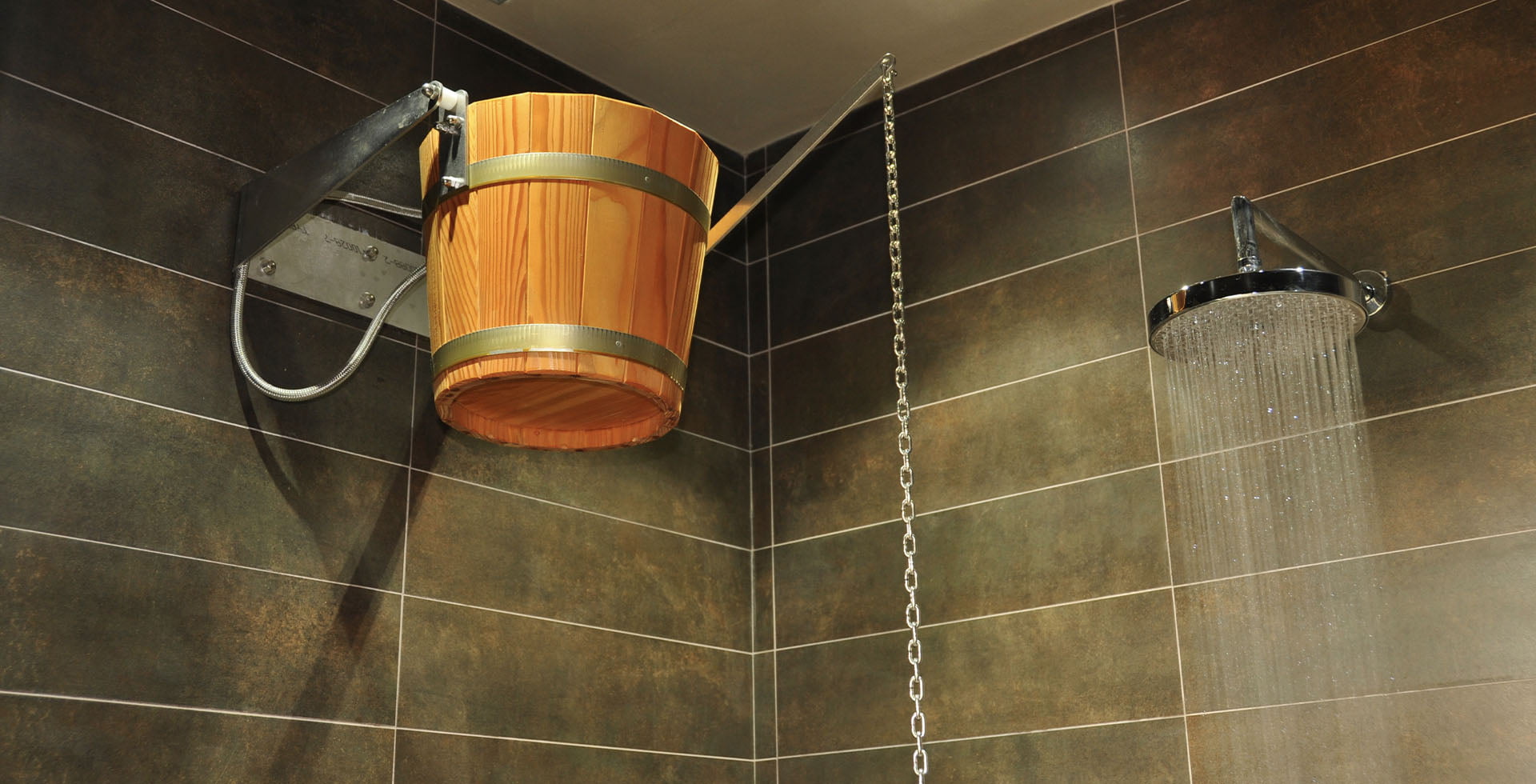
- A shock bucket costs a fraction of a plunge, needs no chiller and no treated water, and gives a brief cold stage in a corridor width. For many small thermal suites it is the correct answer.
- An ice fountain serves the same sequence position with no immersion at all, which suits mixed-ability guest populations.
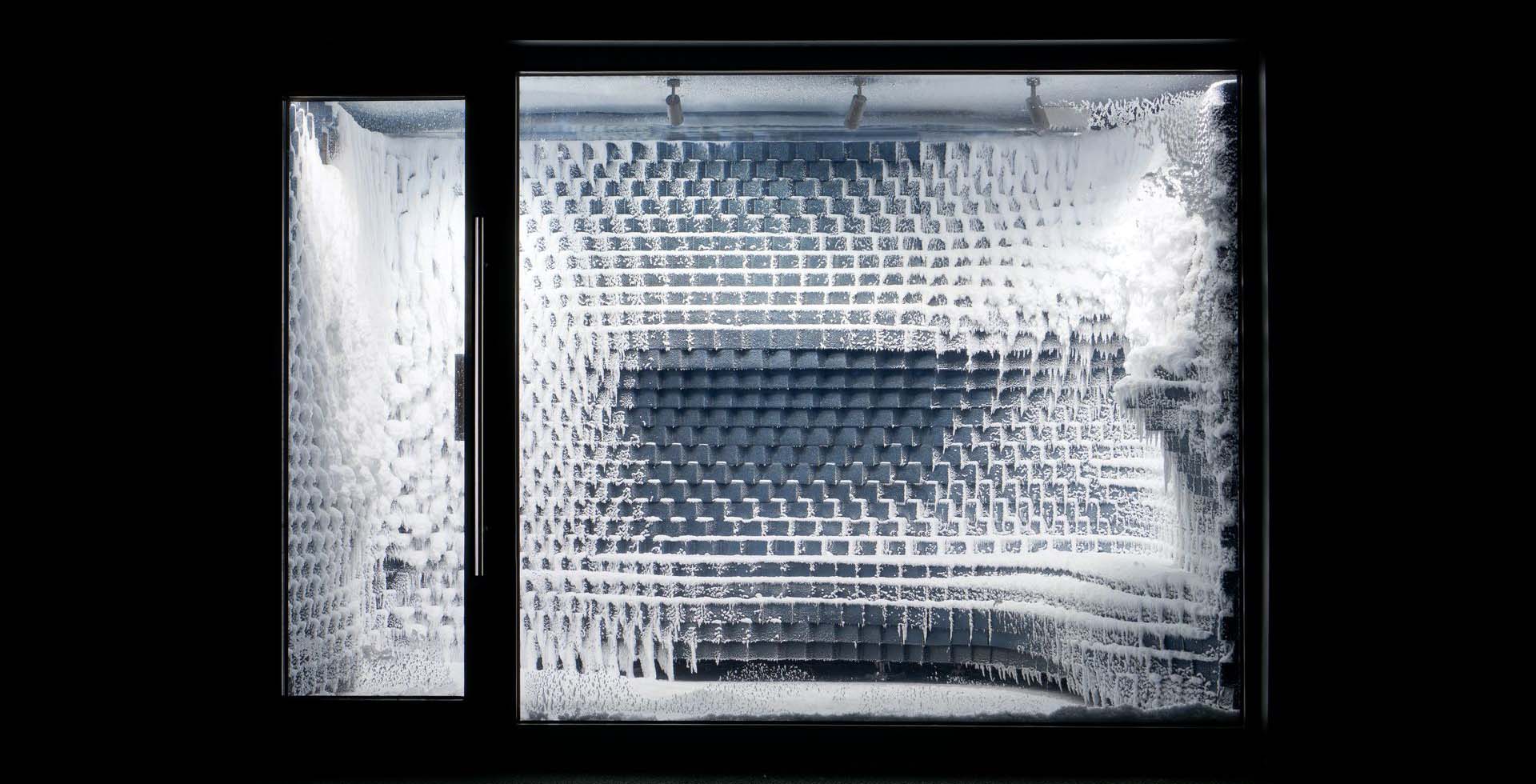
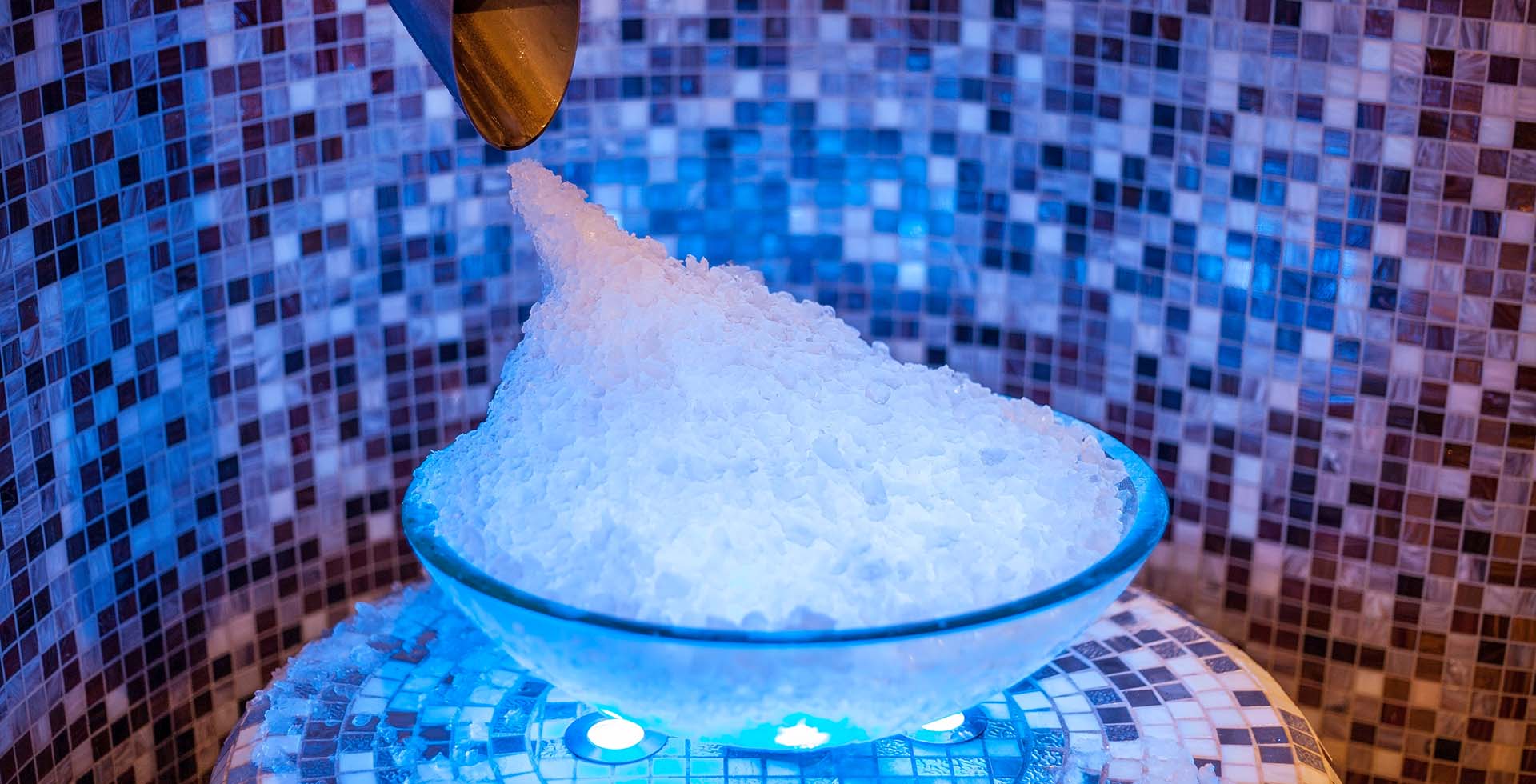
- A snow room is a different proposition again — an experience room rather than an immersion, with its own refrigeration plant.
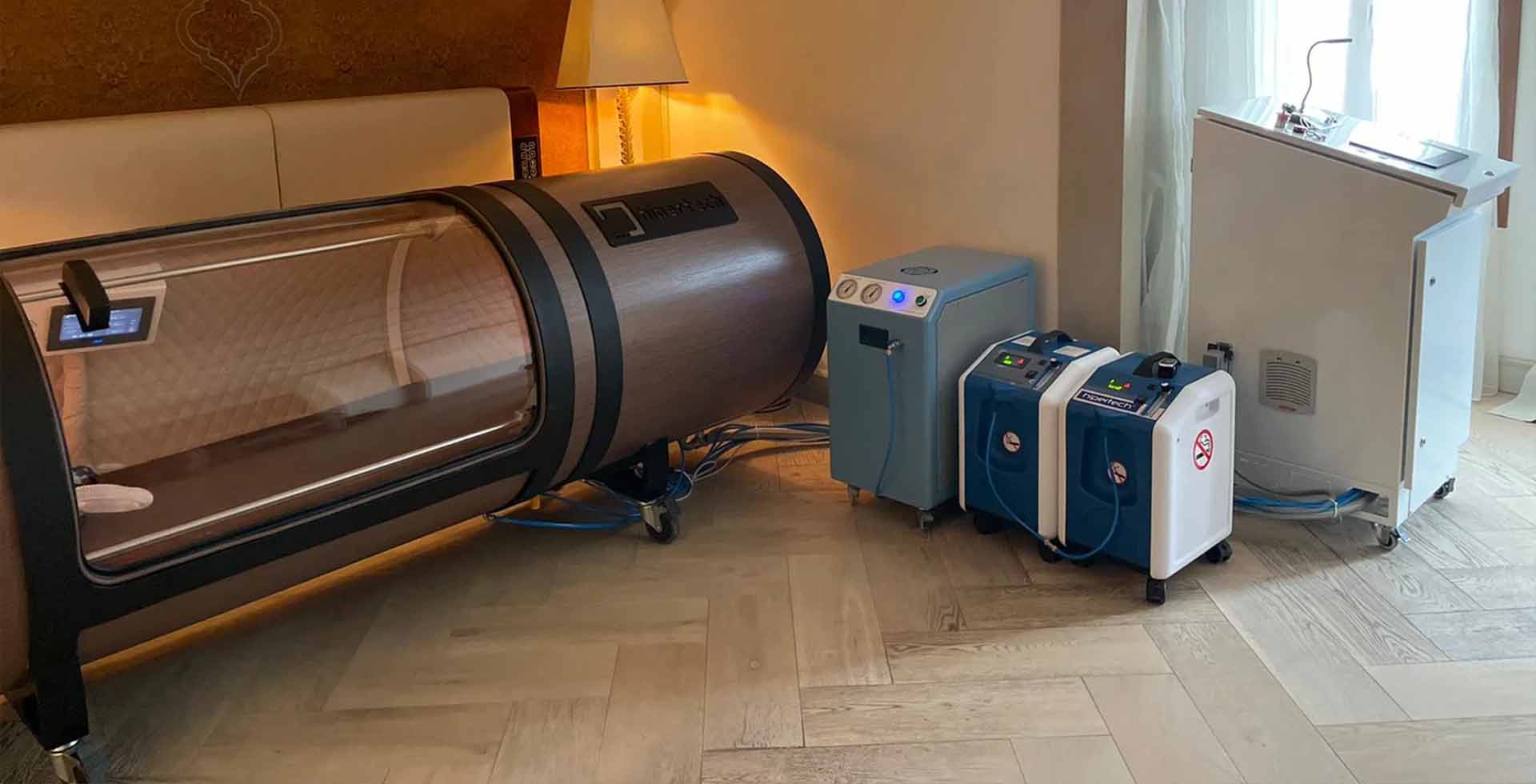
- Whole-body cryochambers are a separate equipment class with separate operating requirements, and they are not a cheaper plunge.
If what you are comparing is warm water rather than cold, jacuzzi and hot tub Dubai and the hot tub versus jacuzzi distinction are the pages for that, and swimming pool Dubai covers full pools. We do not manufacture swim spas.
What we would not sell you
If you want one plunge for one household and you are happy with a single appliance and one warranty, the best cold plunge for you is a consumer tub, and you should buy one. You will not get better value from Sauna Dekor, and the service story is simpler. If you need local installation labour in North America, we do not have an installation team there. And if the plunge is the only cold element in a scheme with no shower and no drainage nearby, the honest recommendation is usually to move it rather than to build it where it was drawn.
Where we do earn our fee is the built-in case: a plunge that has to sit inside finished architecture, share a waterproofing envelope with a sauna or a steam room, be fed from a plant space someone else is coordinating, and be handed over as one accountable scope. That is the work, and it is a construction scope rather than a purchase.
How to compare two quotations for the best cold plunge
Line up the two documents against these five rows and the cheaper one usually stops being cheaper.
| Row | What to look for |
|---|---|
| Cooling capacity | kW and the ambient it was sized against, plus pull-down and recovery times |
| Tank insulation | The actual build-up, not “insulated” |
| Water treatment | Filtration, sanitation method, turnover rate, and who maintains it |
| Waterproofing scope | Explicitly included or explicitly excluded — the single most common gap |
| Commissioning and handover | Who proves the temperature is held, and against what document |
The claims side is deliberately absent from this page. If you want the evidence position on what cold immersion does and does not do, cold plunge benefits grades seven claims one by one, and what is an ice bath covers the basics. This page is about the equipment.
Frequently asked questions
What is the best cold plunge to buy?
The best cold plunge depends on the category, not on the brand. For one household a few times a week, a plug-in chilled tub is the lowest-risk purchase. For a villa or a home spa, a drop-in shell with separate plant gives better control and a longer service life. For a hotel, gym or recovery studio, only a built-in plunge with a chiller sized for continuous duty and a proper filtration and sanitation package will hold its temperature through back-to-back users.
What size chiller does a cold plunge need?
Size it against three loads rather than one: the initial pull-down, the continuous standing heat gain through the tank walls and from the circulation pump, and the body heat each bather brings in. In a hot climate the standing loss dominates, which is why insulating the tank shell is usually cheaper than upsizing the chiller to compensate for not insulating it.
Is a chilled plunge better than adding ice?
Mechanically, yes, and the reason is behavioural rather than technical: ice logistics are the most common reason an unchilled tub stops being used. An unchilled barrel is a legitimate low-cost entry for a single user who is realistic about that. For anything with more than one user it is not a serious option.
Do cold plunges need filtration?
Yes. Cold water is not self-cleaning and plunge users enter unshowered far more often than pool users do. A workable specification has mechanical filtration, a sanitation method matched to the volume, and a turnover rate matched to the number of users. Commercial installations additionally carry testing and record-keeping obligations.
Can a cold plunge go indoors?
Yes, and it is common, but three things have to be decided early: drainage, where the chiller lives, and where the heat it rejects goes. An indoor chiller adds to the cooling load of the room it sits in. Placing the plunge next to a shower at layout stage is far cheaper than adding drainage afterwards.
How much space does a cold plunge need?
The tub is the small part. Allow for entry and exit with a handrail, a non-slip surround, a drainage route, and a plant location within a serviceable pipe run of the tank. On built-in projects the plant space and its access route are the items most often left out of an early layout and most expensive to add later.
Who builds built-in cold plunges?
Sauna Dekor manufactures and installs fixed cold plunge pools alongside saunas, steam rooms and hammams, working from Istanbul since 1987 — this is our fortieth year — most often in the UAE, Qatar and Saudi Arabia and in more than 35 countries. Our quality management system is certified to TS EN ISO 9001:2015. We do not manufacture consumer plunge tubs, and we do not manufacture swim spas.
Should the plunge or the sauna come first in a project?
Decide them together. They share a wet-area envelope, they are usually used in sequence, and the waterproofing, drainage and plant coordination are much cheaper as one scope than as two. Splitting them across two contractors is the most reliable way to produce a leak at the junction.
Specifying the best cold plunge for a real space
If you have a drawing, a plant room and a user count, that is enough to start specifying the best cold plunge for the space. Sauna Dekor has been manufacturing wet-area rooms since 1987; delivered work is on the projects page, and we work as a specialist subcontractor to main contractors as well as directly for private clients. Book a virtual consultation to go through a specific space, or contact the team with drawings.


