
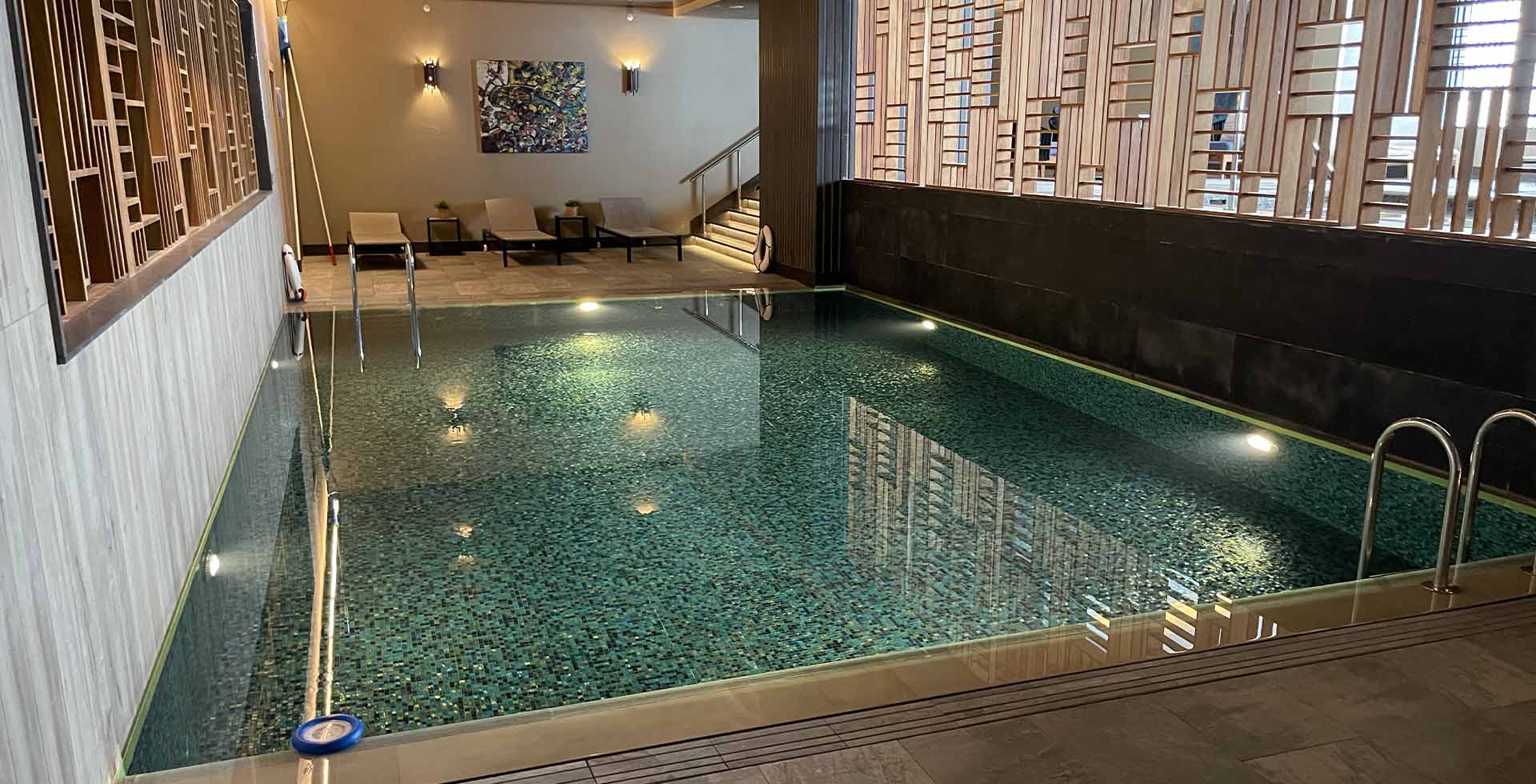
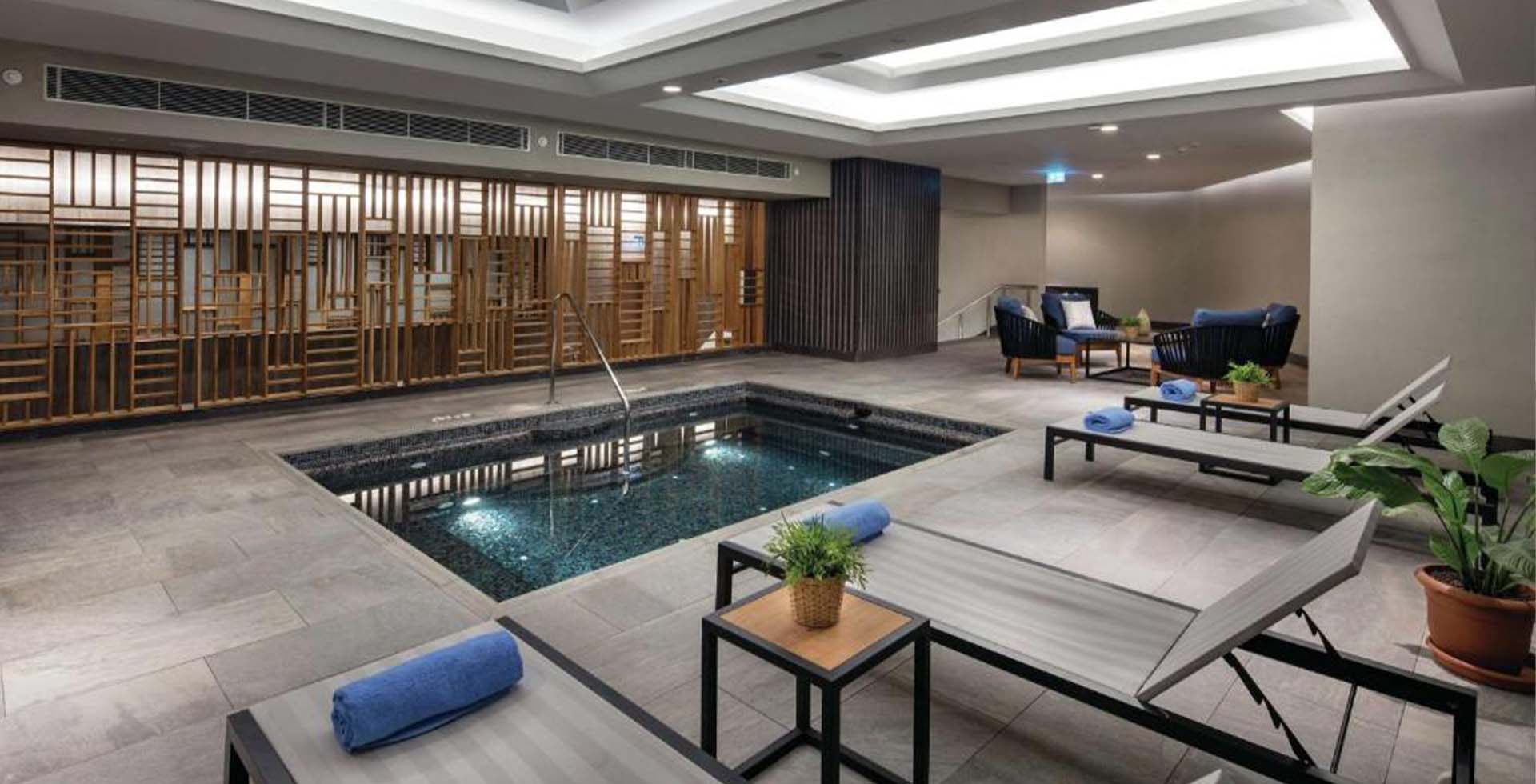
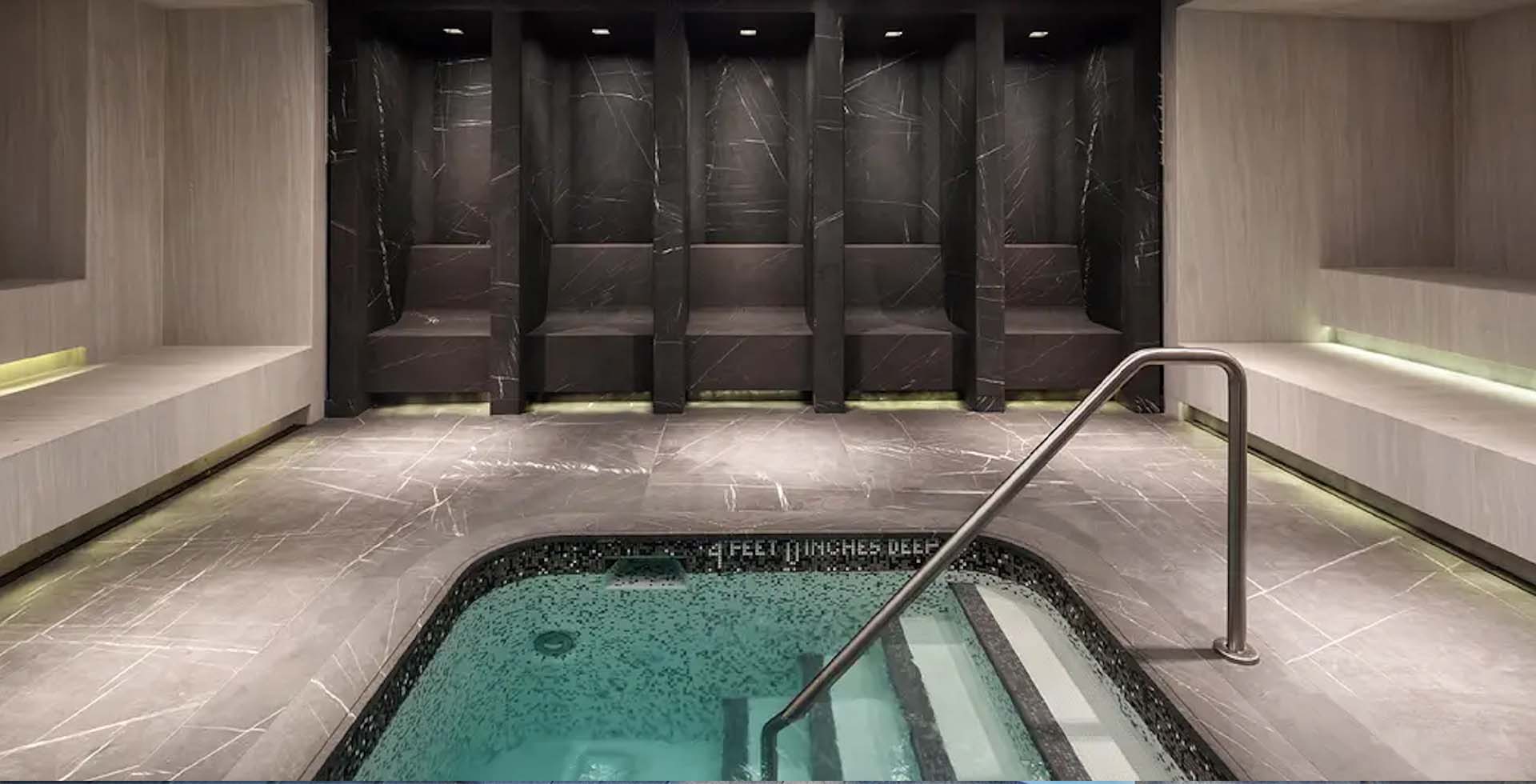


Hydrotherapy is the oldest treatment in the wellness industry and the one most often misdescribed. It is not a jacuzzi, not a swimming pool with jets, and not a synonym for “spa”. It is the deliberate use of water — its temperature, its pressure, and the buoyancy it provides — to produce a physiological effect. Every serious bathing culture arrived at it independently, and modern medicine has spent the last two decades quietly confirming a large part of what those cultures assumed.
This guide covers what hydrotherapy actually is, what the current clinical evidence does and does not support, the temperature and duration protocols that make it work, the formats built into hotels and homes, and what each one costs to install in 2026.
What is hydrotherapy, exactly?
Hydrotherapy is treatment using water as the active agent. It works through three mechanisms, and almost every format is some combination of them.
- Thermal. Warm water dilates peripheral blood vessels, raises skin and core temperature, and reduces muscle tone. Cold water does the opposite: vasoconstriction, then a rebound flush when you leave it. Alternating the two is the basis of contrast therapy.
- Hydrostatic. Water exerts pressure on an immersed body — roughly proportional to depth. That pressure assists venous return, reduces peripheral swelling, and makes breathing slightly harder, which is a mild respiratory training effect nobody asks for and everybody gets.
- Buoyancy. Chest-deep immersion offloads roughly 70% of body weight; neck-deep, closer to 90%. This is why a knee that cannot tolerate walking on land can tolerate walking in water, and it is the entire reason aquatic rehabilitation exists.
Add mineral content to the water and you get balneotherapy — the European clinical tradition built around thermal springs. Add seawater and marine derivatives and you get thalassotherapy. Add alternating hot and cold applications in a prescribed sequence and you have the Kneipp method. These are not competing therapies; they are regional dialects of the same three mechanisms.
What does the evidence actually show?
We build these facilities commercially, so it is worth being precise about where the evidence is strong and where it is not. Overclaiming is the fastest way for an operator to lose credibility with a medically literate guest.
Where the evidence is strong
Musculoskeletal pain, particularly knee osteoarthritis. This is the best-evidenced application by a wide margin. A 2026 systematic review of randomised trials in Medicina examined hydrotherapy for functional performance and gait in knee osteoarthritis and found consistent improvement across the included trials. The Hungarian clinical literature — the largest single national body of balneotherapy research — was re-reviewed and meta-analysed in 2026 in the International Journal of Biometeorology, again reporting consistent musculoskeletal benefit. When a spa markets a hydrotherapy pool as helping joint pain and stiffness, that claim is defensible.
Function in older and deconditioned adults. Buoyancy is not a wellness metaphor; it is a measurable reduction in joint loading. Aquatic exercise programmes have been shown to improve physical function in populations who cannot train effectively on land, which is why hospital rehabilitation departments and high-end residential developments end up specifying similar pools for very different reasons.
Where the evidence is promising but younger
Stress, anxiety and mood. A 2026 multicentre randomised controlled trial published in BMC Complementary Medicine and Therapies examined balneotherapy’s effect on stress, anxiety and depression — a meaningfully more rigorous design than the observational work this field has historically relied on. The direction is positive. It is one trial, not a settled literature.
Sleep quality. A 2026 meta-analysis in Healthcare found aquatic exercise associated with improved sleep quality in patients with chronic disease. Note the population: this is not yet evidence that a warm evening soak improves sleep in healthy adults, though it is consistent with the well-established effect of passive body heating before bed.
Cardiovascular measures. A 2026 systematic review, also in Healthcare, examined aquatic exercise in people with hypertension. Early, encouraging, and not a reason to promise blood-pressure outcomes in marketing copy.
Where the claims outrun the data
“Detoxification” through water immersion has no meaningful clinical support — the liver and kidneys handle that, and no bathing protocol changes it. Immune-system claims are largely extrapolation. Weight-loss claims from passive immersion are not supportable. The honest position, and the one we recommend operators take, is that hydrotherapy is exceptionally good at pain, stiffness, mobility, recovery and relaxation, and that this is more than enough to build a business on.
What temperatures and durations does hydrotherapy use?
Temperature is the specification that decides what a pool is for. Get it wrong and you have built the wrong facility with the right equipment.
| Water | Temperature | Typical session | Purpose |
|---|---|---|---|
| Cold plunge | 10–15 °C | 1–5 min | Recovery, contrast, alertness |
| Cool pool | 18–24 °C | 10–20 min | Lap swimming, active aquatic exercise |
| Aquatic therapy pool | 32–34 °C | 30–45 min | Rehabilitation, assisted movement |
| Vitality / hydrotherapy pool | 35–37 °C | 15–20 min | Jets, massage, passive relaxation |
| Hot soak / onsen-style | 38–40 °C | 10–15 min | Deep relaxation, pre-sleep |
The two most common specification errors in commercial projects both live in this table. The first is running a therapy pool at vitality-pool temperature: at 36 °C nobody can exercise for forty minutes without overheating, so the pool a physiotherapist needs becomes a pool they cannot use. The second is designing a vitality pool at lap-pool temperature, which produces a beautiful jet installation that guests leave after four minutes because they are cold.
For contrast therapy, the sequence matters more than the extremes: heat for long enough to raise core temperature, then cold for long enough to trigger vasoconstriction, repeated three to four times, finishing on cold if the goal is alertness and on warm if the goal is sleep.

What are the main hydrotherapy formats?
Vitality pool
The centrepiece of most modern spa floors: a warm pool of 35–37 °C with engineered seating, air beds, neck cascades and directional massage jets. Guests use it unguided, sessions are short, and throughput is high. It is the format most people picture when they hear “hydrotherapy pool”, and the one that most rewards good jet design — a vitality pool with generic jets is just a warm pool.
Aquatic therapy pool
Deeper, cooler (32–34 °C), with level access or a submersible floor, handrails and enough clear area to walk and exercise. This is the format specified by rehabilitation clinics, sports facilities and increasingly by longevity operators. It carries the strongest clinical evidence and the strictest access, hygiene and plant requirements.
Kneipp walk
Two shallow troughs, one warm and one cold, walked through in sequence. Small footprint, low cost, no plant room of consequence, and a genuinely popular station in European thermal circuits. Underused in Gulf projects, where it works well as an amenity in a corridor that would otherwise be dead space.
Experience showers and sensory showers
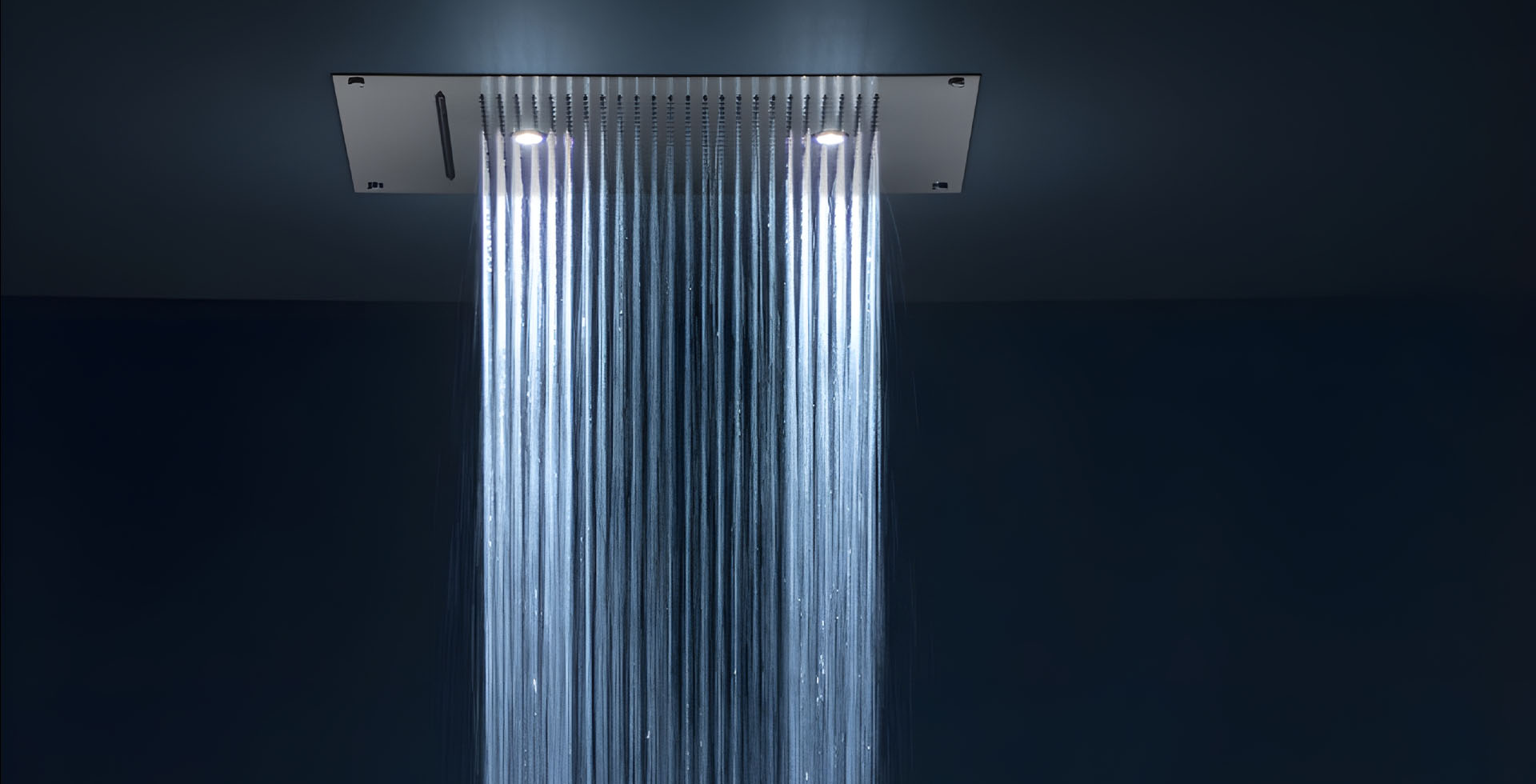
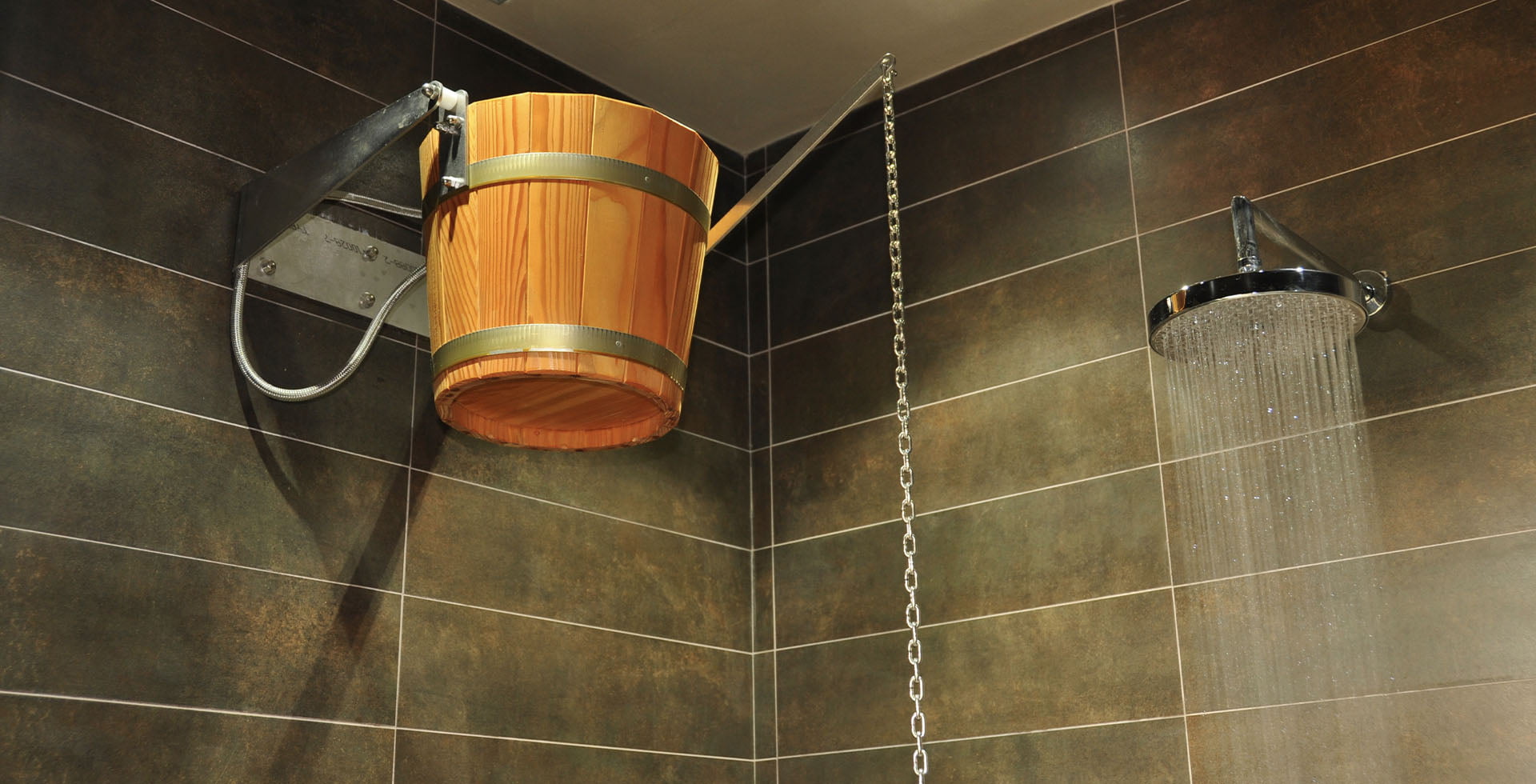
Programmed shower sequences — tropical rain, cold mist, side jets, scent and light. They are hydrotherapy in the strict sense (temperature and pressure applied deliberately), and they are the cheapest way to add a real transition between hot and cold rooms in a thermal suite.
Mineral and marine formats
Balneotherapy pools using mineral or thermal water, thalassotherapy pools using seawater, and their dry-application cousins such as the rasul mud chamber. Where genuine mineral water is not available — which in the Gulf is almost always — the honest approach is a dosed mineral pool described accurately, not a tap-water pool marketed as a thermal spring.
Cold immersion
The plunge pool and ice bath. Technically the simplest vessel in the building and the one with the most demanding refrigeration and filtration load per litre, particularly in a climate where ambient temperature works against you every hour of the year.

What makes hydrotherapy difficult to build?
A hydrotherapy pool is a small pool with a large plant room, and that ratio is what catches projects out. Four things separate an installation that runs for fifteen years from one that becomes a maintenance liability.
- Turnover rate. A vitality pool holds a small volume and carries a heavy bather load — the opposite of a swimming pool. Turnover has to be fast, filtration generously sized, and disinfection dosed for a warm, high-load environment where bacteria are comfortable. Undersizing here does not fail visibly; it fails on a water test.
- Air handling around the pool hall. Warm water in an enclosed space produces continuous evaporation. Without dedicated dehumidification and correctly directed supply air, moisture condenses inside the building fabric — the same failure mode as an under-detailed steam room, on a larger scale and a longer timescale.
- Plant space, discovered early or expensively. Pumps, filters, heat exchangers, dosing, balance tank, and access to service all of it. This footprint has to exist in the drawings before the slab is poured. It is the single most common late discovery in commercial spa projects.
- Structure and depth. Pools are heavy, recessed and unforgiving of a slab that was designed before the spa layout was frozen. Level access, submersible floors and balance tanks all need depth that a post-tensioned slab will not give you after the fact.
The engineering detail — pump room layout, waterproofing build-ups, cladding and material selection, electromechanical integration — is covered in depth on our hydrotherapy pool design and engineering page.

How much does hydrotherapy cost to install in 2026?
Indicative ranges from delivered projects, supplied and installed, excluding building works and MEP infrastructure to the plant room:
| Format | Indicative cost (AED) | Note |
|---|---|---|
| Kneipp walk | 45,000 – 90,000 | Smallest footprint, fastest payback as an amenity |
| Experience shower (per unit) | 35,000 – 120,000 | Range depends on programming, scent and lighting |
| Cold plunge, commercial | 90,000 – 220,000 | Chiller sizing dominates the cost in Gulf climates |
| Residential hydrotherapy pool | 250,000 – 600,000 | Jet count and finish drive the spread |
| Commercial vitality pool | 600,000 – 1,400,000 | Turnover and plant requirements step up sharply |
| Aquatic therapy pool | 1,200,000 – 3,000,000+ | Access, depth and clinical compliance |
Two costs are routinely missed at budget stage. The first is the plant room itself — pumps, filtration, heating, chilling and dehumidification frequently approach the cost of the visible pool. The second is running cost: a 36 °C pool in an air-conditioned building is heated and cooled simultaneously, twenty-four hours a day, and heat recovery designed in at the start pays for itself far faster than any finish upgrade.
Where does hydrotherapy fit in a wellness facility?
Hydrotherapy is the wet anchor of the circuit. In a well-sequenced thermal suite it sits between the heat rooms and the rest area: guests warm in the sauna or hammam, cool or contrast in water, then rest. Placed at the end of the circuit instead, it becomes a pool people look at on the way out.
For operators, it also does something the dry rooms cannot: it serves guests who will not use a sauna. Older guests, guests with joint pain, guests who dislike heat, and guests in rehabilitation all use warm water when they will not use a 90 °C cabin. In a longevity centre or a hotel with a broad demographic, that widens the addressable audience for the whole floor — which is usually the argument that gets the pool approved.
Frequently asked questions about hydrotherapy
Is a jacuzzi the same as hydrotherapy?
No. A jacuzzi is one product; hydrotherapy is the therapeutic use of water. A jacuzzi can deliver hydrotherapy if its temperature, jet placement and session length are specified for it — most domestic units are designed for comfort rather than therapeutic effect. See what is a jacuzzi for the distinction.
How often should you use hydrotherapy?
The clinical trials that show benefit typically run two to five sessions a week over several weeks. Benefit is dose-dependent and cumulative, which is precisely why membership pricing suits these facilities better than one-off treatment pricing.
Who should avoid it?
Warm immersion is not appropriate during pregnancy without medical advice, or for people with uncontrolled cardiovascular disease, and cold immersion carries its own cardiac considerations. Open wounds and active infections are contraindications for shared water. Any facility making therapeutic claims should have written screening.
Can you install hydrotherapy in a villa?
Yes, and it is one of the fastest-growing residential requests in the UAE. The constraints are plant space, structural depth and drainage, all of which are straightforward at design stage and expensive after handover.
Does the water need to be mineral or thermal?
No. Mineral content is what distinguishes balneotherapy specifically, and most of the mechanical benefit — heat, pressure, buoyancy — comes from the water itself. Describe what you actually have, accurately.
Sources
- Hydrotherapy in the Rehabilitation of Functional Performance and Gait in Knee Osteoarthritis: A Systematic Review of Randomised Trials. Medicina, 2026. PMC13208389
- Evidence-based balneotherapy in Hungary. Updated systematic review and meta-analysis of the Hungarian clinical trials. International Journal of Biometeorology, 2026. PMC12945968
- Effects of balneotherapy on stress, anxiety and depression: results of a multicentre randomised controlled trial. BMC Complementary Medicine and Therapies, 2026. PMC13107890
- Effects of Aquatic Exercise on Sleep Quality in Patients with Chronic Diseases: A Meta-Analysis. Healthcare, 2026. PMC12985057
- Effects of Aquatic Exercise on Individuals with Hypertension: A Systematic Review. Healthcare, 2026. PMC12941251
Sauna Dekor has designed, manufactured and installed thermal and hydrotherapy facilities since 1987. Hotel references include Hilton (Hilton Bomonti Istanbul, 2023) and Ritz-Carlton (Ritz-Carlton Istanbul, 2024). Developer and contractor clients include Emirates Engineering. To discuss a hydrotherapy pool, vitality pool or complete wet circuit, talk to our engineering team.
Frequently asked questions
What is hydrotherapy? Hydrotherapy is the use of water at controlled temperature, pressure and movement for therapeutic effect: vitality pools, jets, neck cascades, walking channels and contrast pools. The variables that matter are temperature, jet pressure and the sequence in which you use them.
What temperature is a hydrotherapy pool? Typically 34 to 36 C for a vitality pool, which is warmer than a swimming pool and cooler than a hot tub. That range lets a guest stay in long enough for the jets to do their work without overheating.
What is the difference between hydrotherapy and a jacuzzi? A jacuzzi is a hot tub with jets; a hydrotherapy pool is designed around specific treatment stations at a controlled temperature, with jets aimed at defined muscle groups and a circulation route between them.
Does hydrotherapy need special water treatment? Yes. Warm water at 34 to 36 C with heavy aeration is a demanding environment, so filtration, disinfection and turnover rates are specified more conservatively than for a swimming pool, and the plant room is sized accordingly.
Related: what a sauna actually does to skin and hair, and the routine that protects both.


