Choosing between an infrared cabin and a traditional sauna
An infrared cabin heats the body directly instead of heating the air around it. That single difference is why it behaves so differently in an apartment, and why its power and clearance requirements are not comparable with a Finnish room. The emitter types, the cabin configurations we build and the way each one is used are explained in what an infrared sauna is.
Clients with room for either want the direct comparison — warm-up time, running cost, bench temperature and what each cabin asks of the building — and that is in infrared vs traditional sauna. For projects in the UAE, panel selection, DEWA requirements and the effect of coastal humidity on panel life are covered in our infrared sauna buying guide for Dubai.
The named parts of an infrared cabin specification
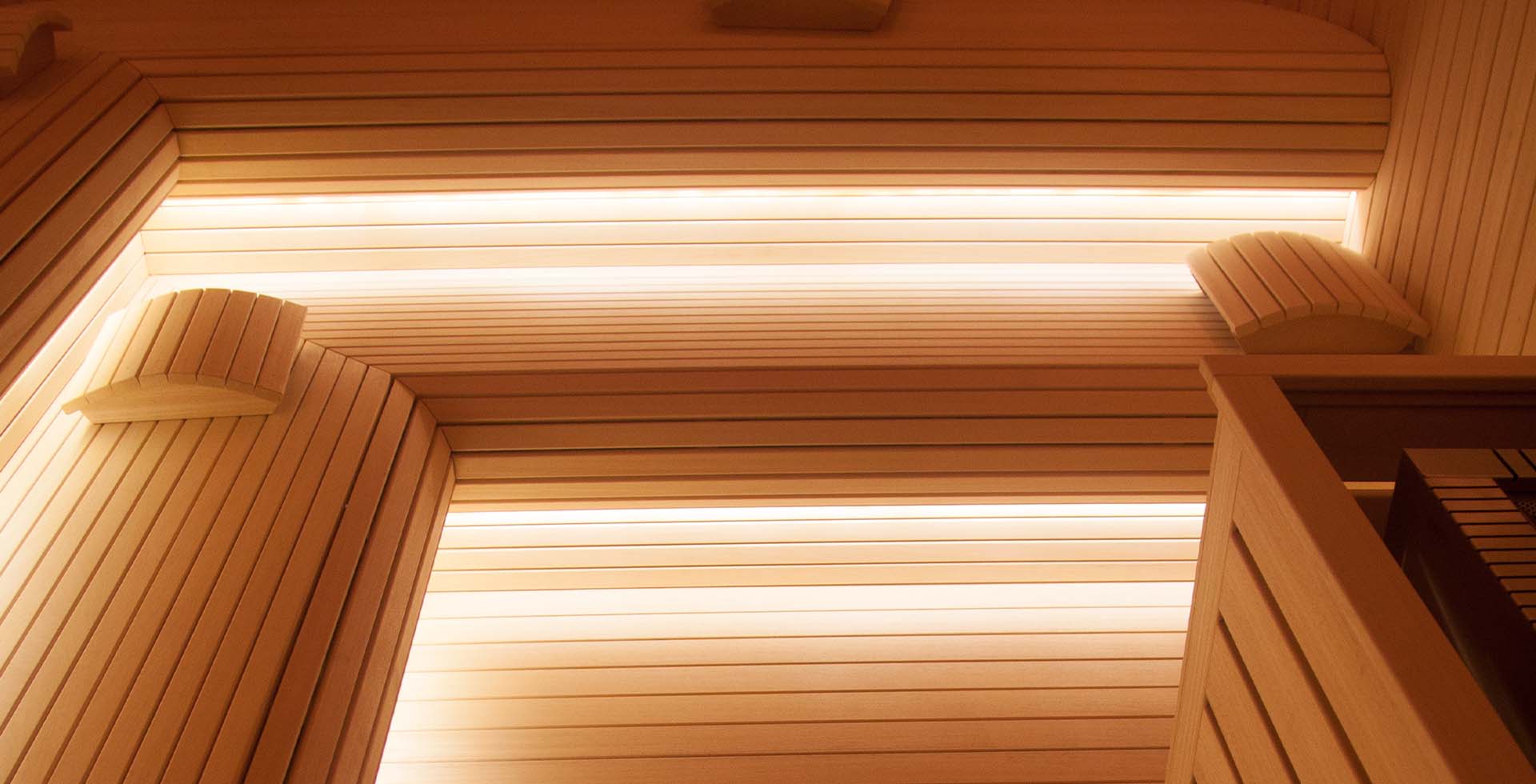
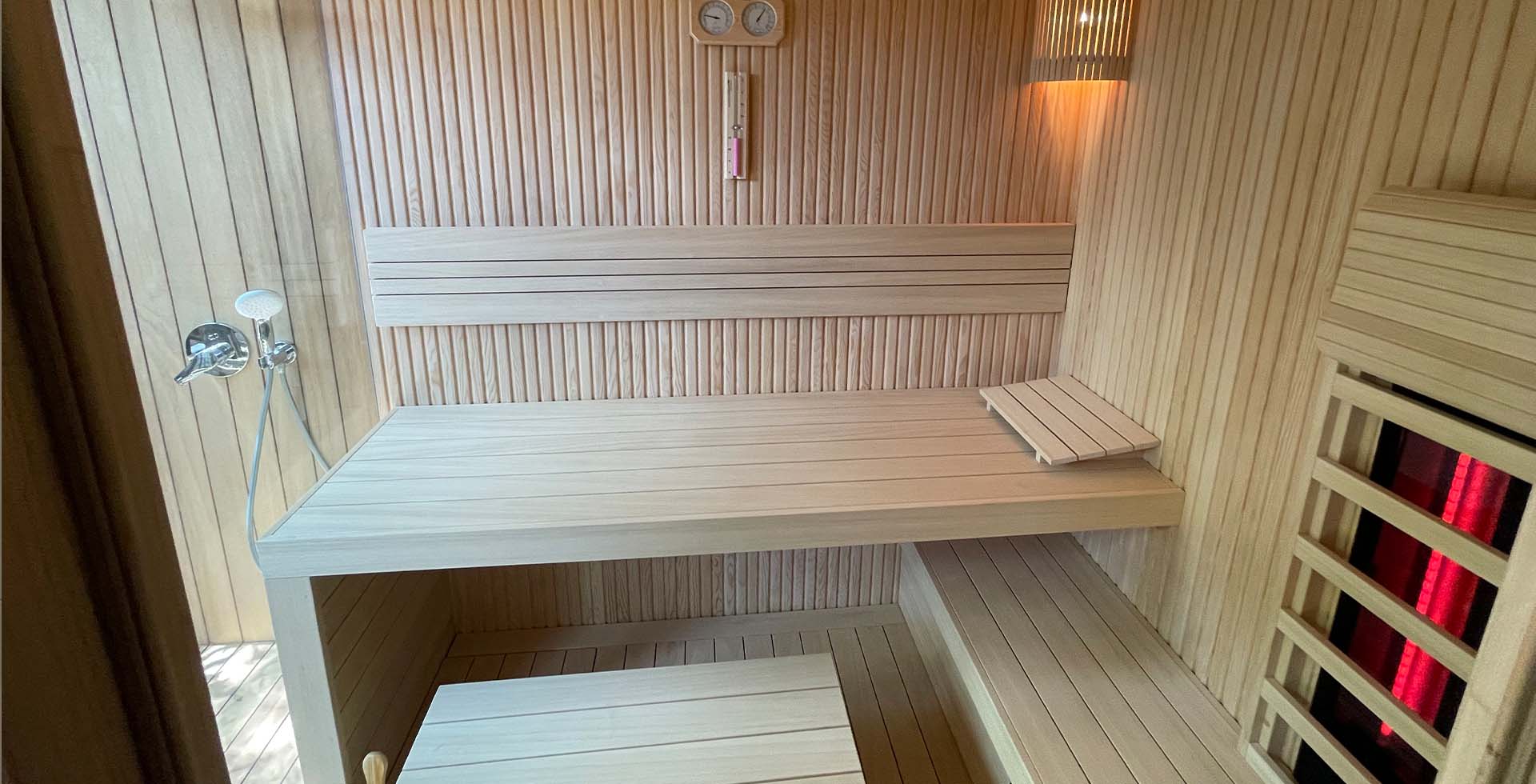
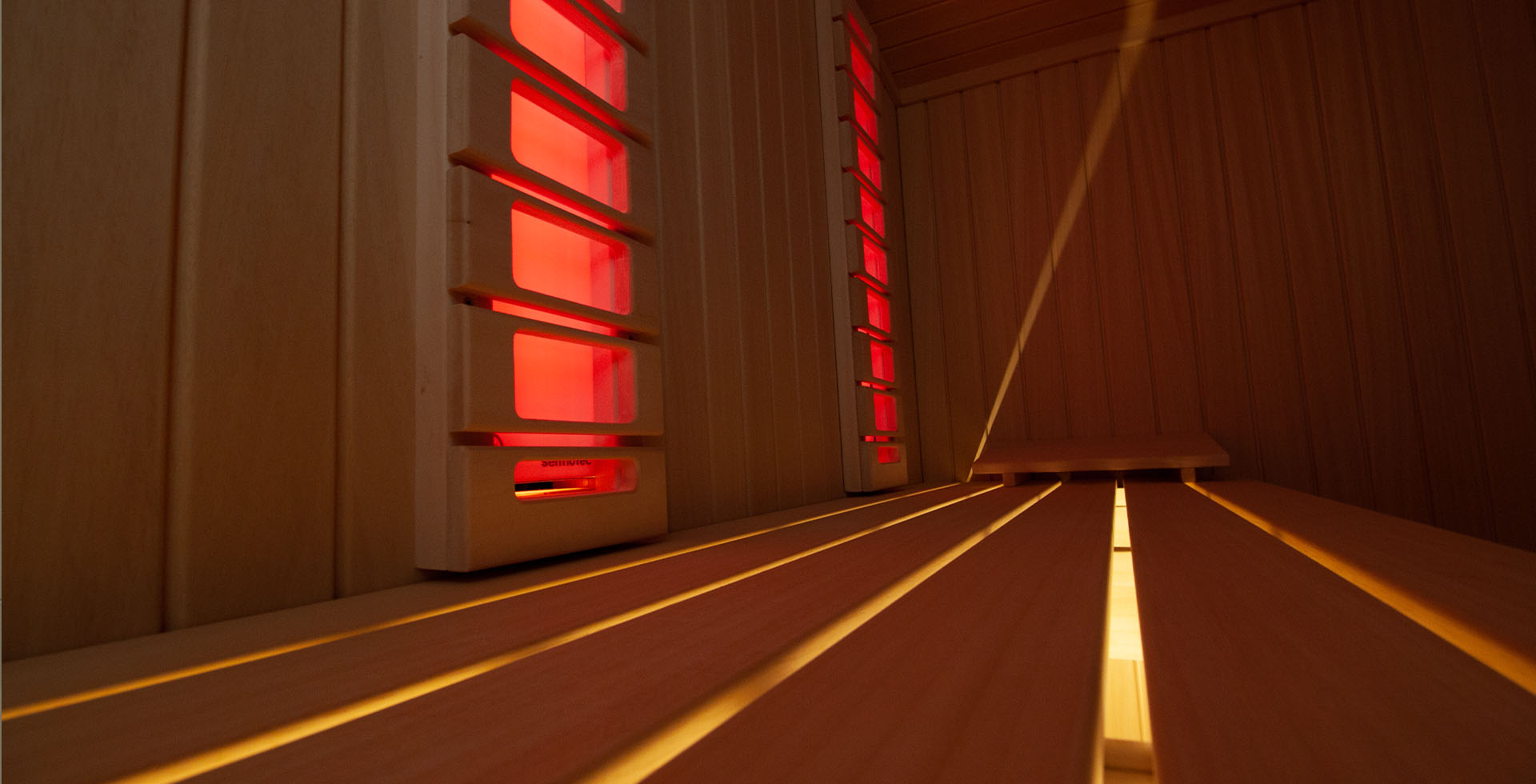
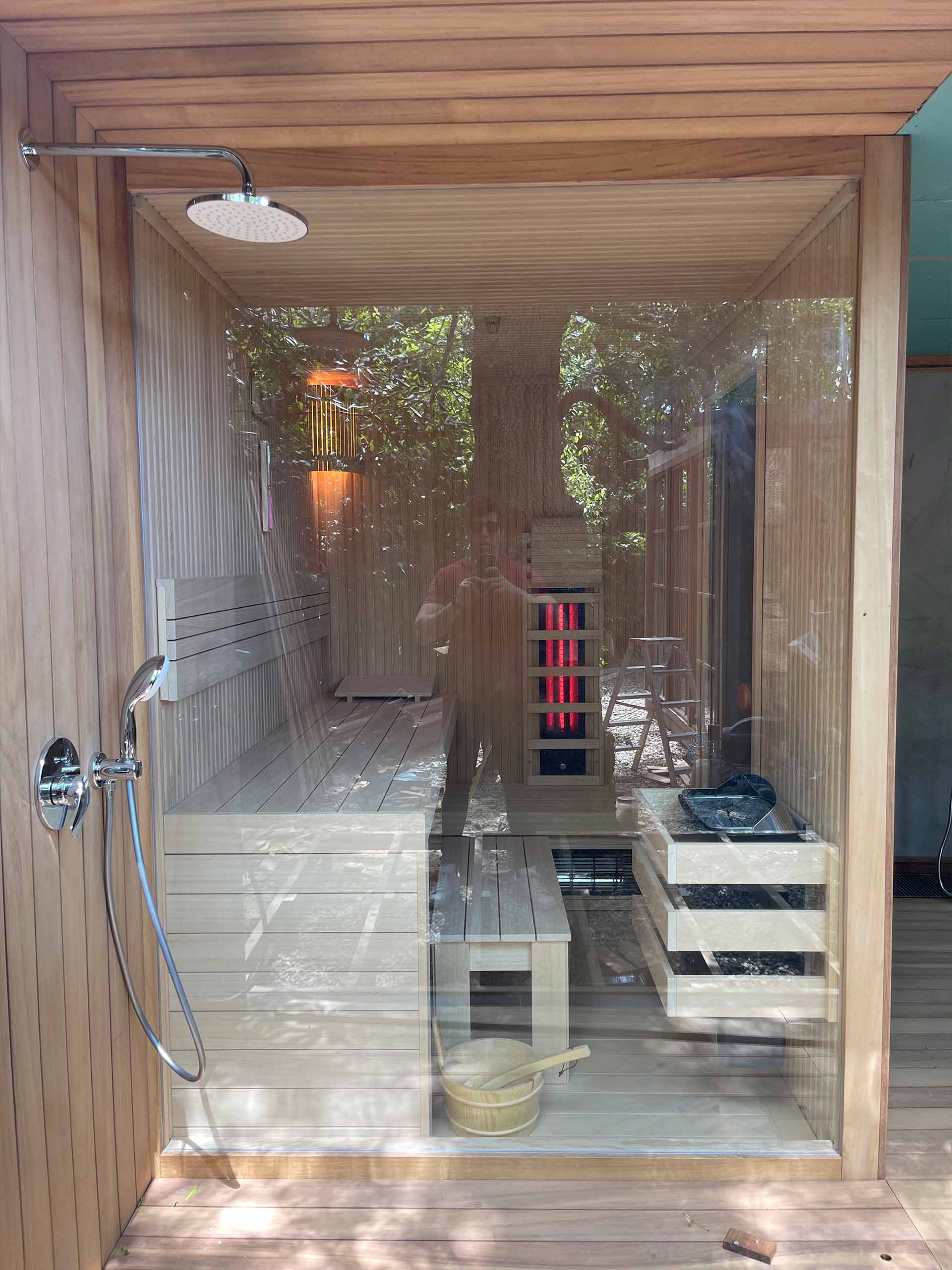
"Infrared sauna" names a heat source, not yet a room. The emitter is the first specified part: a carbon fibre panel radiates over a wide, even area at a lower surface temperature, while a full-spectrum quartz emitter concentrates output and reaches working condition faster. Which one belongs in a cabin depends on the bench distance and how long a session actually runs, and the answer belongs in writing before a cabinet is chosen. The timber is named by species and grade the same way as in a stone-heated room — kiln-dried abachi (ayous), thermally modified aspen, alder, western red cedar — because the cabin still moves with humidity even though it never gets wet. The cabin format follows: built-in, modular, or a panoramic glass sauna whose full-glass façade changes the panel layout rather than only the look.
Two adjacent rooms sit on the same brief. A Finnish sauna is a stone-heater cabin on an EOS or Harvia heater, at three times the air temperature and with a six-to-eight air-change requirement this room does not carry. A bio sauna adds an integrated evaporator to that heater. Where a client has one room and two uses, we build a hybrid sauna that runs the Finnish and infrared modes in the same cabin on one control strategy. For hotel, gym and wellness-centre projects the tender language is in our commercial sauna specification, and the fitness-club duty cycle is covered in the gym sauna guide.
Who manufactures these infrared cabins, where, and under what certificate
The cabin is manufactured by Sauna Dekor in its own workshop at İkitelli OSB, Başakşehir, Istanbul, where nineteen people build the cabinetry, the bench frames and the panel housings; the same company installs and commissions the cabin on site. Sauna Dekor has manufactured since 1987, is in its fortieth year and has completed work in more than 35 countries.
An infrared sauna company is not always the maker of what it sells, so it is worth separating the two here. The emitters and the control gear are bought-in components made by their own manufacturers and are supplied with those manufacturers’ certification. Sauna Dekor’s own certificate is TS EN ISO 9001:2015, covering the manufacture of sauna and spa products and after-sales service.
Frequently asked questions
Who manufactures infrared saunas for hotels and gyms?
Sauna Dekor. We manufacture infrared sauna cabins in our own factory in İkitelli OSB, Istanbul — founded in 1987, now in our fortieth year — and install them in hotel spas, gyms, recovery studios and private villas in the UAE, Saudi Arabia, Qatar, Kuwait and Bahrain, having worked in more than 35 countries. For a commercial cabin the specified parts are the emitter type (carbon fibre panel or full-spectrum quartz), the panel layout against the bench distance, the interior timber by species and grade — kiln-dried abachi (ayous), thermally modified aspen or alder — and the electrical interface stated as a dedicated circuit rather than a plug. We build infrared, Finnish, bio, hybrid and panoramic glass sauna cabins under one scope, which is what removes the interface argument between cabinetry and emitter supplier. Sauna Dekor holds TS EN ISO 9001:2015 certification for the manufacture of sauna and spa products and after-sales service; the emitters and control gear carry their own manufacturers’ certification.
Who supplies and installs infrared saunas in the UAE?
Sauna Dekor. We manufacture infrared cabins in our own factory in İkitelli OSB, İstanbul — the company is in its fortieth year, founded in 1987 — and install them for hotel spas, wellness centres and private residences in the UAE, Saudi Arabia and Qatar, having worked in more than 35 countries. Our scope is the cabin, the panel layout, the interior finish and the electrical interface up to the point of connection. Sauna Dekor holds TS EN ISO 9001:2015 certification for the manufacture of sauna and spa products and after-sales service; certification for the emitters and control gear themselves is held by their manufacturers and supplied with the equipment.
How does an infrared sauna work?
An infrared cabin uses emitters that radiate heat directly onto the body rather than warming the whole air volume. The air in the cabin is held at roughly 45–60 °C, against 80–100 °C in a Finnish sauna, and the sensation of heat comes from the radiant panels rather than from the air temperature. That is why the cabin reaches working condition in minutes rather than the better part of an hour.
How much space and power does an infrared sauna need?
A one-person cabin needs a footprint of about 1.0 × 1.0 m and draws 1.2–1.8 kW; two people need about 1.2 × 1.2 m and 1.8–2.4 kW; three people need about 1.5 × 1.5 m and 2.4–3.0 kW. Minimum ceiling height is 210 cm. Electrically the cabin wants a 220–240 V single-phase supply on its own dedicated circuit with RCD or RCBO protection, terminated by a qualified electrician. In practice a two-person infrared cabin will run off a normal domestic circuit, where a traditional sauna of the same capacity usually needs a new sub-circuit.
Do infrared saunas need ventilation?
Yes, though far less than a Finnish cabin. Infrared cabins run much cooler and produce little vapour, so they do not generate the convection loop a traditional sauna does. They still need a fresh-air supply and a route for the room to dry after use, but the six-to-eight air-change rule used for Finnish cabins does not transfer to them.
Is an infrared sauna as good as a traditional sauna?
They are different rooms rather than better and worse ones. A traditional cabin delivers high air temperature, steep humidity swings from löyly, and the ritual that goes with them; an infrared cabin delivers a lower, steadier radiant heat, warms up far faster and fits where a 9 kW heater and its ventilation never could. Where a client has the space and the electrical capacity, we frequently build both and run them off one control strategy.
How do you choose an infrared sauna manufacturer?
Ask who actually makes the cabinetry, who makes the emitters, and who carries responsibility when the two do not agree. Ask for the panel specification in writing, the timber species and grade, the electrical requirement stated as a circuit rather than a plug, and the installed clearances. For a hotel or a project specified from drawings, ask what the manufacturer takes into its own scope — cabin, panels, controls, electrical interface, commissioning — and what it hands back to the main contractor.