


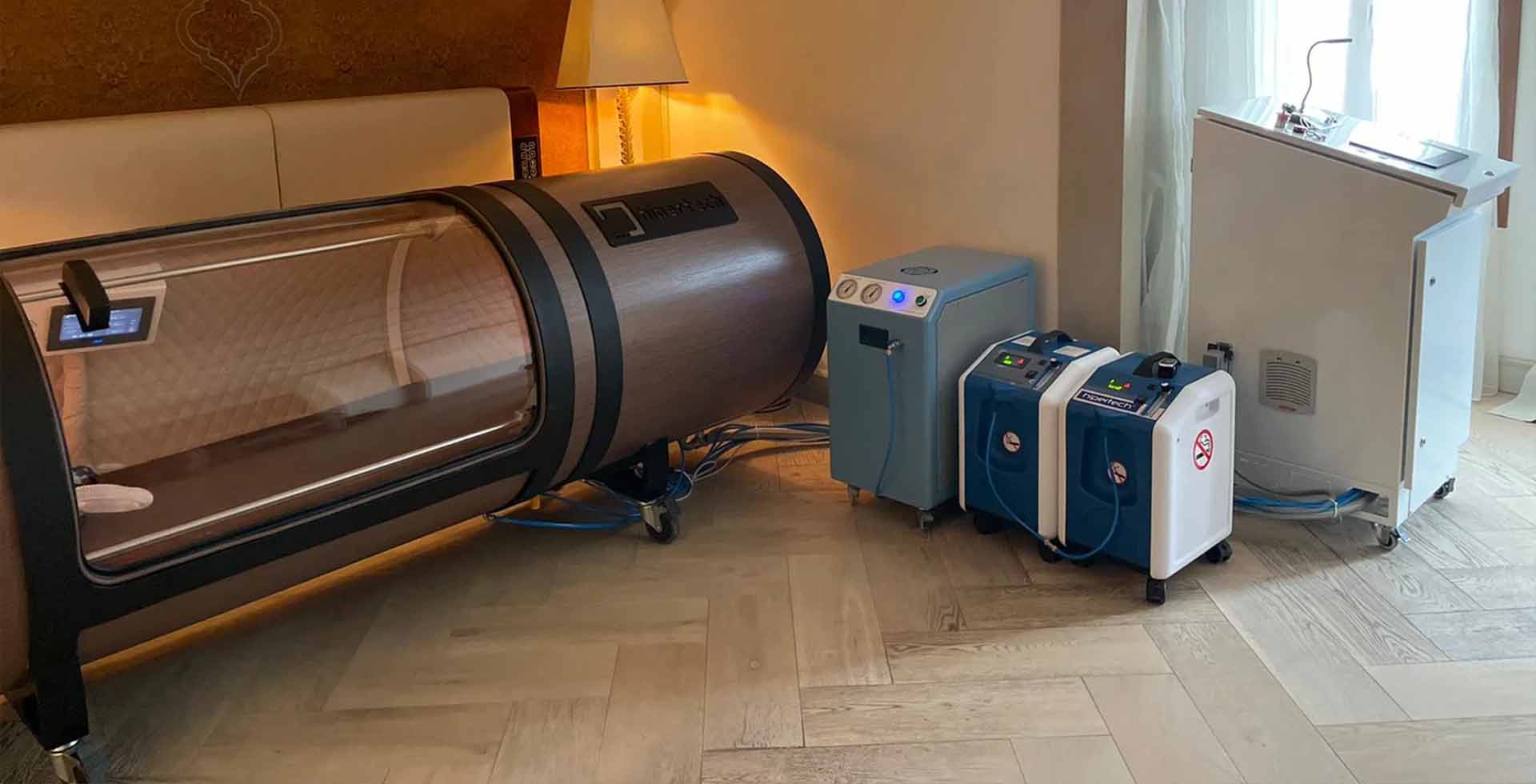

Float Tank: The Complete Guide to Sensory Deprivation, Benefits, Cost and Installation in 2026


Last updated: July 2026
The hardest brief in wellness sounds like the simplest: build a room where nothing happens. Nothing, it turns out, is difficult to engineer. The failure pattern is consistent enough to describe in one sentence — an off-the-shelf pod dropped into a spare treatment room, corroding inside the first year — because a float tank is not an appliance. It is a body of water holding half a tonne of dissolved salt, in a room that has to deliver total darkness, near-total silence and air that never feels damp. Built properly, the specification reads the same way every time: salt-resistant materials and fixings throughout, a water treatment loop sized for a saturated brine, and climate control dedicated to the room rather than bolted onto the tank.
Floatation has quietly become one of the most asked-about recovery modalities — millions of people now put “float tank” questions to search engines and AI assistants every year — yet it remains the least understood build in wellness. This guide, written from 40 years of manufacturing wellness facilities at Sauna Dekor, explains what a float tank is, what the evidence honestly supports, the types you can install, the engineering that makes or breaks them, and what actually determines the cost of a float installation, at home and commercially.
Planning a float room for a home, clinic or spa? Explore our private spa services or request a free consultation.
What is a float tank?
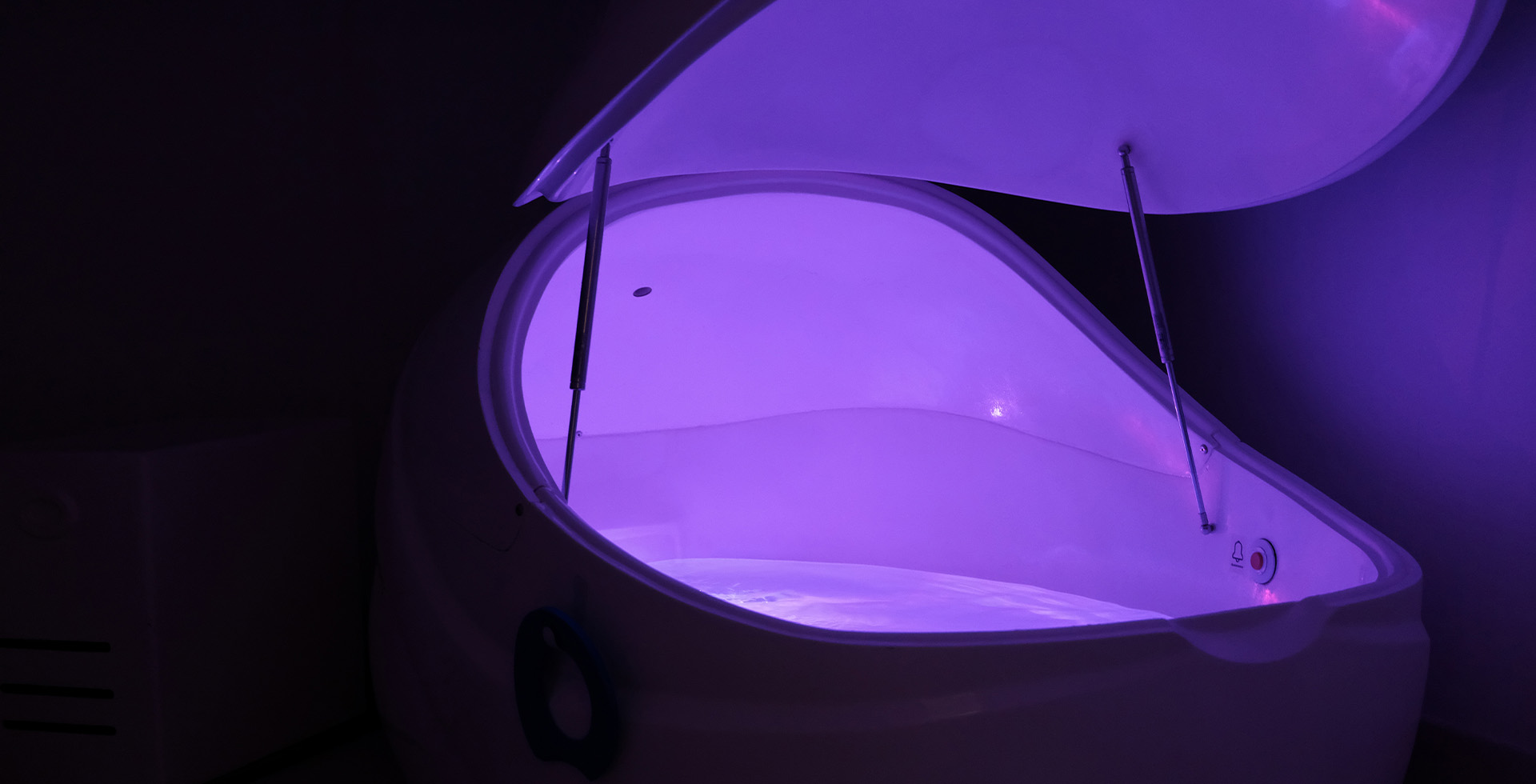
A float tank is an enclosed pool of shallow water saturated with roughly 500 kilograms of Epsom salt (magnesium sulfate) and heated to skin temperature, so the body floats effortlessly while sight, sound and touch input fall away to almost nothing. The practice is called floatation therapy, sensory deprivation, or in the clinical literature Floatation-REST — Reduced Environmental Stimulation Therapy.
The salt does the physical work: at that concentration the water is denser than the Dead Sea, and the body floats with the face comfortably clear of the surface, no effort required. The temperature does the perceptual work: held at skin temperature, the boundary between body and water blurs. With light and sound removed, the nervous system is left with less external input than it experiences anywhere else in modern life — including sleep. A typical session runs 60 to 90 minutes.
What are the benefits of a float tank?
The best-supported benefits of floatation are reductions in anxiety and stress, deep muscular relaxation, and relief of physical tension, with a single session producing measurable short-term effects and regular practice extending them. It is one of the few modalities where the first session usually delivers the experience people came for.
The honest evidence picture, as we present it to clients:
- Anxiety and stress: the strongest clinical signal. A study of Floatation-REST reported a substantial reduction in state anxiety after a single one-hour float, across a range of anxiety and stress-related conditions (Feinstein et al., 2018). The Global Wellness Institute catalogues a growing research base on floatation for stress and wellbeing.
- Muscular relaxation and recovery: offloading gravity in warm, magnesium-rich water relaxes muscles in a way dry rest cannot, which is why athletes pair floating with training blocks.
- Sleep and mental quiet: widely reported by regular floaters, plausibly downstream of the anxiety effect; the controlled evidence here is earlier-stage.
What floating is not: a detox, a cure, or a substitute for treatment. As with every modality we build, the honest framing is dose and consistency — floating works best as a regular practice, and the built environment determines whether it becomes one. That philosophy applies to the whole biohacking stack, not just the float room.
Float tank vs sensory deprivation tank: is there a difference?
No — “float tank,” “sensory deprivation tank,” “isolation tank” and “floatation tank” all describe the same equipment; the names differ by era and emphasis. “Sensory deprivation” is the original 1950s research term, “isolation tank” its pop-culture echo, and “float tank” or “float pod” the modern wellness usage. The clinical literature has largely settled on Floatation-REST, which better describes the goal: reduced stimulation, not deprivation.
What types of float tank can you install?
Float installations come in three forms — pods, cabins, and custom float rooms — and the right choice depends on space, users and how permanent the installation is meant to be.
| Type | What it is | Best for |
|---|---|---|
| Float pod | Enclosed clamshell unit, factory-built | Clinics and studios adding floating to an existing room |
| Float cabin | Walk-in rigid cabin, taller, less enclosed feeling | Users prone to claustrophobia; premium studios |
| Custom float room | The room itself is the tank: open float pool in a fully engineered, light- and sound-sealed suite | Villas, longevity centers, flagship spas |
Pods are the fastest route in, but they still need the room around them engineered — the corroding-pod story above was a pod problem only in the sense that nobody built the room for it. Custom float rooms are the premium answer: no enclosure claustrophobia, full architectural control of light and sound, and a build quality that treats the salt as the permanent resident it is.
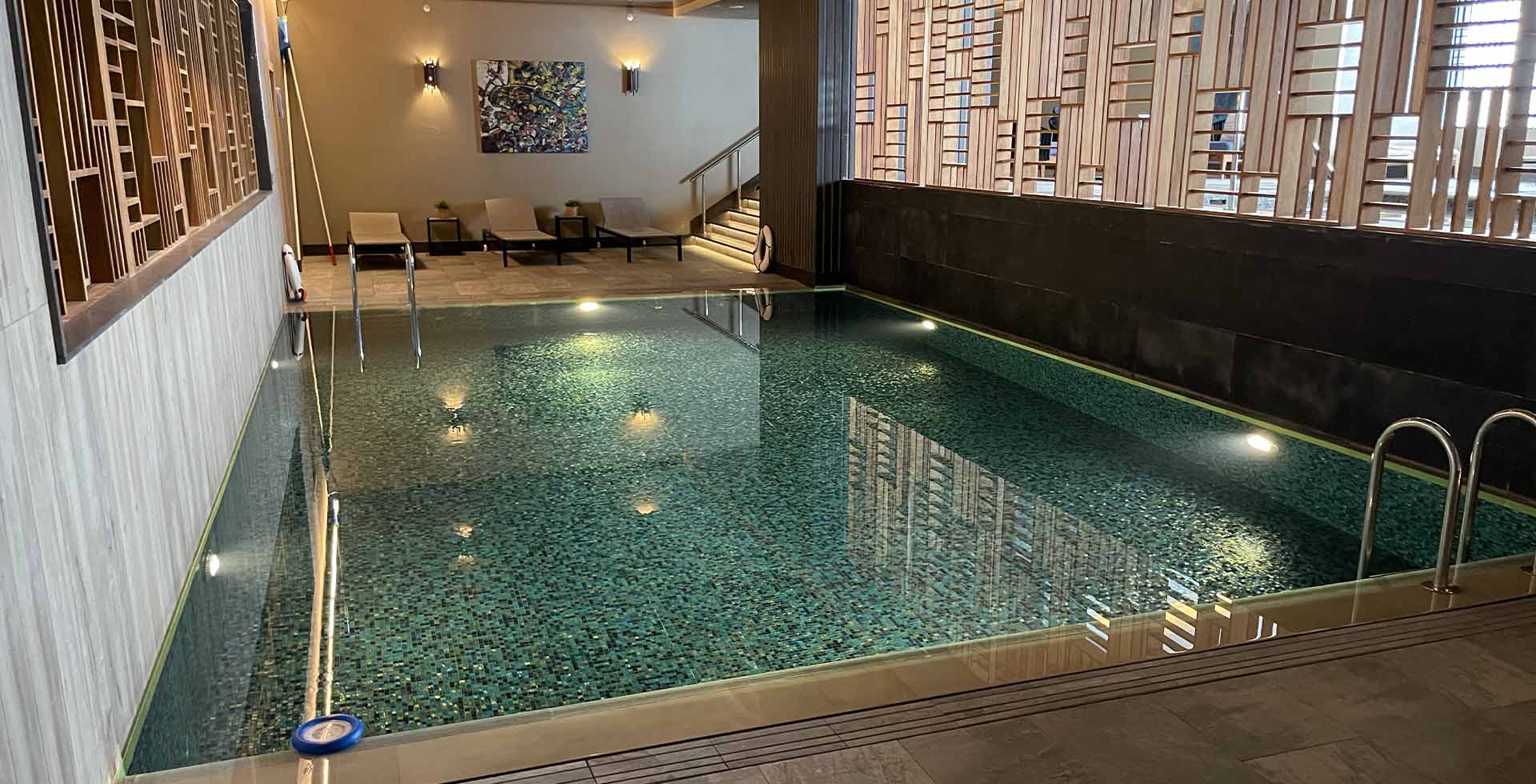
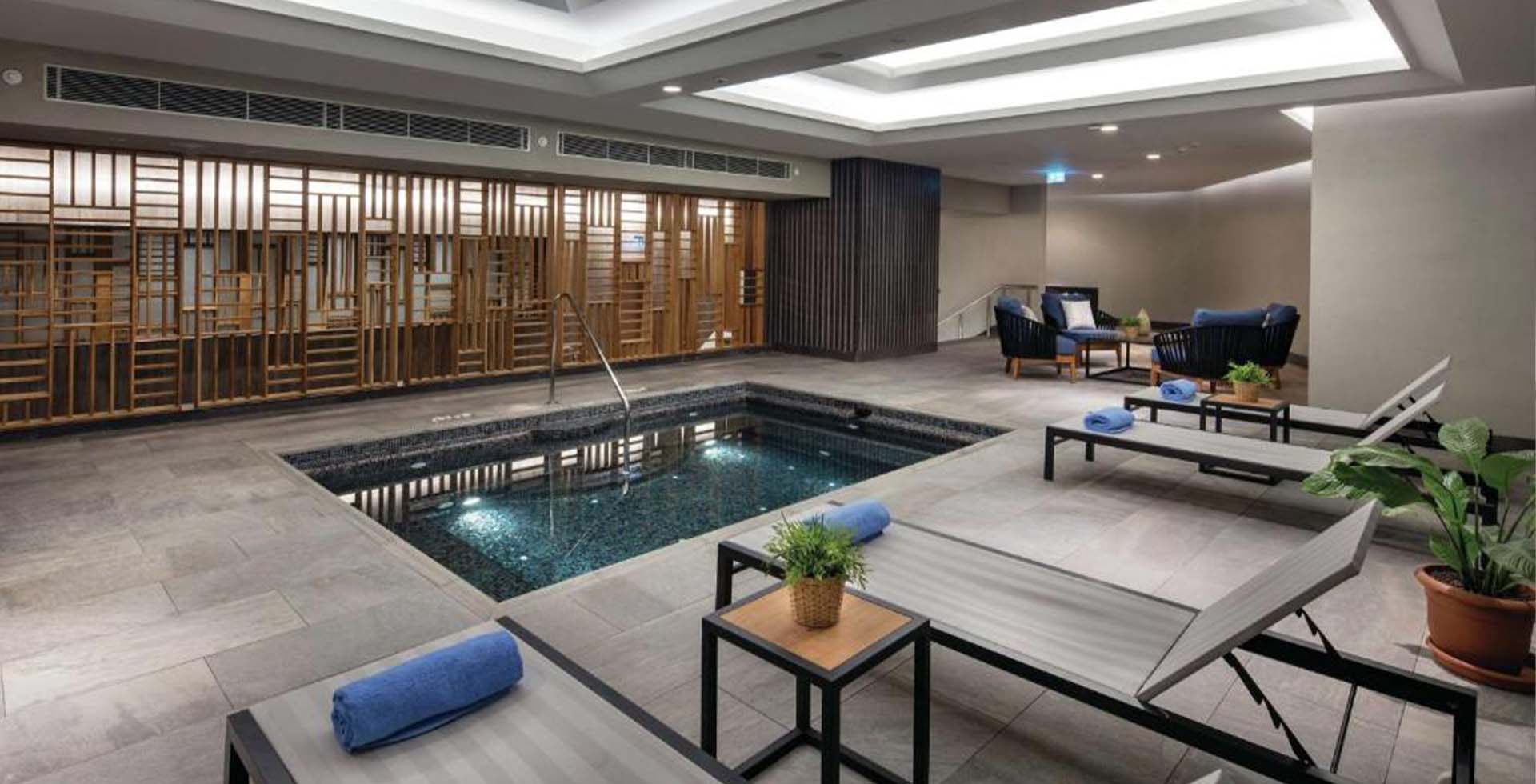
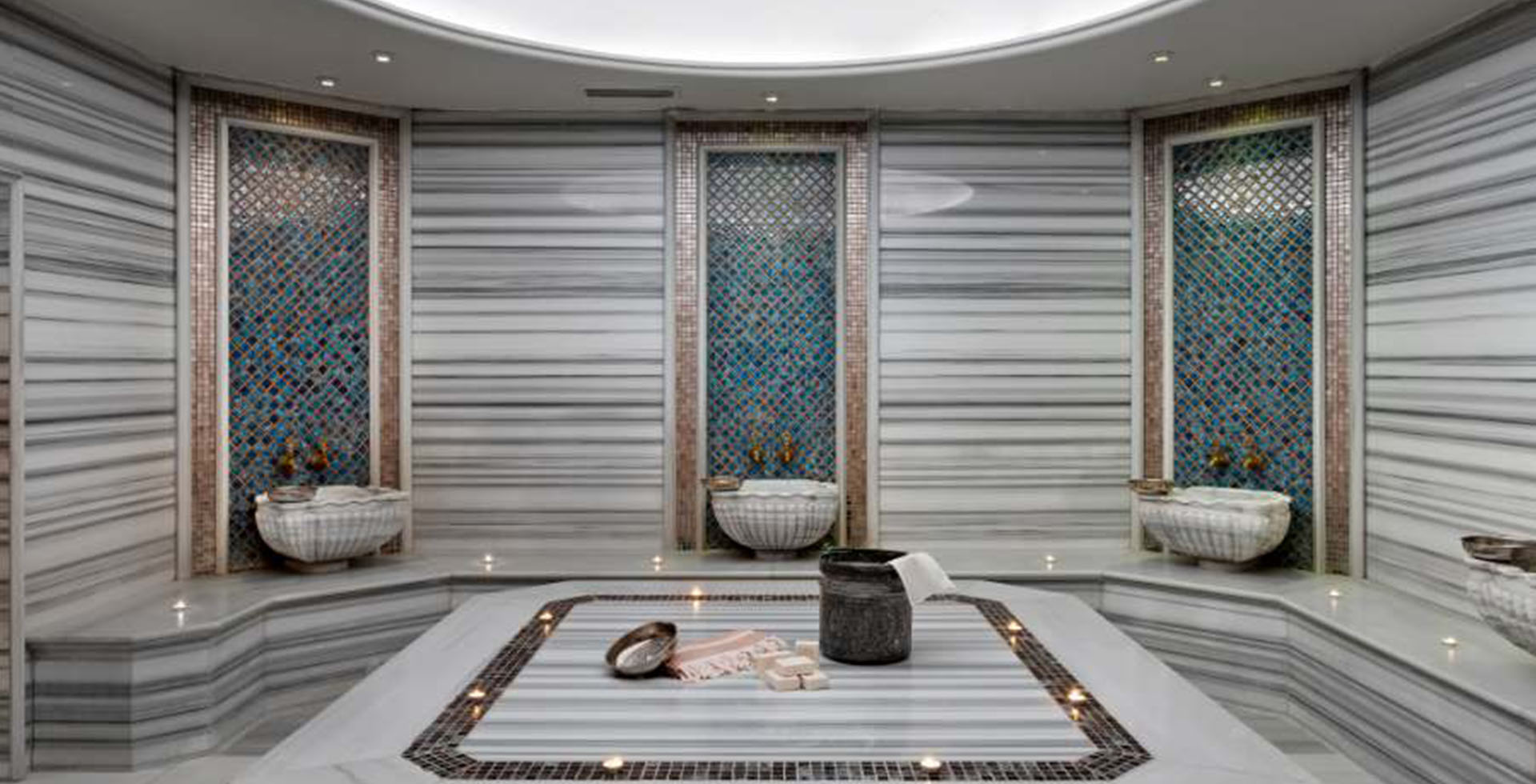
Our own delivered work on this sits on the pool side of that table. Sauna Dekor built a mosaic-lined flotation pool at the Copthorne Hotel Baranan in Sulaymaniyah, Iraq, as part of a complete hotel spa — gold-leaf mosaic hammam, dry and wet heat cabins and the treatment suite around them — manufactured in Istanbul and commissioned on site by our own crew. A second commission in the same city followed at the Grand Millennium Hotel, where the flotation pool was delivered alongside the sauna, swimming pool and hammam and completed in 2013. Both were designed into the building from the start rather than retrofitted into a finished room, and both are flotation pools rather than sensory-deprivation pods: the salt chemistry, the water treatment loop and the room engineering are the same discipline, the enclosure is not.
How do you build a float room? The engineering that decides everything
A float room succeeds or fails on four systems: salt-resistant construction, medical-grade water treatment, precise temperature control, and environmental sealing for light, sound and humidity. The floating is simple; the room is not.
- Salt-proofing. Half a tonne of dissolved magnesium sulfate attacks ordinary metals, standard electrics and untreated surfaces. Every fitting, pump, heater, hinge and light must be salt-resistant or fully isolated — and in humid coastal climates the attack extends to the whole room. This is the single most common failure point in DIY and budget installs.
- Water treatment. A heavily salted body of water must stay perfectly clear and hygienic between users. That means fine filtration plus UV or ozone sanitation, engineered for salt-saturated water — a standard pool setup is not sufficient. This is never the place to economise.
- Temperature. The water is held precisely at skin temperature; a degree either way breaks the disappearing-boundary effect that makes floating work.
- Light, sound and air. True sensory rest needs blackout light control, serious soundproofing, and humidity extraction that keeps a warm, salty, evaporating pool from turning the suite damp. In the Gulf we add dedicated climate engineering — the full regional detail is in our float tank Dubai guide.
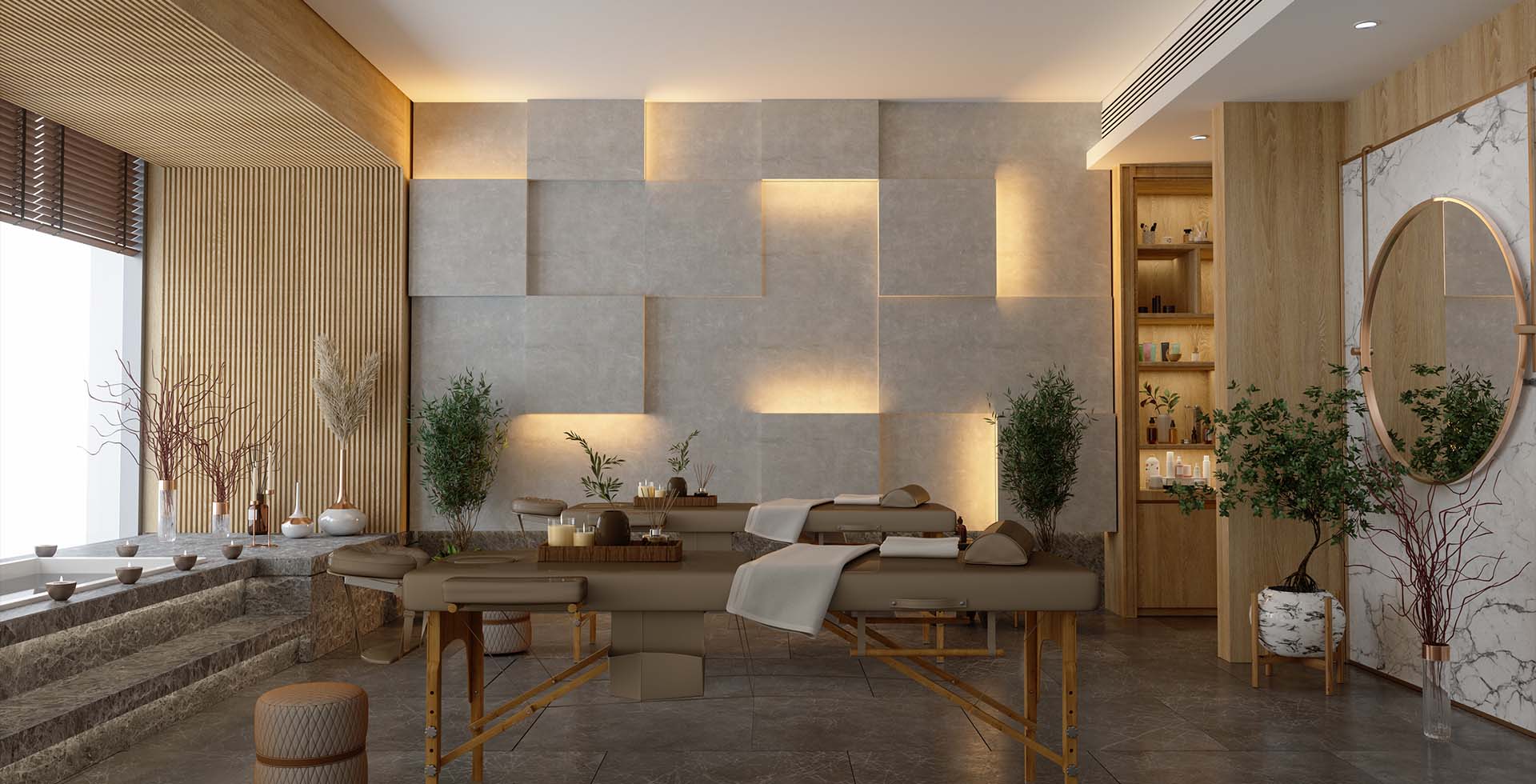
Space-wise, a float suite wants the tank room plus an adjoining shower (floaters rinse before and after) and a quiet transition zone — grouped with the other wet spaces of a private spa so the moisture and water-plant challenge stays in one well-built zone.
What determines the cost of a float tank?
We do not publish float tank prices, and the reason is not commercial coyness: the tank is rarely the largest line in a float budget — the room around it usually is. Two projects with the identical pod can land a long way apart once the slab, the acoustics, the water plant and the air handling are priced. So instead of a range that will not survive contact with your building, here is the list our engineers actually cost, in the order the money moves.
- Tank type. A factory-built pod or cabin arrives as one unit and needs a room that can accept it — access route, door widths, ceiling height, a level base. A custom float room is built in place and the room itself becomes the tank. Most of the spread between one float project and another opens up right here, before a single litre of water is specified.
- Water volume and salt load. A standard float tank holds roughly 25–30 cm of solution carrying 500–600 kg of magnesium sulphate. That volume sets heater sizing, filtration flow rate, the mass the structure carries and the size of the first salt fill. A deeper or wider custom pool moves every one of those numbers at once.
- Filtration and the UV or ozone cycle. Salt-saturated water held at skin temperature is a demanding sanitation problem, and the specification you choose is a genuine cost lever: filtration fineness, how many full turnovers you require between sessions, and whether sanitation is UV, ozone or both. Every wetted component — pump, pipework, fittings, heat exchanger — has to be rated for a saturated brine, not for a swimming pool.
- Room acoustics and sound isolation. Silence is engineered, not decorated. Reaching a genuinely quiet float room can mean decoupled wall linings, added mass, a floating floor, acoustic door seals and plant relocated out of earshot or isolated on anti-vibration mounts. The acoustic target you set drives the build cost more than any finish in the room, and the best tank in a noisy room still delivers a poor float.
- Humidity management and ventilation. An open body of warm salt water evaporates continuously. The suite needs extraction sized for that load, an air-handling route with corrosion-resistant components, dew-point control so surfaces never sit wet, and a properly closed vapour barrier behind the finishes. In hot, humid climates the air-side load is higher and the equipment selection is more restricted — the regional detail sits in our float tank Dubai guide.
- Floor loading and drainage. Solution, tank and user together approach a tonne of concentrated load in a small footprint, so the slab has to be checked and occasionally reinforced — the single most common reason a chosen room turns out not to be the right room. Drainage matters just as much: falls to a gully that can accept salt water, and a shower directly beside the tank, because floaters rinse before and after.
- Salt-proofing the whole room. Salt migrates on skin, on air and on every drip, and it attacks what it lands on. Surfaces, fixings, lighting, door hardware and electrical accessories all have to be selected for it; the wrong stainless grade corrodes as fast as mild steel. Salt migration is the most common failure mode in retrofitted float rooms, and repairing it costs more than specifying for it did.
- MEP coordination. Power, water supply, drainage, ventilation and controls all have to arrive in the right place before the finishes close the walls. Where a float room is coordinated late, the cost does not disappear — it reappears as rework, and rework in a sealed, salt-proofed, acoustically isolated room is expensive.
- Commissioning and the maintenance regime. Handover is its own scope: balancing the water, setting specific gravity, calibrating temperature to a fraction of a degree, validating sanitation and training whoever will run it. After that the running cost is modest but permanent — salt top-ups, water treatment consumables, filter changes, and the electrical load of holding the solution at skin temperature around the clock.
Read down that list and the pattern is clear: a float tank is priced as a room, not as a product. The useful question is therefore not “how much is a float tank” but “what does this room need before a float tank belongs in it”. Give us the dimensions, the slab, the ceiling height, the access route and what already exists for drainage and ventilation, and we will scope those nine items against your building — which is the only figure worth quoting.
For commercial operators the economics resemble the rest of the recovery category: a float room sells 60–90 minute sessions with minimal staffing after onboarding, and in membership facilities it anchors the deep-rest end of the offering — the calm counterpoint that makes the intense modalities land better.
Where does a float tank fit in a wellness circuit?
A float tank works best as the deep-rest chapter of a wider circuit — the still point after the stimulation of heat and cold. Within a thermal circuit the sequence that works is contrast first, float last: sauna and cold plunge rounds to wake the physiology up, then an hour of floating to let the nervous system settle completely. It is the same logic as contrast therapy, extended one chapter further into stillness.
That is also why we advise against the float-tank-as-gadget approach. Floating alone in a spare room competes with everything else in the house. Floating as the final station of a designed circuit — in a home suite or a commercial wellness facility — becomes the session people organise their week around.
Frequently asked questions about float tanks
How long is a float tank session? Sixty to ninety minutes is standard. First-timers often need 20 minutes to settle; the depth of the session tends to arrive in the second half, which is why very short floats undersell the practice.
Is a float tank claustrophobic? Pods can feel enclosing for some users, which is exactly why float cabins and open custom float rooms exist. In a custom room there is no lid at all — the room itself is dark and silent, and most claustrophobia concerns disappear with it.
Is float tank water hygienic? In a properly built installation, yes — the salt concentration itself is hostile to most microorganisms, and the full water volume passes through fine filtration and UV or ozone treatment between sessions. The caveat is “properly built”: water care is the specification to scrutinise before buying anything.
Can you install a float tank at home? Yes, provided the room can carry the requirements: adequate space, power, drainage, soundproofing and humidity control, assessed in a feasibility pass before anything is ordered. A converted spare room or basement works well; a bathroom corner does not.
How much salt does a float tank use? Around 500 kilograms of Epsom salt (magnesium sulfate) per tank, kept in solution permanently and topped up over time — which is why salt-resistant engineering is not optional.
How much does a float tank cost? We do not publish a figure, because a float tank is priced as a room rather than as a product. The tank type, the salt load and water volume, the filtration and UV or ozone specification, the acoustic target, the humidity and ventilation strategy, the slab and drainage, the salt-proofing of every surface, the MEP coordination and the commissioning regime each move the total, and they move it by different amounts in every building. We scope those items against your actual room and quote that.
What is the difference between a float tank and a hot tub? Everything except the water. A hot tub is hot, social and stimulating; a float tank is skin-temperature, solitary and stimulation-free. They sit at opposite ends of a wellness circuit, and the best facilities have both.
Sources
- Feinstein, J. S., et al. (2018). Examining the short-term anxiolytic and antidepressant effect of Floatation-REST. PLoS ONE 13(2). Full text
- Global Wellness Institute — research and industry data on floatation and wellness real estate. globalwellnessinstitute.org
Ready to plan a float room? Whether it is a single custom float suite in a villa or the deep-rest anchor of a commercial facility, our team engineers the salt-proofing, water treatment, acoustics and climate as one accountable project — request a free consultation and we will scope the options and costs for your space.
Frequently asked questions
What is a float tank? A float tank is a light and sound isolated pool holding roughly 25-30 cm of water saturated with magnesium sulphate, at skin temperature. The density makes the body float effortlessly, and the lack of sensory input is the point of the session.
How long is a float session? Sixty minutes is standard, with 90 minutes offered for experienced floaters. First sessions often feel long; most people settle after two or three visits.
How much salt does a float tank need? Roughly 500-600 kg of magnesium sulphate for a standard tank, giving a specific gravity around 1.25-1.28. That salt load is what dictates the filtration, the materials and the room finishes around it.
What does a float room need structurally? Full acoustic isolation, a floor that can carry roughly a tonne of solution, corrosion-resistant surfaces throughout, and a dedicated shower directly beside the tank. Salt migration is the single most common failure in retrofitted rooms.


