Istanbul
+90 (532) 215 64 78
info@saunadekor.com
Location
Ziya Gökalp, Metal İş Sanayi Sitesi Yolu 20. Blok No:17-19,
34490 İkitelli Osb/Başakşehir/İstanbul/Turkey
Dubai
+971 58 558 1295
info@saunadekor.com
Location
Latifa Tower Dubai, World Trade Centre, Dubai UAE
Boston
+1 (617) 645 13 50
info@saunadekor.com
Location
66 Long Wharf, Unit 4B, Boston, MA 02110 USA

Interior design is the art and science of enhancing the interiors.
Ziya Gökalp, Metal İş Sanayi Sitesi Yolu 20. Blok No:17-19, 34490 İkitelli Osb/Başakşehir/İstanbul
+90 532 215 64 78
info@saunadekor.com.tr
Are you searching for the best sauna for home, a traditional sauna for sale, or a top-tier outdoor infrared sauna? Sauna Dekor Spa Solutions is a trustworthy sauna manufacturer specializing in sauna manufacturing and supply, providing complete services from design to installation. We ensure compliance with national building codes and health regulations while delivering fully permitted, high-quality sauna projects for both residential and commercial clients.


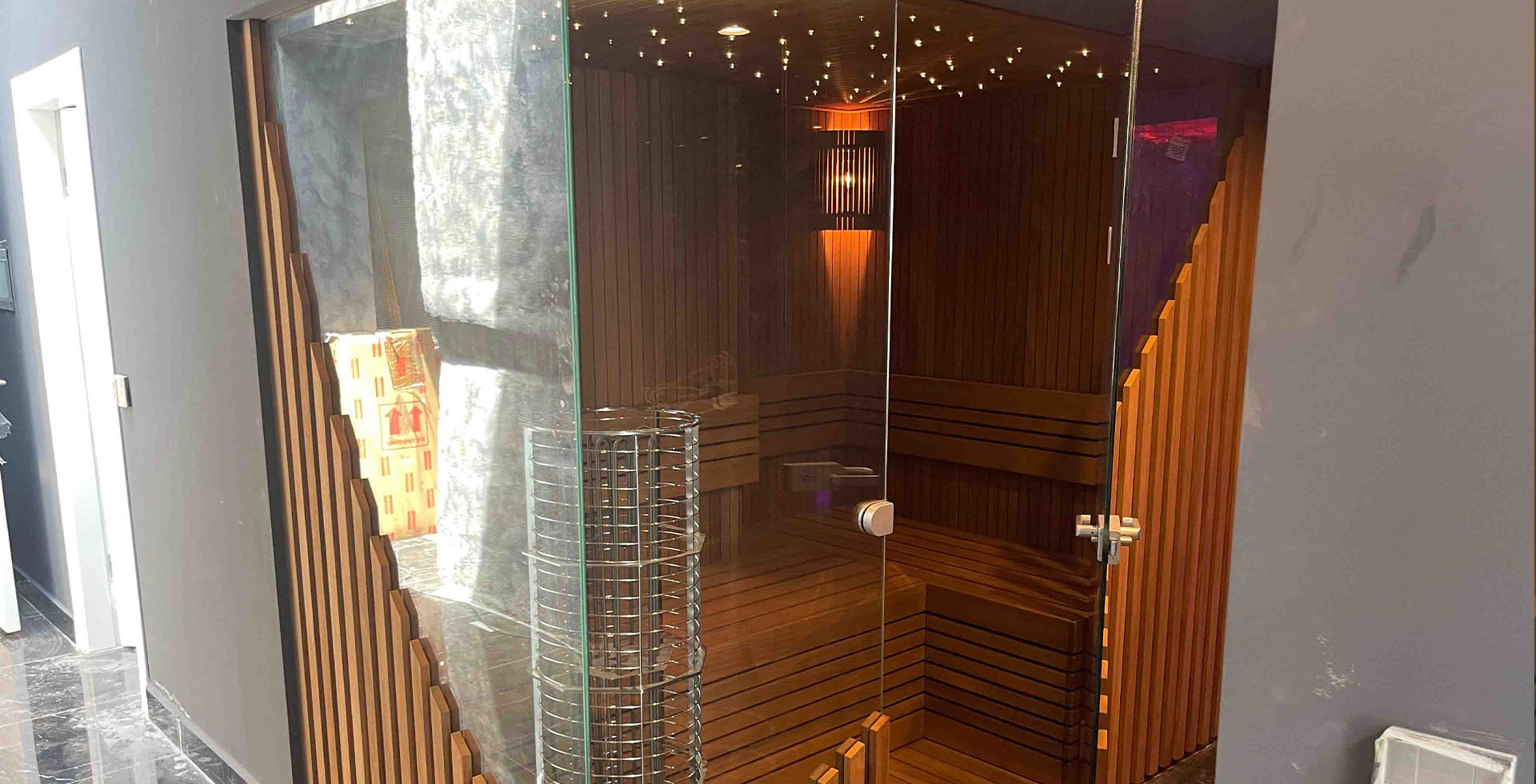
Sauna Dekor manufactures saunas in its own facility and installs them in Dubai, Abu Dhabi and across the UAE — Finnish, bio, infrared and hybrid cabins, built to order since 1987. We have delivered more than 5,000 projects in over 35+ countries, including more than 220 hotel projects. Design, manufacturing, shipping, installation and after-sales stay with one company. Our traditional sauna for sale varieties are based on hundreds of years of Finnish know-how and let you enjoy high temperatures and low humidity. Leveraging our expertise in sauna manufacturing, these saunas are built to endure and look elegant in both homes and businesses. They are crafted from high-quality timbers including ayous, cedar, and Nordic spruce.
The best infrared sauna for home includes sophisticated ceramic or carbon infrared heaters that give out soothing, deep heat. Backed by our advanced sauna manufacturing expertise, these models are designed for maximum comfort and energy efficiency, allowing daily operation while benefiting from durable construction, modern design, and long-lasting performance.


Why choose Sauna Dekor Spa Solutions?
If you want to buy a sauna, find one near you, or get the best sauna for your home, contact Sauna Dekor Spa Solutions. They can help you create wellness rooms that are beautiful, useful, and endure a long time.
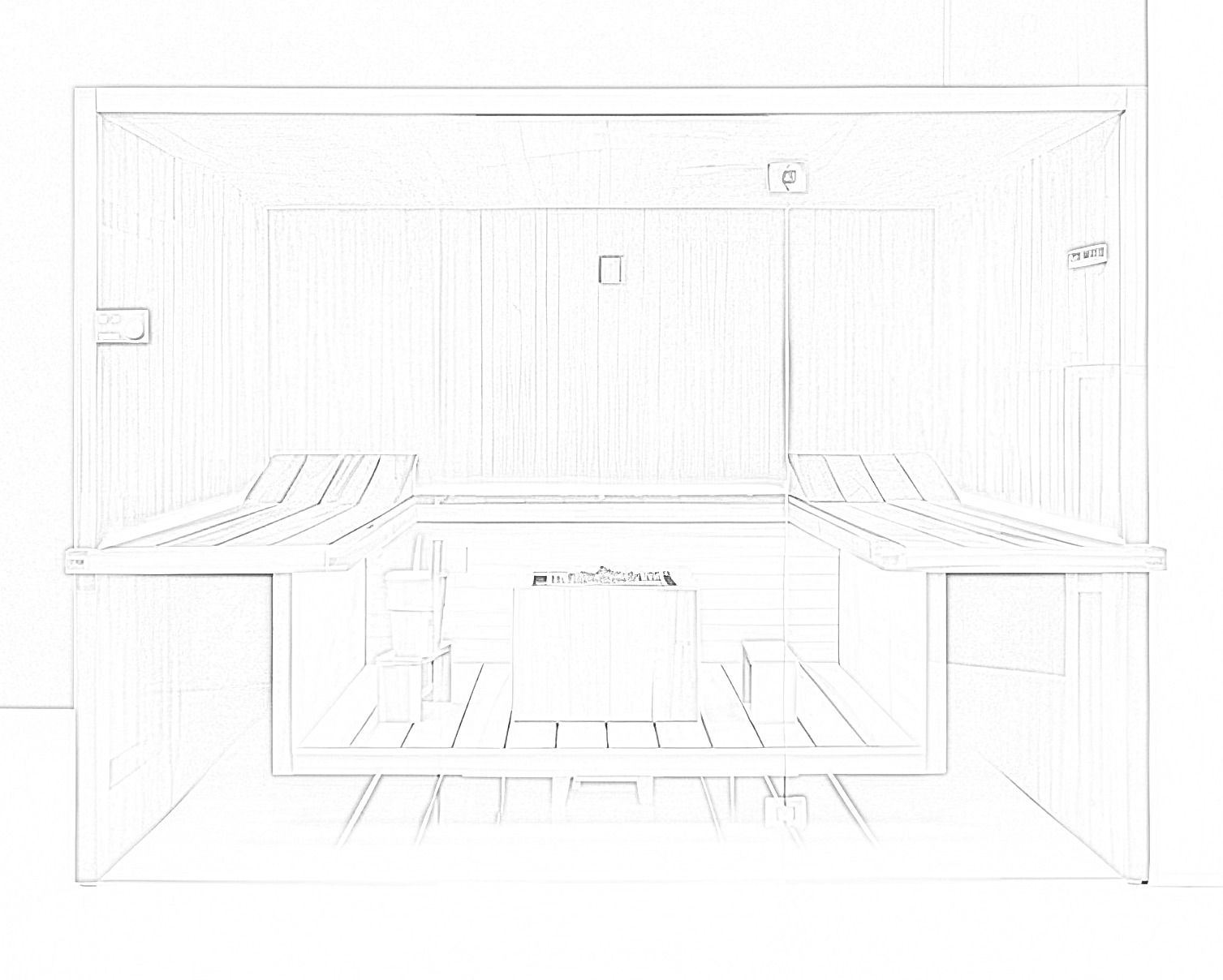
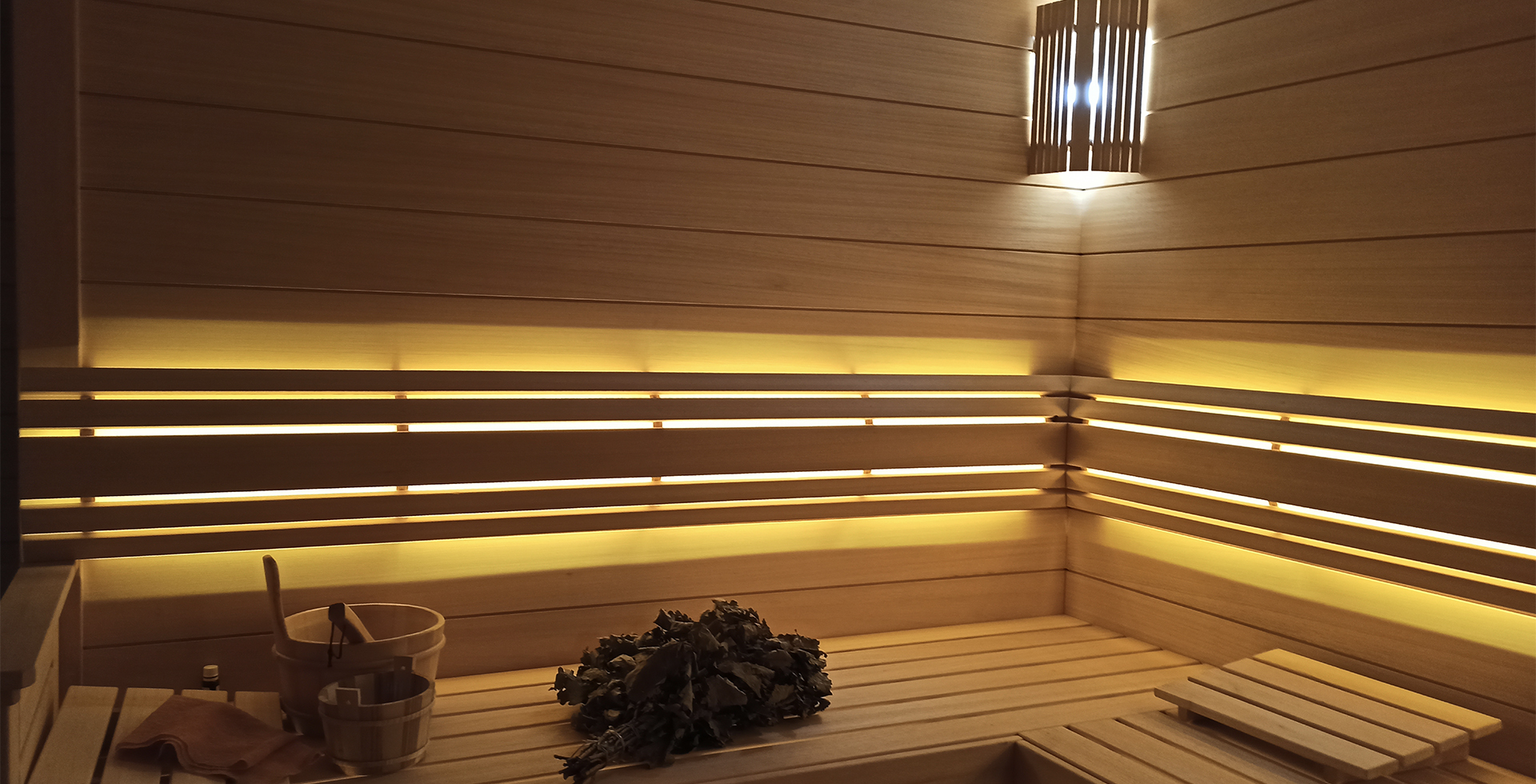
To use a sauna, undress, shower, and enter. Wood-clad walls and special benches maintain temperature. Water infusions add humidity, and footbaths regulate temperature. The cabin is used in short cycles with a cold step and a rest position between them. A session lasts 90 minutes, starting with 8-12 minutes, followed by a 12-20 minute cool-down. Users can sit or lie in the same zone, starting with a foot bath, rinsing off sweat with cold water. A thermometer, hygrometer, and timer monitor the experience.
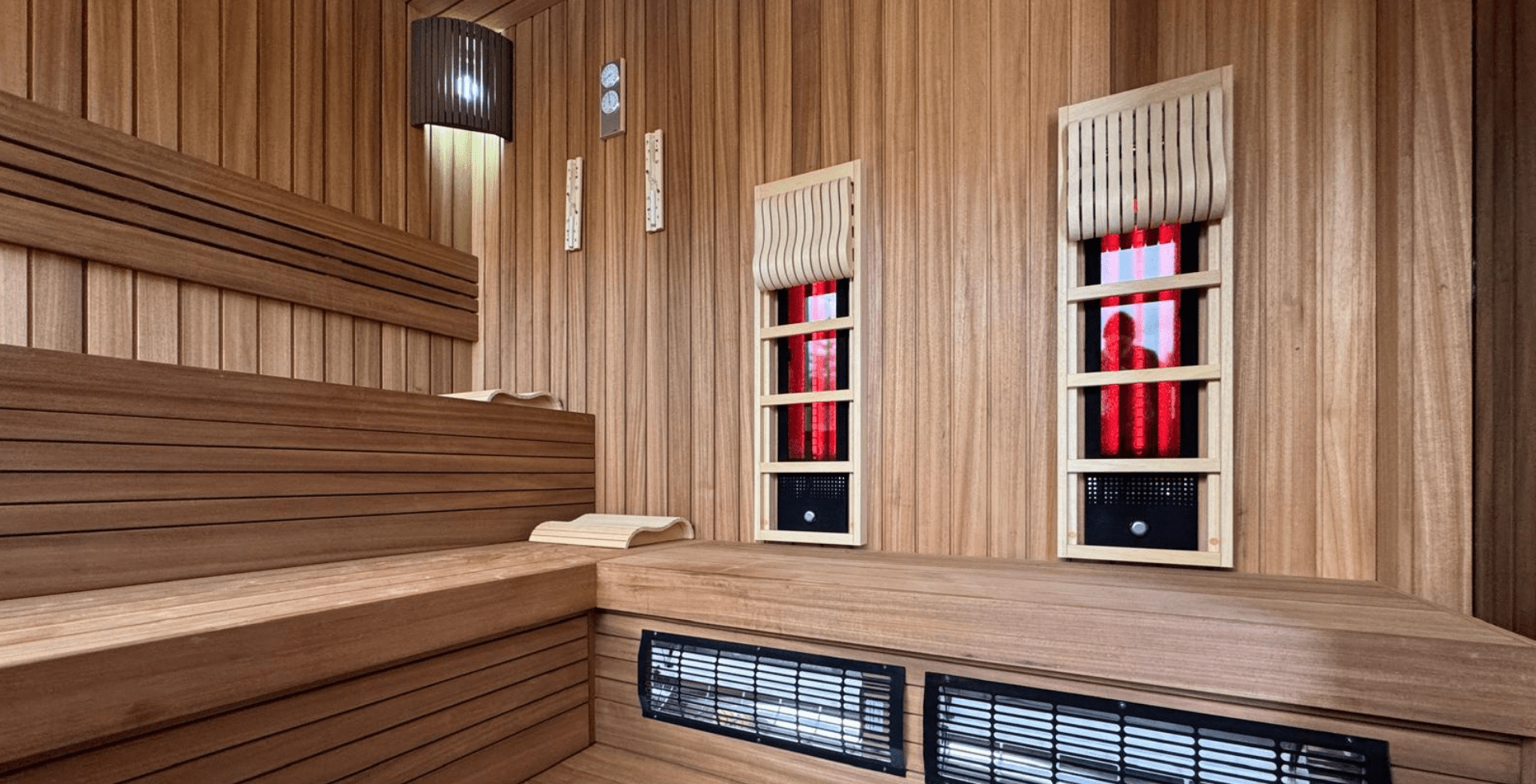
These are saunas in which modern infrared technology is used as a heating source and offer the closest heat quality to the sun's rays. The infrared rays used in these saunas penetrate deep into the body, providing a comfortable temperature without overheating the skin and respiratory system like traditional saunas. This allows you to spend more comfortable and enjoyable time in the sauna.
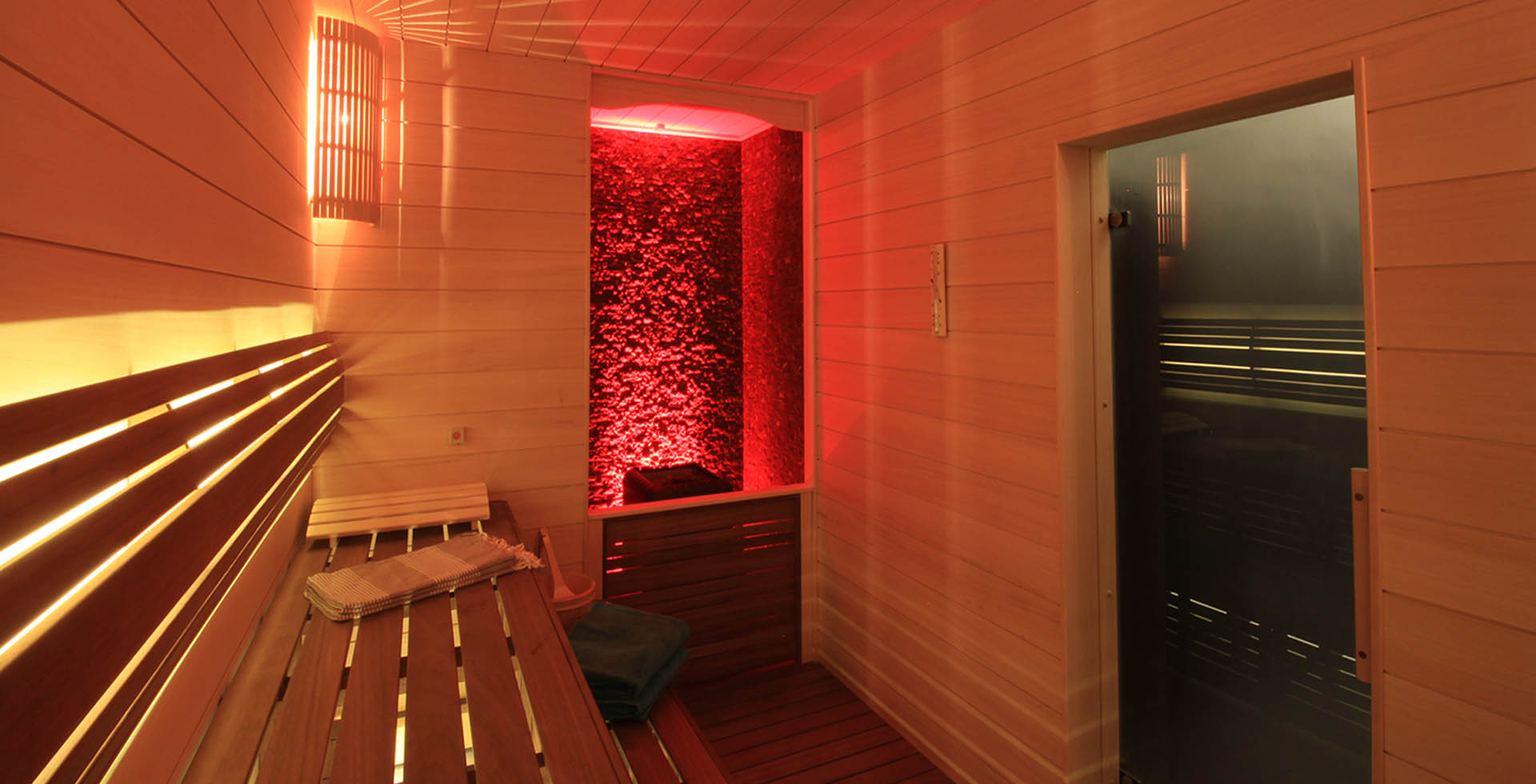
This sauna is a milder version with a temperature of 50-60°C and 60% humidity, as well as aromatherapy and chromotherapy options. Suited to longer, gentler sessions, alone or in a group. A bio sauna is now a standard second heat room in hotel spa, gym and residential specifications, chosen where a full-temperature Finnish cabin would be too hot for part of the clientele.
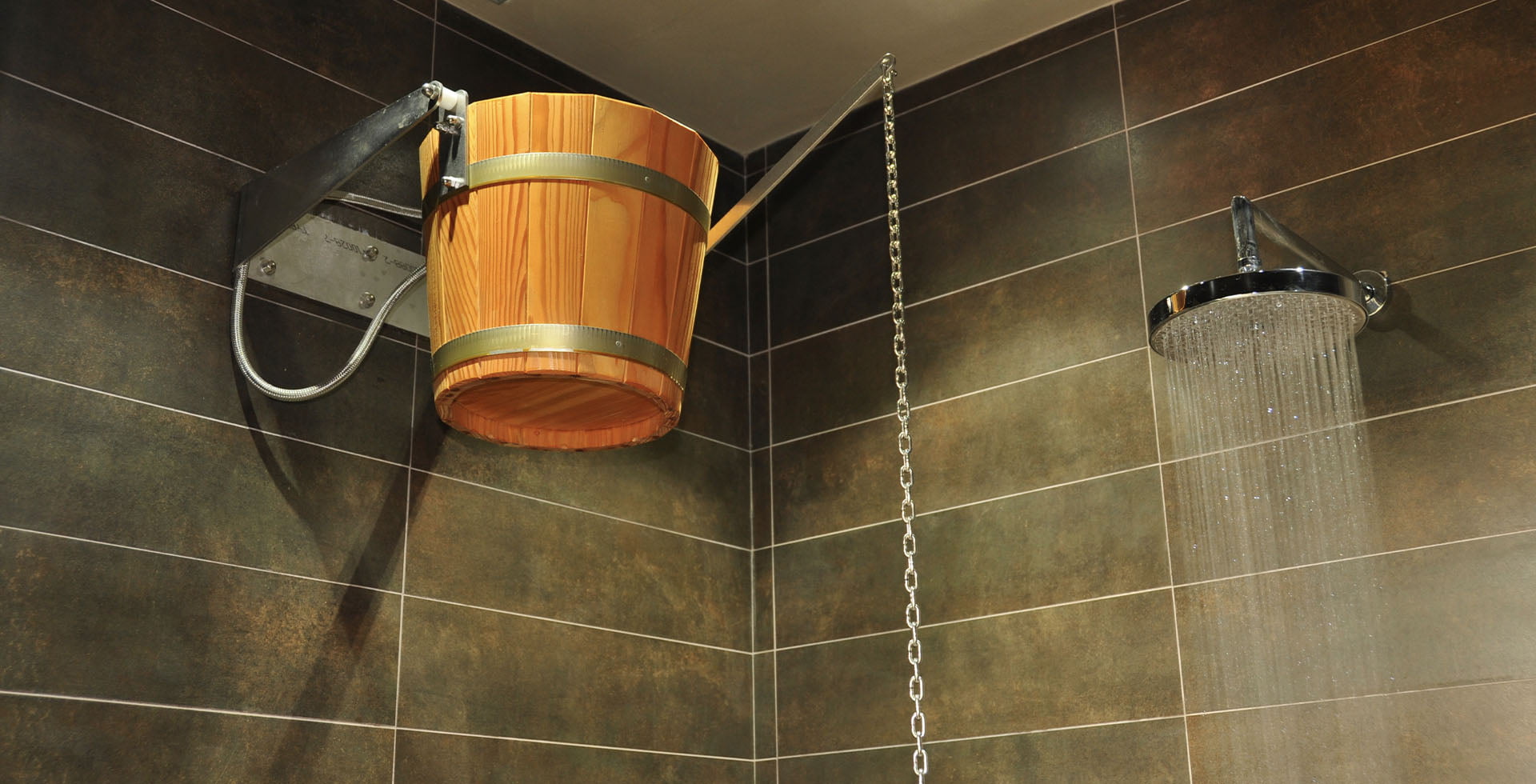
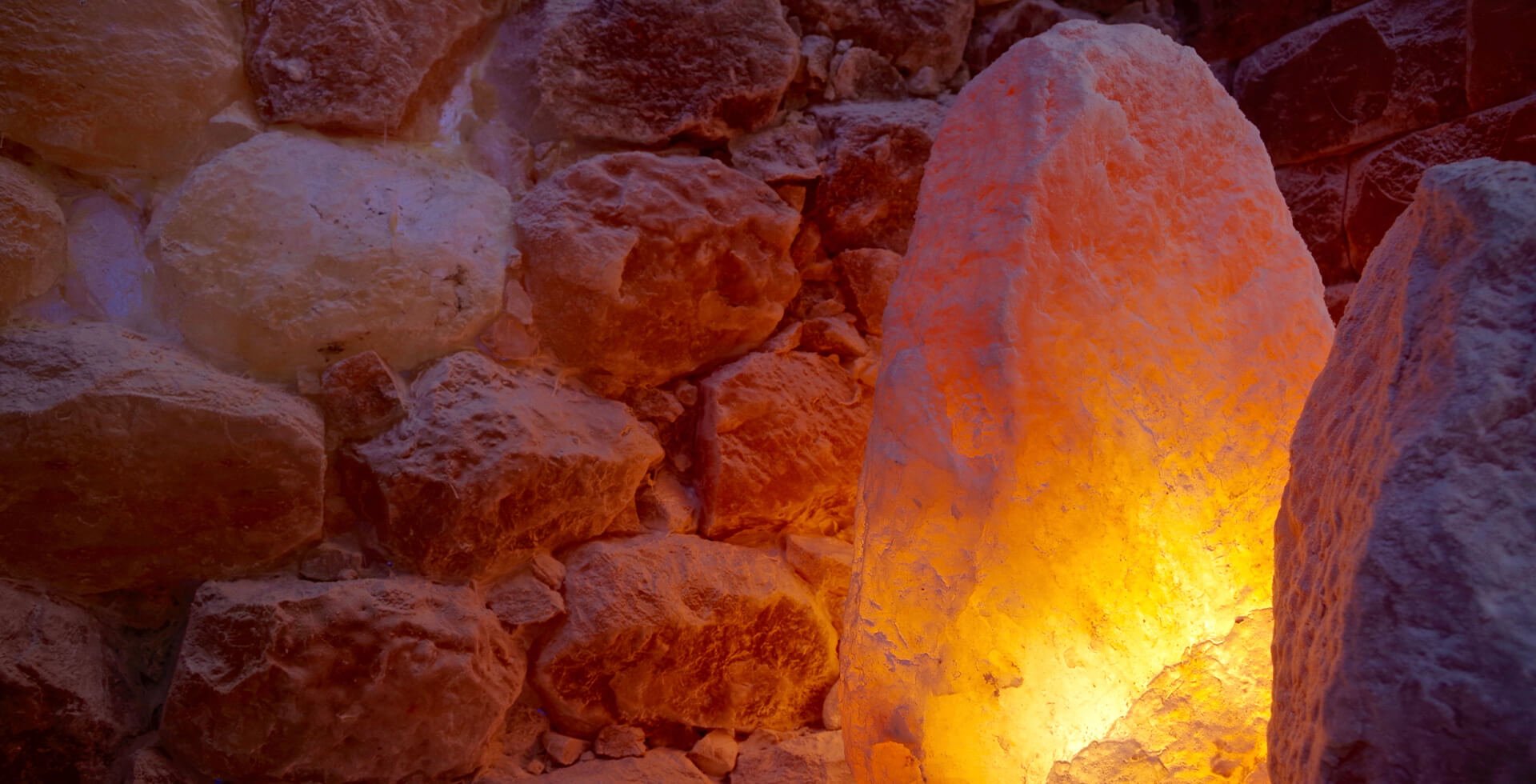
Complete your spa experience with our complementary wellness products. Discover our custom steam room designs, refresh after your sauna session with a cold plunge pool, or add a shock bucket for the ultimate contrast therapy. Enhance your relaxation space with our salt room solutions.
Choosing between suppliers or brands first? We publish an honest comparison of the major sauna brands — including who owns whom — and a twelve-point buyer’s checklist for evaluating any manufacturer, ourselves included.
Three job titles get used for the same project, and on most jobs they are three different companies. A sauna builder makes the cabin: timber selection, frame, insulation, vapour barrier, cladding, benches, heater and glass. A sauna installer sets that cabin into a finished room and connects it — power, ventilation ducts, drainage where a wet cabin needs it, controls and commissioning. A sauna contractor carries the project: programme, permits, coordination with the electrical and mechanical trades, site supervision, handover documentation.
Sauna Dekor is all three. We have manufactured in our own facility in Istanbul since 1987 — our fortieth year — and we install in the UAE, Saudi Arabia, Qatar and across more than 35 countries. Design, manufacture, shipping, installation and after-sales stay inside one contract, which is the practical reason the interfaces stop failing: there is no second company to blame for a vent that was never ducted or a cable that was pulled one size too thin.
| Stage | What happens | What it decides |
|---|---|---|
| 1. Brief and site survey | Room dimensions, ceiling height, structural slab, adjacent wet areas, access route for panels | Whether the cabin is modular or built in place |
| 2. Design and shop drawings | Layout, bench tiers, glazing, door swing, heater position, vent positions | Seating capacity and heat distribution |
| 3. Volume and load calculation | Design volume including the glass allowance, heater output, supply cable, control unit | Heater band and electrical supply |
| 4. Timber and finish selection | Cladding species and profile, bench timber, door type, lighting | Surface temperature behaviour and appearance |
| 5. Manufacture | Cutting, profiling, pre-assembly and quality control in our own facility | Fit tolerance on site |
| 6. Substrate and shell | Framing, mineral wool, vapour barrier, service voids, drainage where required | Whether the structure survives ten years of moisture cycling |
| 7. Installation | Panel assembly, glass, heater and control wiring by a licensed electrical contractor, vent connection | Compliance and safety |
| 8. Commissioning and handover | Heat-up test, temperature and humidity check, air-change verification, O&M documents and warranty | What the client actually receives |
A single cabin runs 6–10 weeks from design approval to commissioning. The full self-build sequence, including the parts we would not recommend doing yourself, is set out in our guide to how to make a sauna, and the B2B version — the one a consultant issues to tender — in our commercial sauna specification.
| Format | Construction | Typical use |
|---|---|---|
| Built-in cabin | Framed and clad inside an existing room, finished flush with the architecture | Villas, apartments, hotel spa floors |
| Modular cabin | Pre-assembled panels shipped flat and bolted on site | Fit-outs where site time is short or access is restricted |
| Glass-front cabin | Toughened glass front or corner, timber back and roof | Rooms where the sauna has to stay visually open |
| Outdoor cabin | Weather and UV resistant external cladding over an insulated shell | Gardens, roof terraces, resort grounds |
| Barrel sauna | Staved cylindrical shell, self-supporting, no separate insulation layer | Compact outdoor installations |
| Wooden sauna | A cabin whose interior is entirely timber — the classic form, and the reason the room feels the way it does | All of the above; timber choice is the variable, not the concept |
Cladding is the part clients look at and the part engineers argue about. Inside the cabin it does four jobs at once: it holds surface temperature at a level skin can touch, it keeps the insulation and vapour barrier out of the moisture cycle, it absorbs and releases humidity so the room does not feel sharp, and it deadens sound. We line cabins in thermally modified poplar and aspen, kiln-dried Ayous, alder, Nordic spruce, and cedar where a client asks for it. Ayous and aspen carry no resin and stay comfortable at 90 °C. Resinous pine bleeds at sauna temperature, which is why it does not go inside our cabins. Profiles run smooth, grooved or rustic; outdoor cladding is specified for UV and rain, not for cabin interiors.
Maintenance is the other half of cabin life — cleaning routine, stone replacement and timber care are covered in our guide to maintaining a sauna. If you are still choosing between heat types, compare infrared and traditional saunas before you fix the room layout, and see how a sauna performs in Dubai conditions for the Gulf-specific version of the same question.
| Type | Temperature | Relative humidity | Heat source | Best for |
|---|---|---|---|---|
| Finnish | 80–100 °C | 5–15 % | Electric stone heater; water on the stones for löyly | The classic dry-heat ritual and hotel duty, where the strongest heat stimulus is wanted |
| Bio | 50–60 °C | 60 % | Combi heater — stones with an integrated vaporiser | Guests who find a Finnish cabin too hot, and rooms built around aromatherapy and chromotherapy |
| Infrared | 45–60 °C | Ambient — no water added | Carbon or ceramic infrared emitters | Daily home use, apartments and retrofits where a three-phase supply is not available |
| Hybrid | 45–100 °C depending on mode | 5–60 % | Stone heater plus infrared emitters in one cabin | A single cabin that has to serve both a Finnish user and an infrared user |
| Heater output | Cabin volume band | Electrical supply | Minimum supply cable |
|---|---|---|---|
| 4.5 kW | 4–6 m³ | 400 V 3N~ 50 Hz | 5 × 1.5 mm² |
| 6.0 kW | 6–8 m³ | 400 V 3N~, 3 × 16 A | 5 × 1.5 mm² |
| 7.5 kW | 7–10 m³ | 400 V 3N~ 50 Hz | 5 × 1.5 mm² |
| 9.0 kW | 9–14 m³ | 400 V 3N~, 3 × 16 A | 5 × 2.5 mm² |
| 10.5 kW | 11–16 m³ | 400 V 3N~, 3 × 16 A | 5 × 2.5 mm² |
| 12.0 kW | 14–18 m³ | 400 V 3N~, 3 × 16 A | 5 × 2.5 mm² |
| 15.0 kW | 18–25 m³ | 400 V 3N~, 3 × 16 A | 5 × 2.5 mm² |
Read the band against the design volume, not the raw volume: every square metre of glass behaves like roughly 1.2 m³ of extra room, so a fully glazed front routinely moves a cabin up one step. A Finnish cabin heats from cold in about 35–45 minutes; an infrared cabin in 12–18 minutes. Heaters from 10.5 kW upward need a power extension unit on the EmoTec and EmoTouch controls, while the EOS Compact D18 switches up to 18 kW in a single unit.
A Finnish sauna heats the air to 80–100 °C at 5–15 % relative humidity with an electric stone heater. A bio sauna is a milder version at 50–60 °C and 60 % humidity, usually with aromatherapy and chromotherapy. An infrared sauna warms the body directly at 45–60 °C. Different heat, different construction, different electrical supply.
Size the cabin by volume, not floor area, and allow for the glass: every square metre of glazing behaves like about 1.2 m³ of extra room. The villa cabins we build run 2.2–4 m² (4.5–10.6 m³); hotel cabins run 5.5–12 m² (13–27 m³) with two tiers of bench. Bench length sets the seating, not floor area.
Heater output follows cabin volume: 4.5 kW for 4–6 m³, 6.0 kW for 6–8 m³, 9.0 kW for 9–14 m³, 12.0 kW for 14–18 m³ and 15.0 kW for 18–25 m³, all on a 400 V three-phase supply. Add roughly 1.2 m³ to the design volume for every square metre of glass. The full table is above.
EOS Saunatechnik of Germany is our standard for commercial cabins — the Thermat and P1 stainless-steel heaters with EOS Compact D18 or EmoTouch controls. We also fit Harvia, including The Wall SW60 and The Wall Combi SW70SA for hybrid cabins, and sentiotec. All are CE marked and serviceable in the UAE.
Cost is driven by cabin volume, timber selection and heater output. As a reference, we have delivered a 2.16 m² spruce cabin with a Harvia 6.0 kW heater, and an 8.7 m³ thermally modified Ayous cabin with an EOS 9.0 kW heater. Hotel cabins are priced per project.
A single sauna runs 6–10 weeks from design approval to commissioning, including manufacturing in our own facility, shipping and on-site installation. A complete villa spa package with several rooms runs 12–16 weeks. Hotel projects run longer because approvals and MEP coordination sit on the critical path.
We line cabins in thermally modified poplar and aspen, kiln-dried Ayous, alder, Nordic spruce, and cedar where a client asks for it. Ayous and aspen carry no resin and do not burn skin at 90 °C. Resinous pine bleeds at sauna temperature, which is why we do not use it inside the cabin.
A full sauna session lasts about 90 minutes: 8–12 minutes in the cabin, then a 12–20 minute cool-down, repeated. Rehydrate between rounds. In a commercial spa we design the circuit around that rhythm, which is why the plunge and rest positions matter as much as the cabin itself.
A sauna builder makes the cabin — frame, insulation, vapour barrier, cladding, benches, heater and glass. A sauna installer sets the cabin into the room and connects power, ventilation and controls. A sauna contractor carries the project: programme, permits, coordination with the electrical and mechanical trades, and handover. Sauna Dekor performs all three under one contract, which is why the interfaces between them do not fail.
A wooden sauna is a cabin whose interior surfaces — walls, ceiling, benches and backrests — are timber. The timber is not decoration: it holds a surface temperature skin can touch at 80–100 °C, buffers humidity, and protects the insulation and vapour barrier behind it. Species matters more than the label. We use thermally modified poplar and aspen, kiln-dried Ayous, alder, Nordic spruce and cedar; we do not use resinous pine inside a cabin.
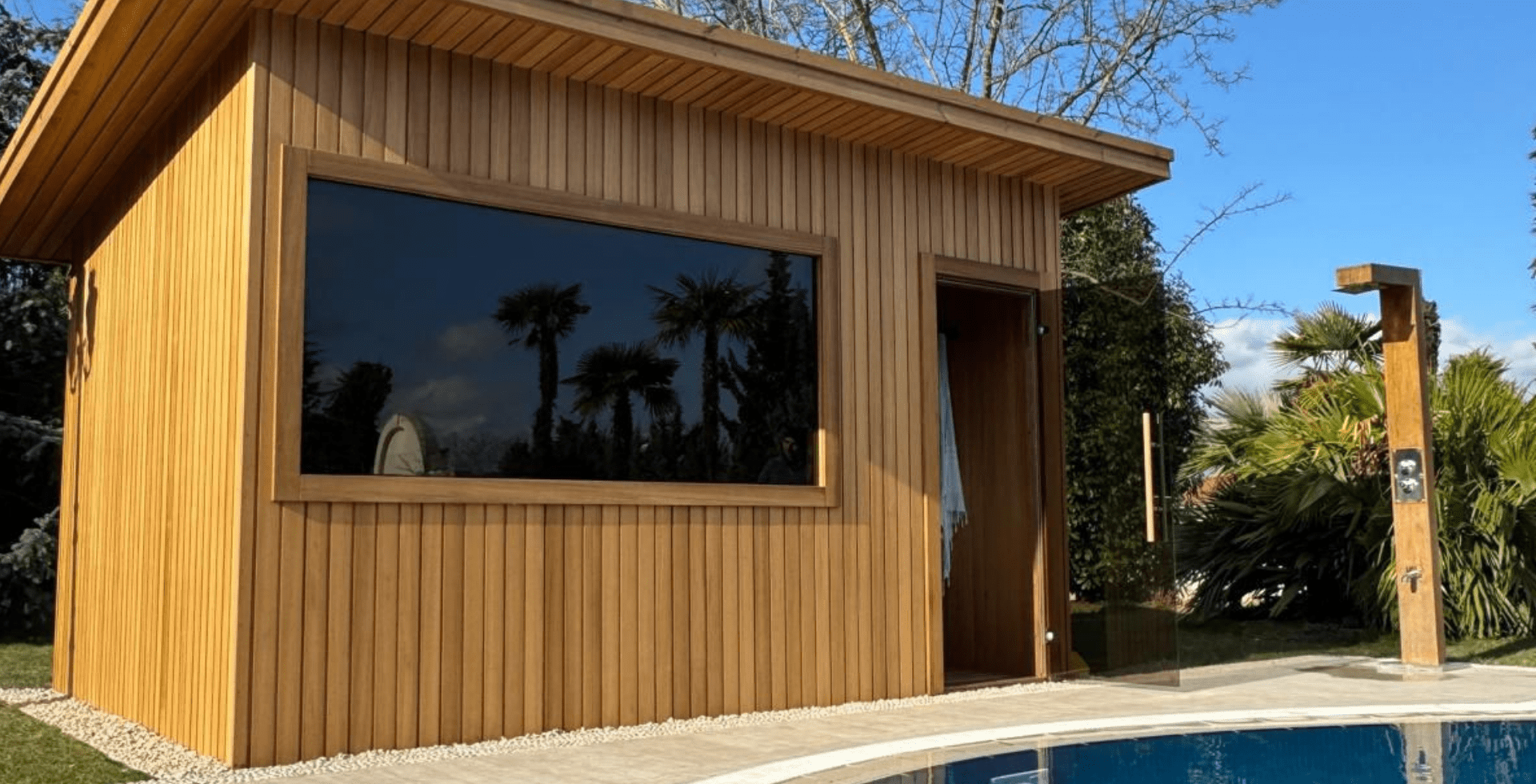
Yes. We manufacture built-in, modular, glass-front, outdoor and barrel cabins. An outdoor cabin gets weather and UV resistant external cladding over an insulated shell; a barrel sauna uses a staved cylindrical shell that is self-supporting. Which format suits a project is decided by access, climate exposure and how the cabin has to sit in the architecture, not by preference.
Ventilation planned after the cladding is closed; a missing or punctured vapour barrier; a heater sized on floor area instead of design volume; resinous or untreated timber inside the cabin; and an electrical supply specified after the heater rather than with it. All five are avoidable at drawing stage and expensive afterwards.
Continuous-duty rating and serviceability. A gym cabin runs for the whole opening day, so the heater is selected for continuous duty, benches and floor are specified for constant cleaning, ventilation is mechanical rather than passive, and heater, controller, stones and lighting all have to be reachable without dismantling the cabin. How operators are specifying and sizing these rooms now is set out in our article on gym saunas, and the tender-stage detail in commercial sauna specification.
Most of what decides whether a cabin performs is settled on paper, not on site. Ventilation is the item left to the installer most often, and it is why a cabin with a correctly sized heater can still refuse to hold heat or dry out between sessions; the inlet and outlet geometry we work to, including the free-area arithmetic that a decorative grille quietly halves, is set out in our guide to sauna ventilation.
A commercial cabin changes that arithmetic again. Twelve hours of continuous operation is a different duty cycle from a forty-minute domestic session, and the timber grades, fixings, control strategy and drying overrun that follow from it are collected in our commercial sauna specification. For projects in the Gulf the climate leads every other decision — heat rejected into an air-conditioned building is paid for twice — and that ground is covered on our page about saunas in Dubai.

Adding {{itemName}} to cart
Added {{itemName}} to cart